
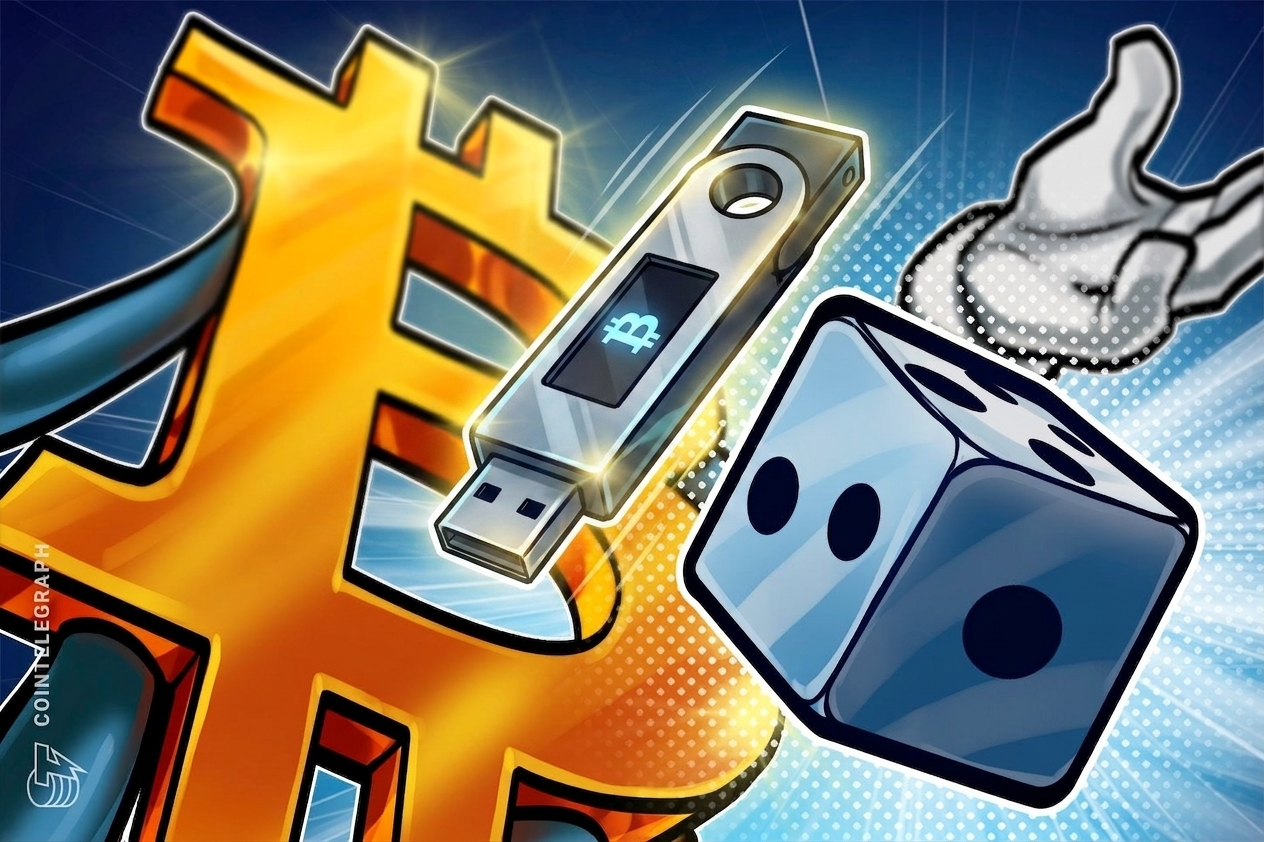
In light of the catastrophic low-entropy bug in Coldcard hardware wallets, linked to publicly observed thefts beginning on July 30, Bitcoin holders have started to re-evaluate the trust assumptions in their hardware wallet setups.
Bitcoiners turn to dice throws as self-custody setups are re-evaluated
Dice entropy may become the new gold standard after the Coldcard hack
Cointelegraph by Charles Bennett
Publisher Cointelegraph
Aug 7, 2026 at 1:00 PM UTC · Updated 2ヶ月前 · 4 分で読める
Key Signal
40 bits Mk2 and Mk3 entropy
Entities
bitcoin
Market Impact
BTC+0.21%$83,348
Last Updated
2ヶ月前
翻訳中…
How Coldcard’s entropy flaw worked
The Coldcard devices were equipped with apparently functional STM32 “true random number generators” (TRNGs) that rely on physical processes to produce an unguessable seed phrase.
However, after Coldcard creator NVK decided to initiate a firmware rewrite to switch from a GPL-licensed free software model to a read-only model, a serious vulnerability appears to have been introduced.
Starting with firmware version 4.0.1, released in March 2021, the device used MicroPython’s Yasmarang PRNG instead of properly using the STM32 hardware RNG.
Random number generation is an unsolvable problem in computer science, which is why the generation of secure, unguessable private keys always has to rely on external physical processes to a degree.
The use of the Yasmarang PRNG was widely characterized by analysts in the space as a pre-programmed fallback. However, Coinkite has now disputed this characterization in a recent X post:
The conjecture that Coldcards were programmed to default to an obviously insecure method of seed generation has also sparked speculation on X about whether this was a deliberately placed backdoor.
Market Context
Bitcoin
BTC
$83,343
+0.21% (24H)
Market Cap
$1.67T
24H Volume
$21.2B
24H High
$84,527
Article Intelligence
Key Entities
Topics
Related Coverage
 CryptoOn the Chain: Bitcoin heads for best quarter in nearly two years despite late pullback6分前 · 2 min read
 CryptoRic Edelman Urges 10-40% Bitcoin Allocation, Sees $500K Price by 203010分前 · 2 min read
 CryptoTop 3 Price Prediction: Bitcoin, Ethereum, Ripple – BTC, ETH, XRP pause near recent highs as bullish momentum moderates13分前 · 1 min read
Sponsored
Ad
NewsLayerLearn more
NewsLayer Premium
Unlock deeper intelligence.
Ad-free reading, exclusive research, and real-time onchain insights.
Go Premium