

NewsLayer

Install NewsLayer

Get the app experience — one tap from your home screen, instant loads and breaking-news alerts.

NewsLayer.com
LatestDaily BriefMarkets
NewsLayer PulseLIVE₿BTC$82,739+1.28%ΞETH$2,442+1.93%◎SOL$106.31+1.49%✕XRP$1.33+2.60%ÐDOGE$0.0818+3.34%₳ADA$0.2242+3.40%Total Cap$2.90T+1.80%24H Vol$131.7BLayer Index50 Neutral
BreakingCapital Is Repricing Crypto Around Infrastructure Trust Rather Than Narrative Heat10分前
Markets
HomeQuantum

Quantum

IBM's new modular cryogenic system for fault-tolerant quantum computer

Computing major IBM has unveiled its first modular cryogenic quantum fridge, which can be joined to create a single cooled environment that can handle hundreds of quantum chips. The cryogenic system, capable of cooling below 15…

Interesting Engineering

Publisher

Aug 19, 2026 at 12:25 PM UTC · 2 分で読める
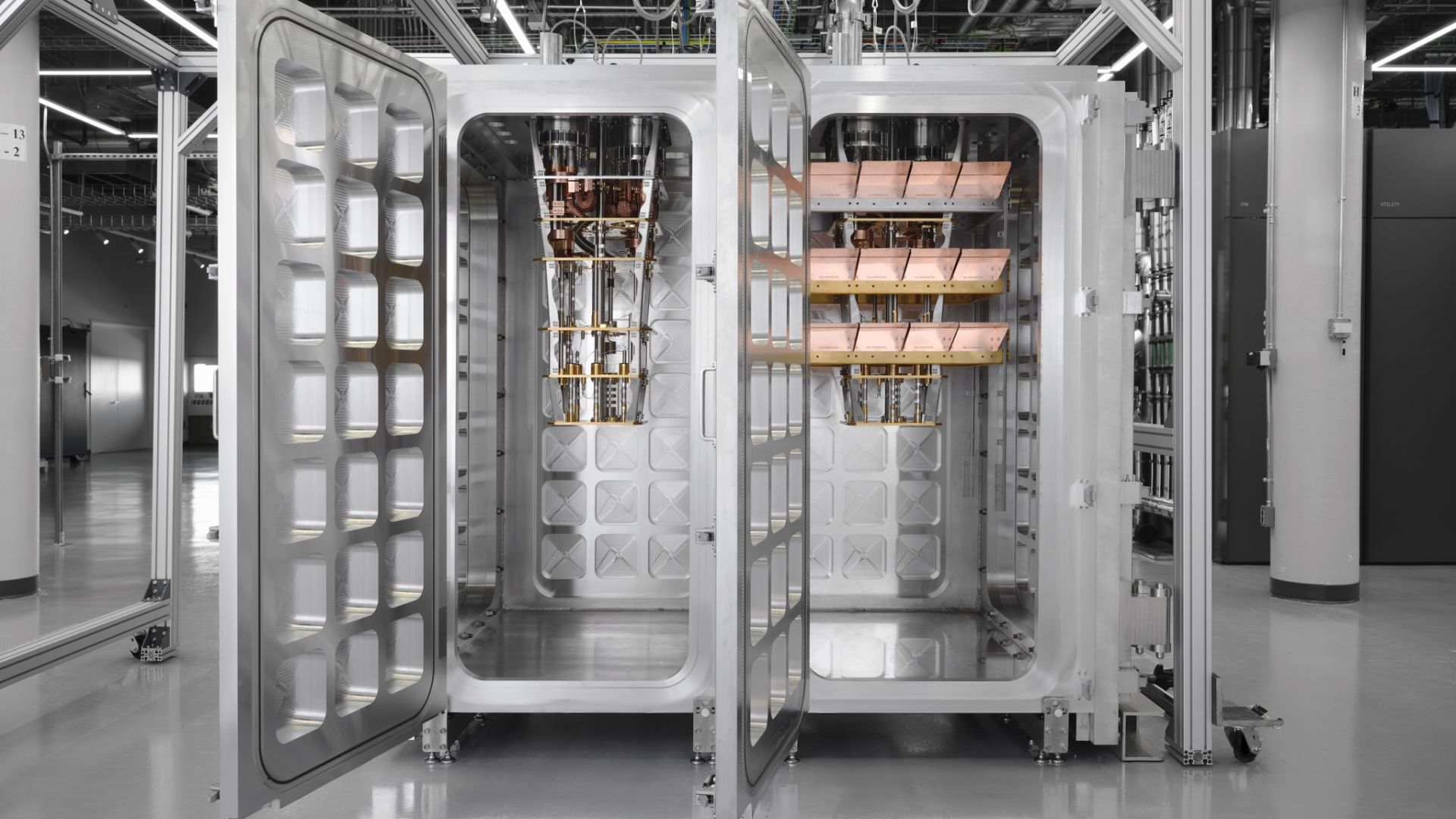
IBM's new modular cryogenic system for fault-tolerant quantum computer
Image via Interesting Engineering

Key Signal

Below 15 mK Final demonstrated temperature

Last Updated

2ヶ月前

翻訳中…

Computing major IBM has unveiled its first modular cryogenic quantum fridge, which can be joined to create a single cooled environment that can handle hundreds of quantum chips. The cryogenic system, capable of cooling below 15 milliKelvin, is an important milestone as IBM works to release its large-scale fault-tolerant quantum computer by 2029. 

Quantum computers are regarded as the next frontier of computing, promising large-scale computations in a fraction of the time needed by the fastest supercomputers today. Unlike silicon-based computers that use binary bits, which can store only 0 or 1, quantum computers use quantum bits, which can store multiple values between 0 and 1 and carry out computations in parallel, exponentially increasing their computing power. 

Quantum bits, or qubits, usually work at extremely low temperatures, near absolute zero. Achieving this is a challenge but one that researchers have perfected using multi-stage devices called dilution refrigerators. The qubits operate inside chambers where temperatures are ultra-low, but the complex architecture of refrigeration and computing infrastructure make it difficult to build large-scale quantum computers. 

How IBM is solving this problem

Article Intelligence

Topics

quantum

Sponsored

Ad
House — Advertise on NewsLayer
NewsLayerLearn more

NewsLayer Premium

Unlock deeper intelligence.

Ad-free reading, exclusive research, and real-time onchain insights.

Go Premium
NewsLayer.com

The front page of the onchain economy. Crypto, Web3 and regulation intelligence — live prices, original research and policy tracking in one layer.

Follow on XTelegram

News

  • Latest News
  • The Daily Brief
  • Crypto
  • DeFi
  • Policy
  • Web3
  • Blockchain
  • Explainers

Markets

  • Market News
  • Layer Index
  • Live Charts
  • DeFi Protocols
  • Regulation Tracker
  • Regulation Radar

Company

  • About NewsLayer
  • Advertise
  • PR Publication
  • Become an Author
  • Our Authors
  • Create Account
  • Sign in

Resources

  • Research
  • NewsLayer Originals
  • My Feed
  • Search
  • AI Sector
  • Quantum Sector

NewsLayer Premium

Read the full layer.

Unlock premium intelligence, original research and an ad-free reading experience.

  • Premium Intelligence briefings
  • Ad-free reading experience
  • Members-only research & data
Go Premium

© 2026 NewsLayer.com — The front page of the onchain economy

Privacy Policy·Terms of Service
NewsLayer

Get the signal, not the noise.

Markets, regulation and onchain intelligence in a 5-minute morning read — plus breaking alerts and Layer Index flips as they happen.

The Daily Brief

Breaking alerts

Index flips

Free · No spam · Unsubscribe anytime
