
This website uses cookies
We use cookies to personalise content and ads, to provide social media features and to analyse our traffic. We also share information about your use of our site with our social media, advertising and analytics partners who may combine it with other information that you’ve provided to them or that they’ve collected from your use of their services.
Consent Selection
Details
  • Necessary cookies help make a website usable by enabling basic functions like page navigation and access to secure areas of the website. The website cannot function properly without these cookies.
  • Preference cookies enable a website to remember information that changes the way the website behaves or looks, like your preferred language or the region that you are in.
    • We do not use cookies of this type.

  • Statistic cookies help website owners to understand how visitors interact with websites by collecting and reporting information anonymously.
    • We do not use cookies of this type.

  • Marketing cookies are used to track visitors across websites. The intention is to display ads that are relevant and engaging for the individual user and thereby more valuable for publishers and third party advertisers.
    • We do not use cookies of this type.

  • Unclassified cookies are cookies that we are in the process of classifying, together with the providers of individual cookies.
    • __emg_sidPending
      Maximum Storage Duration: 1 dayType: HTTP Cookie
      __emg_vidPending
      Maximum Storage Duration: 1 yearType: HTTP Cookie
      nl-read-countPending
      Maximum Storage Duration: PersistentType: HTML Local Storage
Cookie declaration last updated on 8/12/26 by Cookiebot
[#IABV2_TITLE#]
[#IABV2_BODY_INTRO#]
[#IABV2_BODY_LEGITIMATE_INTEREST_INTRO#]
[#IABV2_BODY_PREFERENCE_INTRO#]
[#IABV2_BODY_PURPOSES_INTRO#]
[#IABV2_BODY_PURPOSES#]
[#IABV2_BODY_FEATURES_INTRO#]
[#IABV2_BODY_FEATURES#]
[#IABV2_BODY_PARTNERS_INTRO#]
[#IABV2_BODY_PARTNERS#]
About
Cookies are small text files that can be used by websites to make a user's experience more efficient.

The law states that we can store cookies on your device if they are strictly necessary for the operation of this site. For all other types of cookies we need your permission.

This site uses different types of cookies. Some cookies are placed by third party services that appear on our pages.

You can at any time change or withdraw your consent from the Cookie Declaration on our website.

Learn more about who we are, how you can contact us and how we process personal data in our Privacy Policy.

Please state your consent ID and date when you contact us regarding your consent.
NewsLayer.com
NewsLayer PulseLIVEBTC$78,462-0.88%ETH$2,448-1.03%SOL$96.26-3.54%XRP$1.42-4.22%DOGE$0.086-4.94%ADA$0.2082-4.64%Total Cap$2.65T-3.40%Layer Index58 Neutral

NSF Awards Yale-Led Center $37.5M for Quantum Error Correction Research

Insider Brief Press release – A Yale-led multidisciplinary team of researchers has been awarded a $37.5 million grant from the U.S. National Science Foundation (NSF) for a center aimed at designing practical and self-correcting quantum…

Mohib Ur Rehman

Publisher The Quantum Insider

Aug 26, 2026 at 7:15 AM UTC · Updated 1時間前 · 4 分で読める
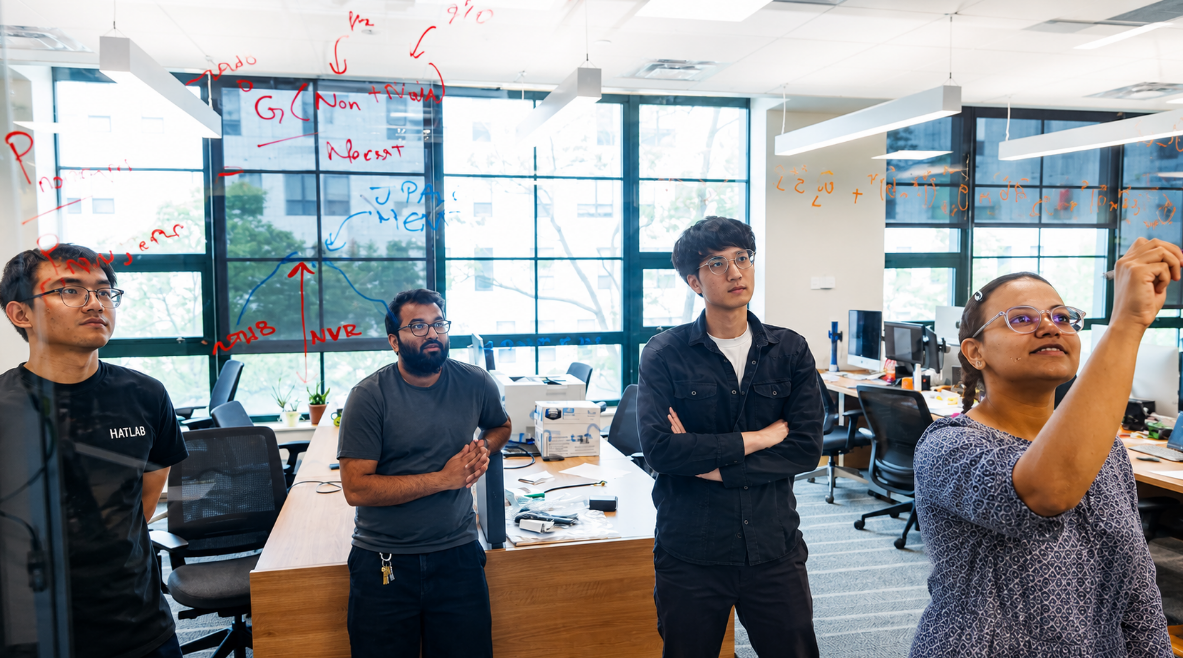
NSF Awards Yale-Led Center $37.5M for Quantum Error Correction Research
Image via The Quantum Insider

Market Impact

Total MCap-3.40%

Last Updated

1時間前

翻訳中…

Insider Brief

  • Yale will lead a $37.5 million NSF Quantum Leap Challenge Institute focused on developing practical approaches to quantum error correction and fault-tolerant quantum computing.
  • The five-year NSF PRACTIQAL center will bring together physicists, engineers, computer scientists and chemists to address challenges across quantum hardware, control electronics, error-correction codes and algorithms.
  • The research will focus on making error correction more efficient and scalable, including through the development of specialized erasure qubits that can identify when and where errors occur.

Press release – A Yale-led multidisciplinary team of researchers has been awarded a $37.5 million grant from the U.S. National Science Foundation (NSF) for a center aimed at designing practical and self-correcting quantum computers from top to bottom and pointing the way forward for industry to build reliable machines.

The grant is one of eight that NSF has awarded for large-scale interdisciplinary research centers known as Quantum Leap Challenge Institutes that address major challenges at the frontiers of quantum information science and technology.

Quantum computing holds the promise of solving a range of problems that are nearly impossible for classical computers. Potential applications in materials science, drug design, and more could enhance quality of life and drive economic growth. One of the main challenges, though, is that quantum machines are much more prone to error than classical machines. That’s because qubits— the units of information in quantum computing — are very fragile. In comparison, the ones and zeros of conventional computers are incredibly robust, but quantum states can easily be affected by noise and other factors in their environment.

Market Context

Total Market Cap$2.65T-3.40%
24H Volume$84.4B
BTC Dominance59.2%
ETH Dominance11.1%

Updated 9分前

View All Markets

Article Intelligence

Sponsored

Ad
House — Advertise on NewsLayer
NewsLayerLearn more

NewsLayer Premium

Unlock deeper intelligence.

Ad-free reading, exclusive research, and real-time onchain insights.

Go Premium
