

The simulation validates magic state cultivation, an approach that requires 90% fewer qubits than previous methods for fault-tolerant quantum computing.
NVIDIA simulates 104-qubit quantum processor on JUPITER
The simulation validates magic state cultivation, an approach that requires 90% fewer qubits than previous methods for fault-tolerant quantum computing.
Engineering.com
Publisher
Oct 27, 2026 at 8:38 AM UTC · 2 分で読める
翻訳中…
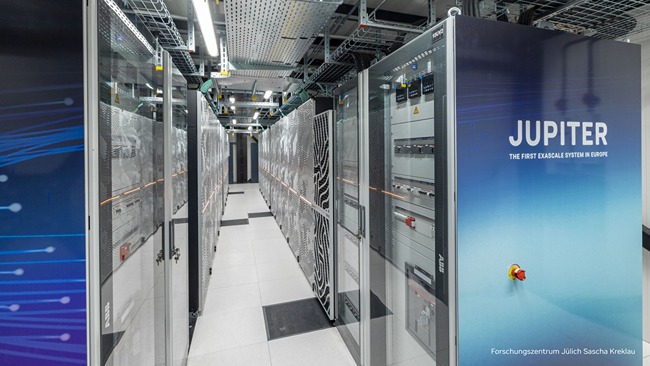
NVIDIA announced a record-breaking quantum computing simulation on JUPITER, Europe’s first exascale supercomputer, allowing researchers to fully explore and validate magic state cultivation — a leading approach to fault-tolerant quantum computing that requires 90% fewer qubits than previous methods.
Running on a system of NVIDIA GH200 superchips at Jülich Supercomputing Centre, the 104-qubit simulation is the largest comprehensive simulation of a fault-tolerant quantum processor to date, modeling how a realistic quantum processor performs fault-tolerant computation at record scale.
That level of fidelity gives researchers the data and tools needed to predict the performance of future designs before they are built — reducing reliance on hardware trial and error, and accelerating the path to useful quantum applications in fields like drug discovery, financial modeling and materials science.
Reducing the resources needed for useful quantum computing
Because qubits operate at the limits of physics, the interactions needed to control them introduce unavoidable, error-inducing noise. Computing in the presence of such noise — known as fault-tolerant quantum computing — requires the use of magic states, a specific arrangement of qubits that is continually consumed during a fault-tolerant quantum computation.
Article Intelligence
Topics
Sponsored
Ad
NewsLayerLearn more
NewsLayer Premium
Unlock deeper intelligence.
Ad-free reading, exclusive research, and real-time onchain insights.
Go Premium