

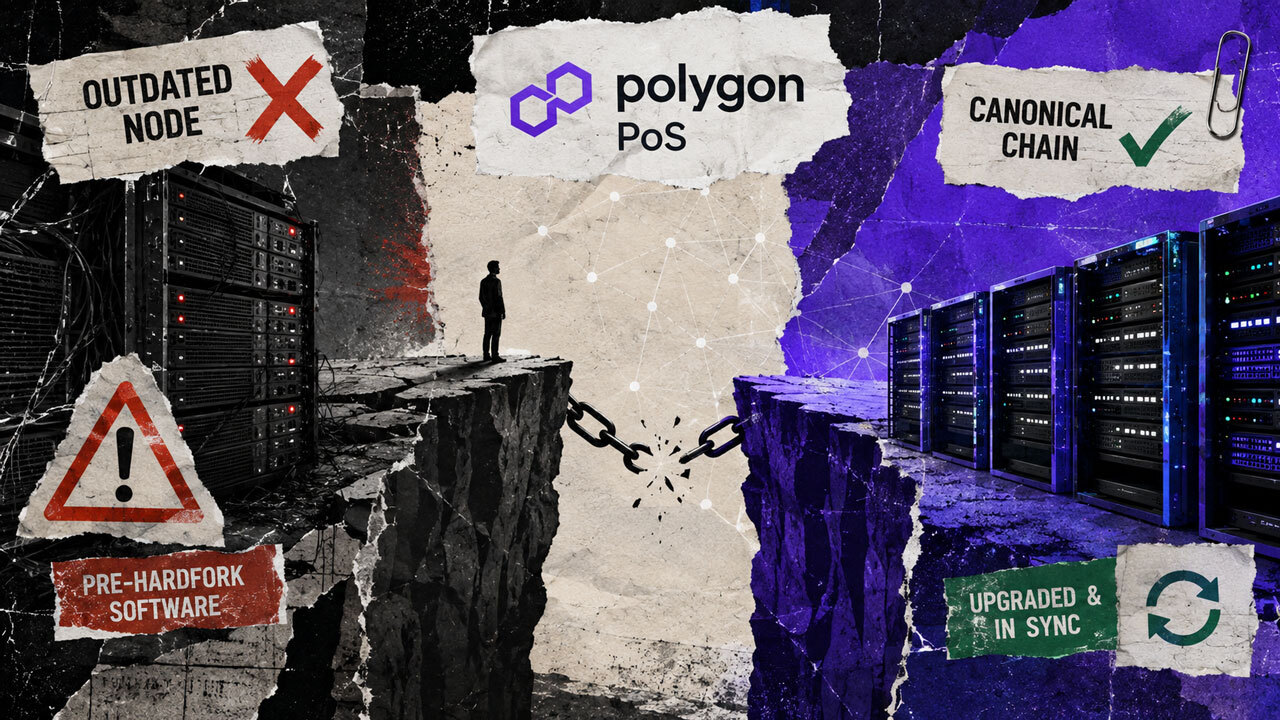
Polygon Labs said any Polygon PoS node that stayed on pre-hardfork Bor or Heimdall binaries past two August activation heights has already fallen out of canonical consensus. In practice, the stale node must upgrade and catch up before it can follow the network’s accepted history again.
Polygon Labs issues urgent client upgrade notice following Austin and Kyoto hardforks
Polygon Labs said any Polygon PoS node that stayed on pre-hardfork Bor or Heimdall binaries past two August activation heights has already fallen out of canonical consensus. In practice, the stale node must upgrade and catch up before…
CryptoSlate
Publisher
Aug 29, 2026 at 9:10 AM UTC · 2 分で読める
Entities
polygon
Last Updated
2時間前
翻訳中…
The company’s Aug. 27 security review described a client-compatibility consequence. Polygon said it had not observed mainnet disruption from Austin and framed the disclosed changes as proactive fixes.
Bor is Polygon PoS’s execution client, while Heimdall handles consensus and checkpointing. Bor versions earlier than v2.10.0 are incompatible after Austin activated at mainnet block 91,949,700, a cutoff that applies to all Bor node roles.
Heimdall validators and full nodes need v0.11.0 after Kyoto activated at height 51,533,000. Polygon’s Heimdall release notice dates that mainnet activation to Aug. 18 at 10:10:31 UTC.
Austin and Kyoto addressed separate client risks
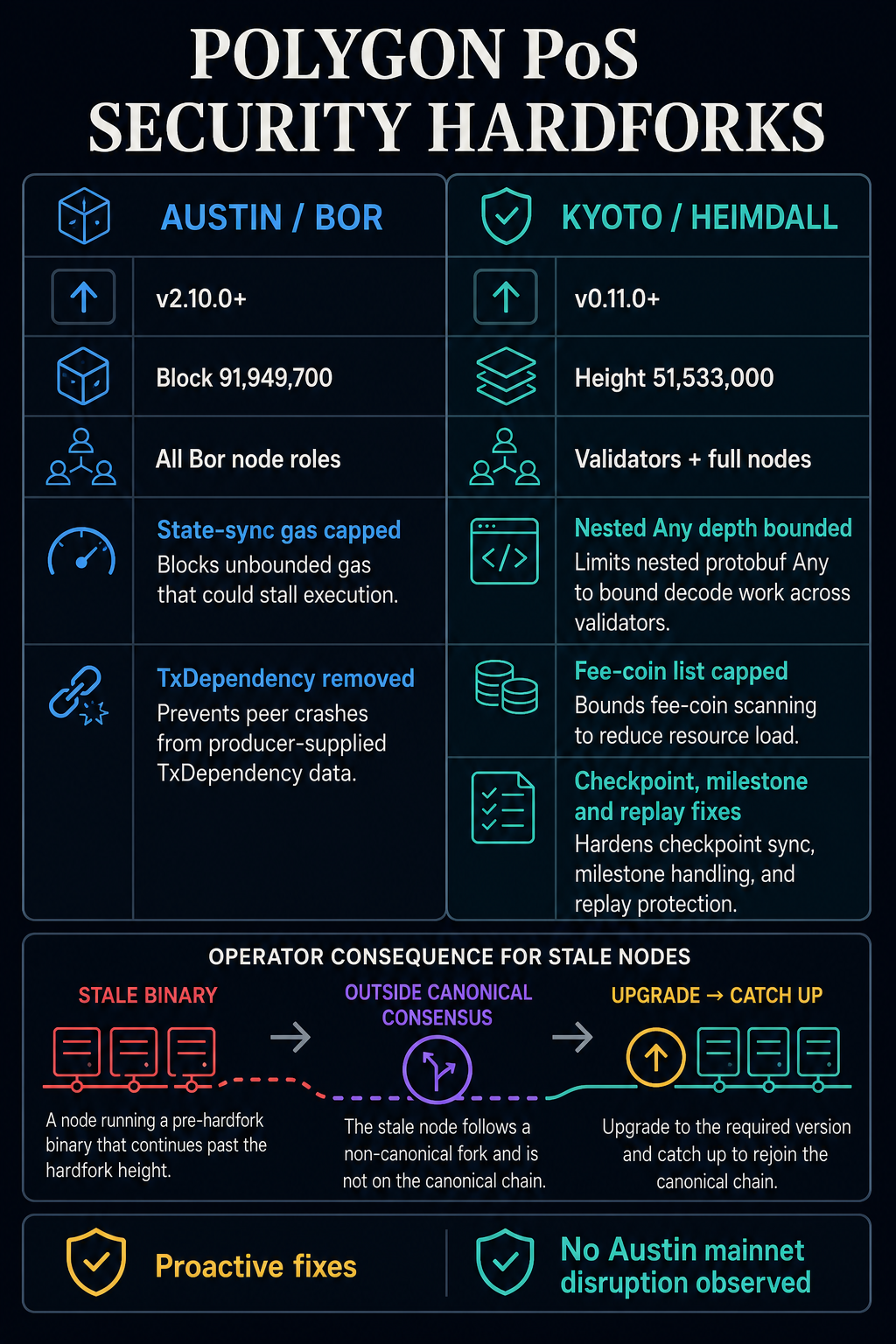
Austin capped the gas consumed while Bor processes state-sync events from L1-to-L2 bridge deposits. Those events execute contract code and precompiles, but their gas use was not previously counted against a fixed block-level ceiling.
Enough events, or one sufficiently costly event, could make block processing slow enough to stall the chain transiently.
Article Intelligence
Key Entities
Topics
Sponsored
Ad
NewsLayerLearn more
NewsLayer Premium
Unlock deeper intelligence.
Ad-free reading, exclusive research, and real-time onchain insights.
Go Premium