

This website uses cookies
We use cookies to personalise content and ads, to provide social media features and to analyse our traffic. We also share information about your use of our site with our social media, advertising and analytics partners who may combine it with other information that you’ve provided to them or that they’ve collected from your use of their services.
Consent Selection
Details
  • Necessary cookies help make a website usable by enabling basic functions like page navigation and access to secure areas of the website. The website cannot function properly without these cookies.
  • Preference cookies enable a website to remember information that changes the way the website behaves or looks, like your preferred language or the region that you are in.
    • We do not use cookies of this type.

  • Statistic cookies help website owners to understand how visitors interact with websites by collecting and reporting information anonymously.
    • We do not use cookies of this type.

  • Marketing cookies are used to track visitors across websites. The intention is to display ads that are relevant and engaging for the individual user and thereby more valuable for publishers and third party advertisers.
    • We do not use cookies of this type.

  • Unclassified cookies are cookies that we are in the process of classifying, together with the providers of individual cookies.
    • __emg_sidPending
      Maximum Storage Duration: 1 dayType: HTTP Cookie
      __emg_vidPending
      Maximum Storage Duration: 1 yearType: HTTP Cookie
      nl-read-countPending
      Maximum Storage Duration: PersistentType: HTML Local Storage
Cookie declaration last updated on 8/12/26 by Cookiebot
[#IABV2_TITLE#]
[#IABV2_BODY_INTRO#]
[#IABV2_BODY_LEGITIMATE_INTEREST_INTRO#]
[#IABV2_BODY_PREFERENCE_INTRO#]
[#IABV2_BODY_PURPOSES_INTRO#]
[#IABV2_BODY_PURPOSES#]
[#IABV2_BODY_FEATURES_INTRO#]
[#IABV2_BODY_FEATURES#]
[#IABV2_BODY_PARTNERS_INTRO#]
[#IABV2_BODY_PARTNERS#]
About
Cookies are small text files that can be used by websites to make a user's experience more efficient.

The law states that we can store cookies on your device if they are strictly necessary for the operation of this site. For all other types of cookies we need your permission.

This site uses different types of cookies. Some cookies are placed by third party services that appear on our pages.

You can at any time change or withdraw your consent from the Cookie Declaration on our website.

Learn more about who we are, how you can contact us and how we process personal data in our Privacy Policy.

Please state your consent ID and date when you contact us regarding your consent.
NewsLayer

Install NewsLayer

Get the app experience — one tap from your home screen, instant loads and breaking-news alerts.

NewsLayer.com

The ECB Surveyed 8,205 Firms and Crypto’s Share Is Striking

Crypto aims to become a means of payment like any other. In the eurozone, it is still far from it. In a large survey conducted by the European Central Bank (ECB), it is noted that, even in the case of sector development followed by the…

Cointribune

Publisher

Aug 16, 2026 at 6:05 PM UTC · 5 分で読める
The ECB Surveyed 8,205 Firms and Crypto’s Share Is Striking
Image via Cointribune
翻訳中…
Summarize this article with:

Crypto aims to become a means of payment like any other. In the eurozone, it is still far from it. In a large survey conducted by the European Central Bank (ECB), it is noted that, even in the case of sector development followed by the entry into force of the MiCA regulation, crypto payments remain marginal at the merchant level. Consumers are still attached to traditional payment channels while businesses show reluctance to take the plunge. This gap persists between the ambitions of the crypto industry and actual usage. Will European regulation be enough to shift the lines?

In Brief

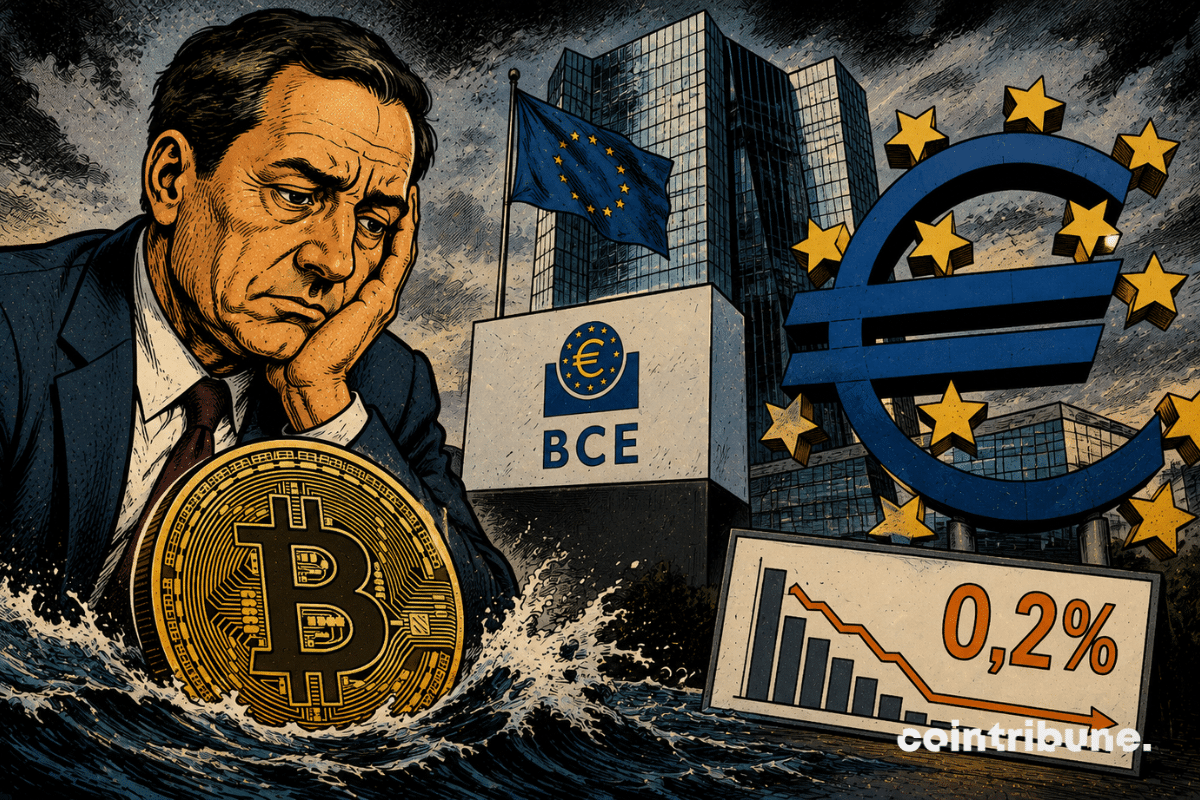
  • A study by the European Central Bank conducted with 8,205 companies reveals that acceptance of cryptocurrencies remains extremely marginal in Europe, standing at only 0.2% for online commerce and 1% in physical stores.
  • Cash and bank cards maintain overwhelming dominance in the market, supported by the ECB’s explicit intention to preserve access to cash despite the rise of digital and mobile payments.
  • This merchant lag persists despite the recognized economic advantages of blockchain and the entry into force of the MiCA regulatory framework, which offers unprecedented legal certainty to industry players.
  • Without the deployment of simple integration tools by payment processors, crypto-assets risk remaining confined in Europe to a role of store of value or speculative investment.

Article Intelligence

Sponsored

Ad
House — Advertise on NewsLayer
NewsLayerLearn more

NewsLayer Premium

Unlock deeper intelligence.

Ad-free reading, exclusive research, and real-time onchain insights.

Go Premium
