

Insider Brief
University at Buffalo Study Decodes Quantum Material’s ‘Optical Dingerprints’
Insider Brief PRESS RELEASE — The tiny atomic defects so important for future quantum technologies can be difficult to spot. Fortunately, they leave behind some clues The defects can alter how a material responds to light, producing a…
Matt Swayne
Publisher The Quantum Insider
Nov 13, 2026 at 8:48 AM UTC · Updated 17時間前 · 3 分で読める
翻訳中…
- A University at Buffalo-led team predicted optical fingerprints for 10 atomic defects in hexagonal boron nitride, potentially helping scientists identify defects useful for quantum technologies.
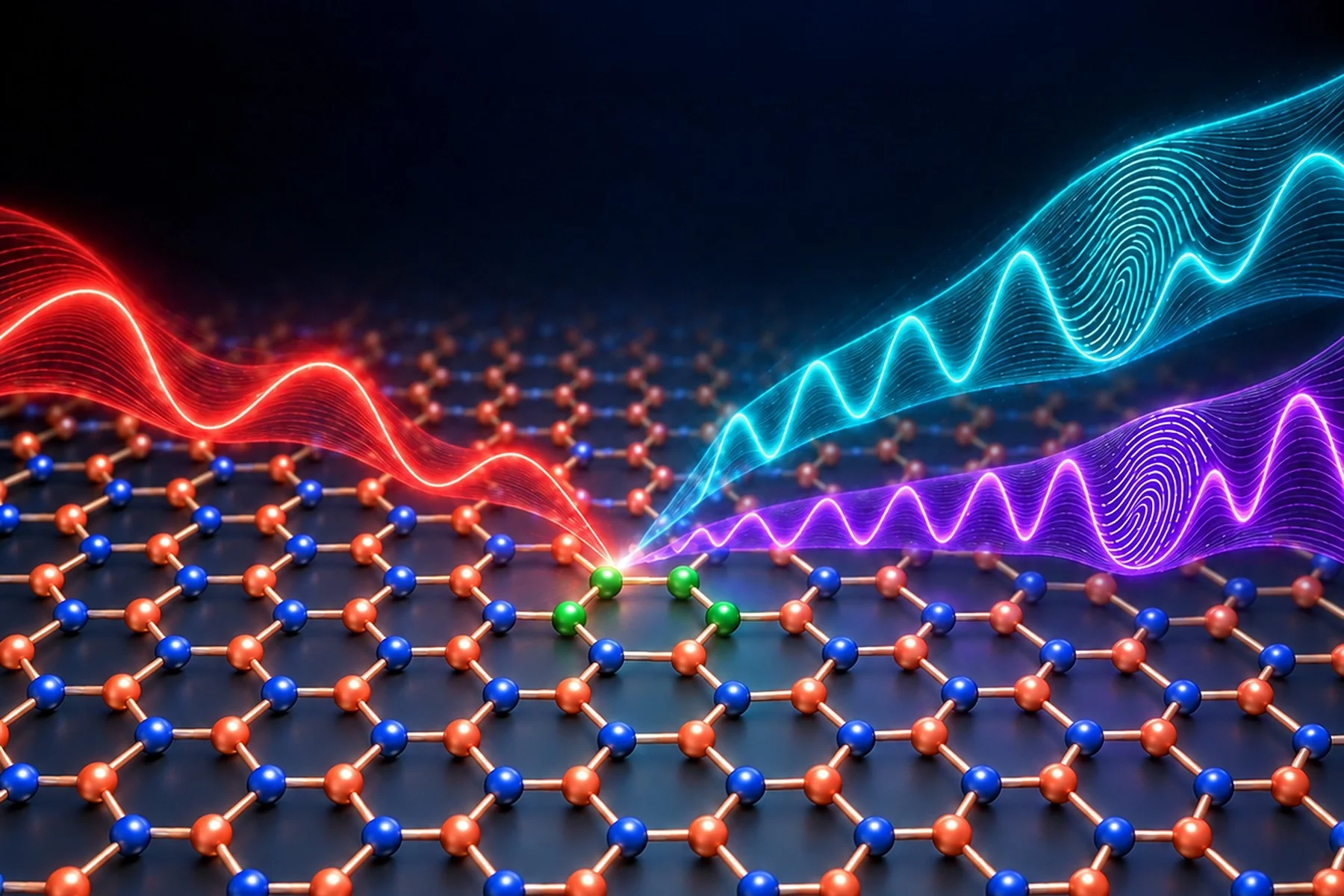
- The simulations showed that defect composition and atomic arrangement can produce distinct responses in the intensity and polarization of light emitted at double or triple the incoming laser’s frequency.
- The findings could guide experimental identification and engineering of defects that emit single photons for future quantum communication and sensing applications.
- Image: An illustration of atomic defects within hexagonal boron nitride alerting light, creating an optical fingerprint. A UB-led study predicted the optical fingerprints for 10 known defects within this material, which could have applications for quantum technologies. (Vasili Perebeinos)
PRESS RELEASE — The tiny atomic defects so important for future quantum technologies can be difficult to spot. Fortunately, they leave behind some clues
The defects can alter how a material responds to light, producing a distinctive optical fingerprint that scientists can measure.
The challenge is figuring out which fingerprints belong to which defects.
Article Intelligence
Related Coverage
 ResearchClassical Light Dynamics Could Help Simulate Quantum Interactions19時間前 · 3 min read
 QuantumAtom Computing Finalizes $100 Million U.S. Department of Commerce R&D Agreement for Fault-Tolerant Quantum Systems4時間前 · 1 min read
 QuantumNtt Research Builds Virtual Quantum Computer From Untrusted Servers12時間前 · 4 min read
Sponsored
Ad
NewsLayerLearn more
NewsLayer Premium
Unlock deeper intelligence.
Ad-free reading, exclusive research, and real-time onchain insights.
Go Premium