
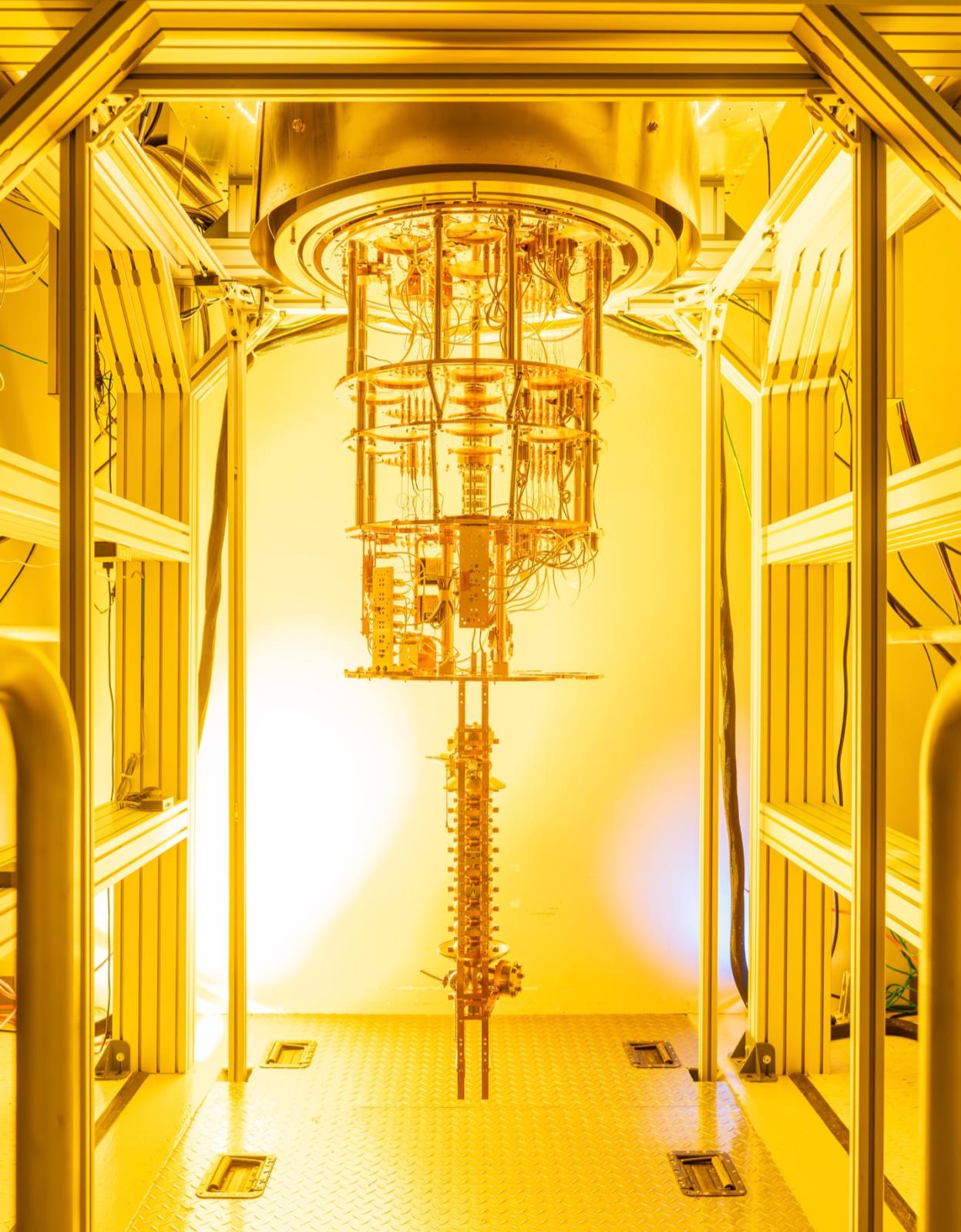
The Department of Energy (DOE) on Sept. 17 announced the Quantum Genesis Q Competition, a $215 million initiative to fund private-sector teams racing to build the world’s first fault-tolerant, scientifically relevant quantum computer. Structured as a milestone-based competition rather than a conventional grant, it will pay out fixed awards of up to $1.5 million per team for early technical milestones, then split a $100 million pool—plus two $50 million bonus pools—among teams that can demonstrate machines with 100, 150, and 200 logical qubits, respectively. Applications, open to any private-sector team, are due Oct. 19.
What the DOE’s Quantum Computing Competition Could Mean for Fusion and Battery Materials
The Department of Energy (DOE) on Sept. 17 announced the Quantum Genesis Q Competition, a $215 million initiative to fund private-sector teams racing to build the world’s first fault-tolerant, scientifically relevant quantum computer.…
POWER Magazine
Publisher
Sep 17, 2026 at 8:16 PM UTC · 4 分で読める
Key Signal
$215M DOE competition funding
Last Updated
16時間前
翻訳中…
Under Secretary for Science Dr. Darío Gil framed the effort in sweeping terms on a press call previewing the announcement. He likened the effort to earlier generations of major scientific instruments, such as the first particle accelerators or incredibly capable telescopes. “It’s a scientific instrument of the first kind, one that deals with one of the most fundamental building blocks of nature, which is quantum mechanics,” Gil said.
That framing—quantum computing as basic-science infrastructure, not power infrastructure—is accurate, and most of what the DOE is funding has little direct bearing on how utilities and power plant operators run their business today. But a companion report, also released today, from the Office of Science Advisory Committee’s (SCAC’s) Quantum Subcommittee, lays out a roadmap of seven “grand scientific challenges” the eventual technology is meant to tackle. Two of them sit squarely in the power sector’s own long-term problem set: fusion energy materials, and next-generation batteries and superconductors.
Article Intelligence
Topics
Sponsored
Ad
NewsLayerLearn more
NewsLayer Premium
Unlock deeper intelligence.
Ad-free reading, exclusive research, and real-time onchain insights.
Go Premium