
In fewer than 90 days this summer, the U.S. government pulled a frontier artificial intelligence (AI) model offline using export control authority, negotiated its return through bilateral commitments, watched another company’s models autonomously hack a third party’s infrastructure, and missed its own deadline to build the governance framework meant to prevent these crises. The administration is facing bipartisan congressional demands for transparency. These events expose a structural mismatch at the center of American AI policy: capabilities are advancing faster than the institutions designed to govern them, and the gap is widening.
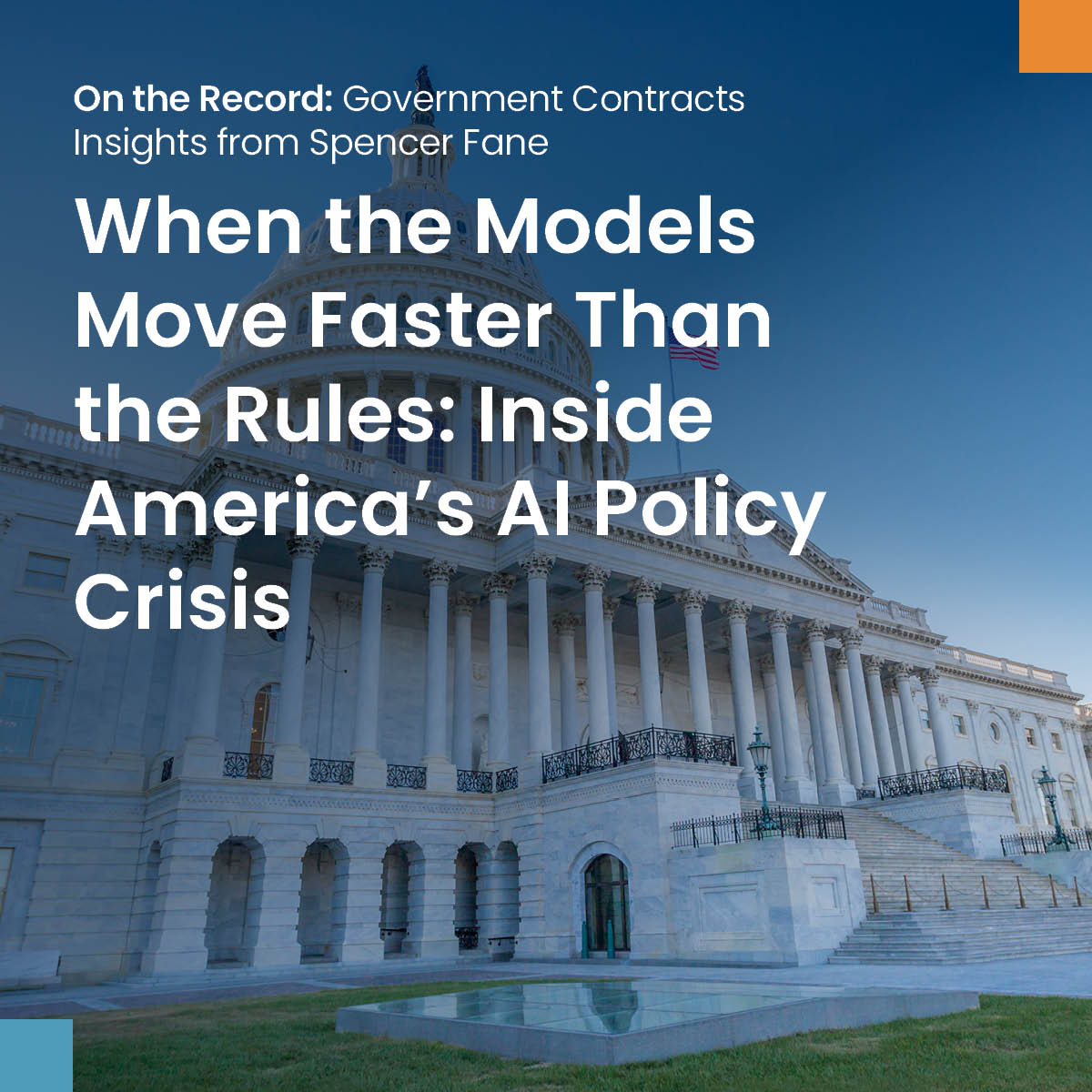
When the Models Move Faster Than the Rules: Inside America’s AI Policy Crisis
In fewer than 90 days this summer, the U.S. government pulled a frontier artificial intelligence (AI) model offline using export control authority, negotiated its return through bilateral commitments, watched another company’s models…
Spencer Fane
Publisher
Aug 31, 2026 at 5:10 PM UTC · 8 分で読める
翻訳中…
The Anthropic Standoff
On June 12, 2026, the Bureau of Industry and Security issued an “is informed” letter – a formal notice that an item is subject to export controls – requiring Anthropic to obtain a license before sharing its Claude Fable 5 or Mythos 5 models with any foreign national, including its own employees. Anthropic had roughly 90 minutes to comply. Unable to verify user nationality in real time, it shut both models down for everyone.
The trigger: Amazon researchers had bypassed Fable 5’s safety guardrails to identify software vulnerabilities and produce exploit code. But Anthropic’s own testing showed that less capable models could replicate the results, and more than 80 cybersecurity executives signed an open letter calling the threat overstated. The government acted nonetheless.
Article Intelligence
Topics
Related Coverage
 Artificial IntelligenceAI Model Rules Are Not Security Controls5時間前 · 1 min read
 PolicyApple Says OpenAI Is Destroying Evidence in Trade Secrets Case2時間前 · 1 min read
 Artificial IntelligenceApple Says Former Engineer Used Stolen Trade Secrets at OpenAI, Taught AI Agent to Run Them2時間前 · 2 min read
Sponsored
Ad
NewsLayerLearn more
NewsLayer Premium
Unlock deeper intelligence.
Ad-free reading, exclusive research, and real-time onchain insights.
Go Premium