

NewsLayer

Install NewsLayer

Get the app experience — one tap from your home screen, instant loads and breaking-news alerts.

NewsLayer.com
LatestDaily BriefMarkets
NewsLayer PulseLIVE₿BTC$86,248+5.69%ΞETH$2,771+3.03%◎SOL$119.2+6.10%✕XRP$1.54+7.74%ÐDOGE$0.1009+13.71%₳ADA$0.2477+7.29%Total Cap$2.92T+5.26%24H Vol$223.6BLayer Index67 Greed
BreakingCoordinated Crypto Hack Drains Fetch.ai and NuNet, Crashes SingularityNET Token 99%6시간 전
Markets
HomeCrypto

Crypto

732 Bytes to Root: Copy Fail Turns the Kernel’s Crypto Subsystem Against Itself

CVE-2026-31431, known as Copy Fail, represents a significant departure from the typical, often unstable, landscape of local privilege escalation (LPE) exploits. Published on April 22, 2026, and subsequently added to the CISA Known…

forkast.news

Publisher

Sep 20, 2026 at 12:39 PM UTC · 2 분 소요
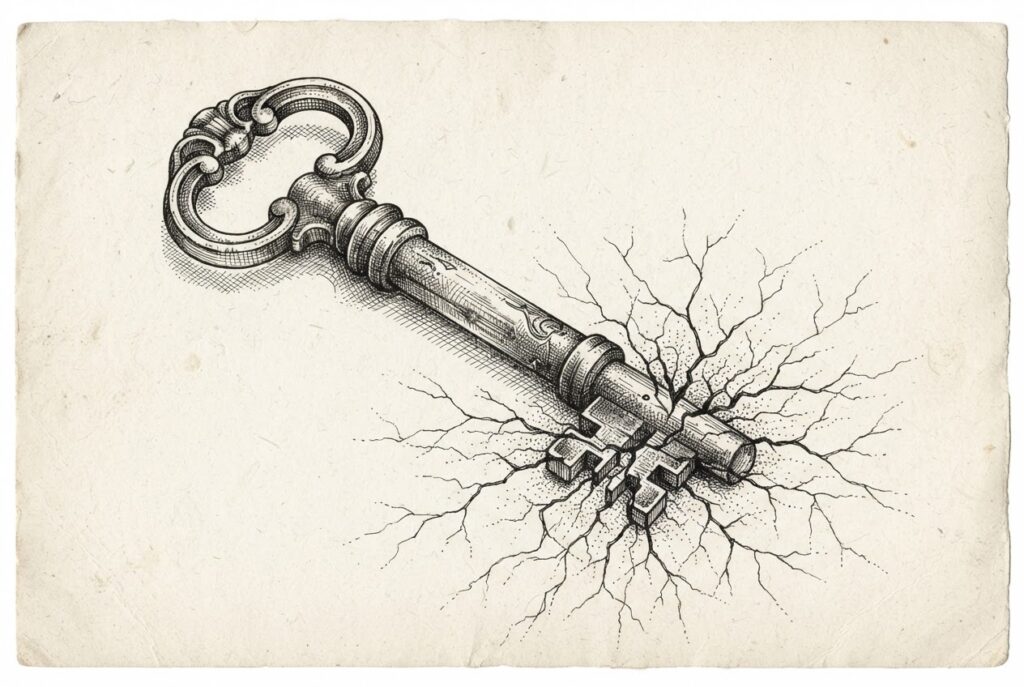
732 Bytes to Root: Copy Fail Turns the Kernel’s Crypto Subsystem Against Itself
NewsLayer editorial artwork
번역 중…

The Deterministic Failure of Kernel Cryptography

CVE-2026-31431, known as Copy Fail, represents a significant departure from the typical, often unstable, landscape of local privilege escalation (LPE) exploits. Published on April 22, 2026, and subsequently added to the CISA Known Exploited Vulnerabilities catalog on May 1, 2026, this vulnerability targets the Linux kernel’s cryptographic subsystem. Specifically, it resides within the algif_aead module of the AF_ALG userspace crypto API.

The vulnerability is classified with a CVSS v3 score of 7.8 and a CVSS v4 score of 8.6. Most notably, it carries an EPSS score of 0.99907, indicating a near-certain probability of exploitation. This is not a theoretical research exercise; it is a reliable, deterministic tool for gaining a root shell from an unprivileged local user account.

Technical Mechanics of Copy Fail

Reach crypto's most engaged readers — advertise mid-article on NewsLayer
Sponsored

Reach crypto's most engaged readers — advertise mid-article on NewsLayer

NewsLayer

Ad

The core of the issue is an incorrect resource transfer between spheres, specifically involving an in-place operation where source and destination buffers can overlap within the kernel’s cryptographic subsystem. This flaw allows for a controlled 4-byte write into the kernel page cache of any readable file. By targeting the in-memory representation of privileged binaries – such as /usr/bin/su – an attacker can achieve privilege escalation without ever modifying the actual file on the disk.

Article Intelligence

Topics

crypto

Sponsored

Ad
House — Advertise on NewsLayer
NewsLayerLearn more

NewsLayer Premium

Unlock deeper intelligence.

Ad-free reading, exclusive research, and real-time onchain insights.

Go Premium
NewsLayer.com

The front page of the onchain economy. Crypto, Web3 and regulation intelligence — live prices, original research and policy tracking in one layer.

Follow on XTelegram

News

  • Latest News
  • The Daily Brief
  • Crypto
  • DeFi
  • Policy
  • Web3
  • Blockchain
  • Explainers

Markets

  • Market News
  • Layer Index
  • Live Charts
  • DeFi Protocols
  • Regulation Tracker
  • Regulation Radar

Company

  • About NewsLayer
  • Advertise
  • PR Publication
  • Become an Author
  • Our Authors
  • Create Account
  • Sign in

Resources

  • Research
  • NewsLayer Originals
  • My Feed
  • Search
  • AI Sector
  • Quantum Sector

NewsLayer Premium

Read the full layer.

Unlock premium intelligence, original research and an ad-free reading experience.

  • Premium Intelligence briefings
  • Ad-free reading experience
  • Members-only research & data
Go Premium

© 2026 NewsLayer.com — The front page of the onchain economy

Privacy Policy·Terms of Service
NewsLayer

Get the signal, not the noise.

Markets, regulation and onchain intelligence in a 5-minute morning read — plus breaking alerts and Layer Index flips as they happen.

The Daily Brief

Breaking alerts

Index flips

Free · No spam · Unsubscribe anytime
