This website uses cookies
We use cookies to personalise content and ads, to provide social media features and to analyse our traffic. We also share information about your use of our site with our social media, advertising and analytics partners who may combine it with other information that you’ve provided to them or that they’ve collected from your use of their services.
Consent Selection
Details
  • Necessary cookies help make a website usable by enabling basic functions like page navigation and access to secure areas of the website. The website cannot function properly without these cookies.
  • Preference cookies enable a website to remember information that changes the way the website behaves or looks, like your preferred language or the region that you are in.
    • We do not use cookies of this type.

  • Statistic cookies help website owners to understand how visitors interact with websites by collecting and reporting information anonymously.
    • We do not use cookies of this type.

  • Marketing cookies are used to track visitors across websites. The intention is to display ads that are relevant and engaging for the individual user and thereby more valuable for publishers and third party advertisers.
    • We do not use cookies of this type.

  • Unclassified cookies are cookies that we are in the process of classifying, together with the providers of individual cookies.
    • __emg_sidPending
      Maximum Storage Duration: 1 dayType: HTTP Cookie
      __emg_vidPending
      Maximum Storage Duration: 1 yearType: HTTP Cookie
      nl-read-countPending
      Maximum Storage Duration: PersistentType: HTML Local Storage
Cookie declaration last updated on 8/12/26 by Cookiebot
[#IABV2_TITLE#]
[#IABV2_BODY_INTRO#]
[#IABV2_BODY_LEGITIMATE_INTEREST_INTRO#]
[#IABV2_BODY_PREFERENCE_INTRO#]
[#IABV2_BODY_PURPOSES_INTRO#]
[#IABV2_BODY_PURPOSES#]
[#IABV2_BODY_FEATURES_INTRO#]
[#IABV2_BODY_FEATURES#]
[#IABV2_BODY_PARTNERS_INTRO#]
[#IABV2_BODY_PARTNERS#]
About
Cookies are small text files that can be used by websites to make a user's experience more efficient.

The law states that we can store cookies on your device if they are strictly necessary for the operation of this site. For all other types of cookies we need your permission.

This site uses different types of cookies. Some cookies are placed by third party services that appear on our pages.

You can at any time change or withdraw your consent from the Cookie Declaration on our website.

Learn more about who we are, how you can contact us and how we process personal data in our Privacy Policy.

Please state your consent ID and date when you contact us regarding your consent.
NewsLayer.com

Arthur Hayes Says Stronger Yen Could Boost Dollar Liquidity, Fuel Bitcoin Rally

게시 2일 전 2 분 소요
Arthur Hayes Says Stronger Yen Could Boost Dollar Liquidity, Fuel Bitcoin Rally

Arthur Hayes Says Stronger Yen Could Boost Dollar Liquidity, Fuel Bitcoin Rally bloomingbit

  • Arthur Hayes said a U.S.-Japan stronger yen policy would expand dollar liquidity and help lift Bitcoin.
  • He said the most favored scenario would be for Japan's Ministry of Finance to use U.S. Treasuries as collateral to tap the FIMA Repo Facility, obtain dollars, sell them and buy yen.
  • He said joint foreign-exchange market intervention by the U.S. and Japan, along with discussion of an expanded FIMA repo limit, points to a policy shift that could become a powerful bullish driver for the digital-asset market.

Forecast Trend Report by Period
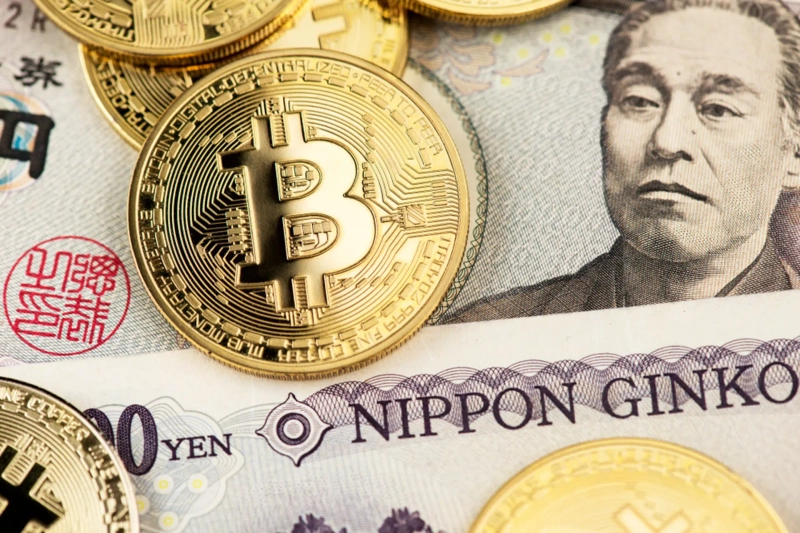
Photo: Shutterstock

BitMEX co-founder Arthur Hayes said coordinated efforts by the U.S. and Japan to strengthen the yen could expand dollar liquidity and help drive a rally in Bitcoin.

In a Substack post titled "Yen-quake" published on August 10, Hayes wrote that Washington and Tokyo had begun working together to lift the yen's value, a process that could sharply increase dollar liquidity.

He outlined three ways to push the yen higher: aggressive rate hikes by the Bank of Japan; a shift by the Japanese government away from overseas assets and toward domestic investment; and a plan under which Japan's Ministry of Finance would use U.S. Treasuries as collateral to access the Federal Reserve's FIMA Repo Facility, obtain dollars, sell them and buy yen.

Hayes said the third option was the scenario most favored by the U.S. and Japan. Under that approach, Japan would pledge its Treasury holdings to the Fed, borrow dollars and sell them in the foreign-exchange market to buy yen. That would strengthen the yen without requiring large-scale sales of U.S. government debt.

He cited recent joint intervention by the U.S. and Japan in the foreign-exchange market, as well as comments by U.S. Treasury Secretary Scott Bessent about expanding the FIMA repo limit, as evidence that the two countries are pursuing a new exchange-rate policy.

"The U.S. Treasury and the Japanese government are moving together to push down the dollar-yen exchange rate," Hayes wrote. "That policy shift will ultimately expand dollar liquidity and become a powerful bullish driver for Bitcoin and the broader digital-asset market."

Attribution

Originally reported by bloomingbit

Get stories like this, daily.

Daily crypto + regulation intelligence, straight to your inbox. Free.

관련 기사