
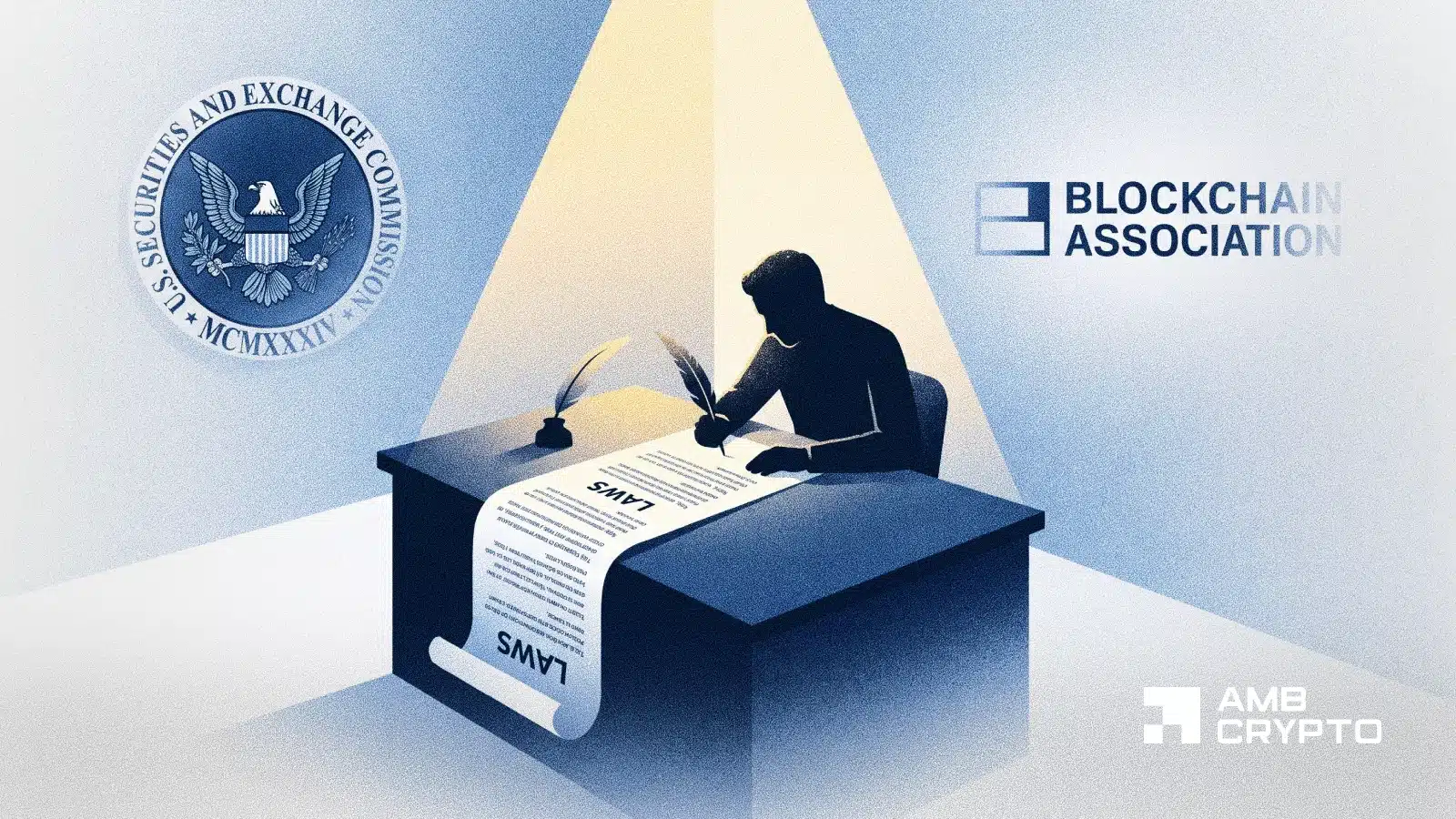
It’s 2026, and the crypto market is not what it was back 2 decades ago in 2005. This time frame forced the U.S. SEC to come up with a proposal to revise the outdated clauses of Regulation NMS—Rules 611 and 610(e). Supporting their proposal on the 17th of August, the Blockchain Association has sent a letter of comment to the SEC.
Blockchain Association backs SEC rewrite to ‘promote U.S. leadership in digital assets’
It’s 2026, and the crypto market is not what it was back 2 decades ago in 2005. This time frame forced the U.S. SEC to come up with a proposal to revise the outdated clauses of Regulation NMS—Rules 611 and 610(e). Supporting their…
AMBCrypto
Publisher
Aug 18, 2026 at 4:00 PM UTC · 2 분 소요
Key Signal
Rule 611 SEC trade-through rule
Last Updated
2달 전
번역 중…
All about the two rules
For those unaware, Rule 611, often referred to as the trade-through rule, created fragmented trading and increased costs by requiring investors to connect to several venues with protected quotes, even if those venues may not provide the best overall execution.
Meanwhile, Rule 610(e), which prohibits locked and crossed markets, used to skew price discovery because displayed prices usually did not accurately reflect actual economic value after fees and rebates.
Hence, the Blockchain Association supports the SEC’s proposal that removing both of these rules could improve competition, liquidity, and price discovery for the upcoming crypto market.
The letter clarified that the two rules have
Led to a myriad of consequences in today’s trading environment, including increased costs and market structure complexity, limiting order handling and execution choice, and contributing to exchange proliferation and fragmentation of trading on equity exchanges
Article Intelligence
Regulation Signal
in progressUpdated 2달 전
SEC Crypto Asset Market Structure RulemakingRelated Coverage
 Web3Grayscale Files With SEC for First US Bittensor ETP Listing7시간 전 · 1 min read
 CryptoAtkins Ties Durable Crypto Rules to Congress as SEC Comment Deadline Nears7시간 전 · 1 min read
 Web3SEC Chair Atkins Reaffirms Push for Comprehensive Crypto Rules7시간 전 · 1 min read
Sponsored
Ad
NewsLayerLearn more
NewsLayer Premium
Unlock deeper intelligence.
Ad-free reading, exclusive research, and real-time onchain insights.
Go Premium