
Santa Barbara에서 열리는 Crypto 2026에 채택된 논문에 따르면, 참가자들에게 정기적으로 신선한 무작위 값을 제공하던 공개 비콘을 교체함으로써 비허가형 합의(permissionless consensus)의 이론적 격차를 해소했다고 합니다.
블록체인, 네트워크 보안 유지를 위한 숨겨진 무작위성 시계 의존성 마침내 해결 가능성 제기
블록체인이 네트워크 보안을 유지하기 위해 의존해 온 숨겨진 무작위성 시계(randomness clock)의 한계를 마침내 극복할 수 있을 것으로 보입니다 CryptoSlate
CryptoSlate
Publisher
Aug 18, 2026 at 3:35 PM UTC · 2 분 소요
Market Impact
BTC+0.58%$83,406
Last Updated
2달 전
문제는 참가자 수의 상한선 외에는 누가 참여하는지 사전에 알지 못하고, 공개 키 기반 구조(PKI)에 의존하지 않고 당사자들이 비잔틴 합의(Byzantine agreement)에 도달할 수 있는 방법입니다. Bitcoin이 이러한 연구 방향에 동기를 부여하는 데 도움이 되었지만, 공개 기록에 따르면 이 새로운 연구는 Bitcoin 업그레이드나 라이브 네트워크를 위한 변경 사항으로 제시되지 않았습니다.
University of Edinburgh research record에는 Damiano Abram, Marshall Ball, Juan Garay, Aggelos Kiayias가 “Permissionless consensus from a common random string”의 저자로 등재되어 있습니다. Crypto 2026은 8월 17일부터 8월 20일까지 열립니다.
비허가형 합의 구조가 비콘을 제거하는 방법
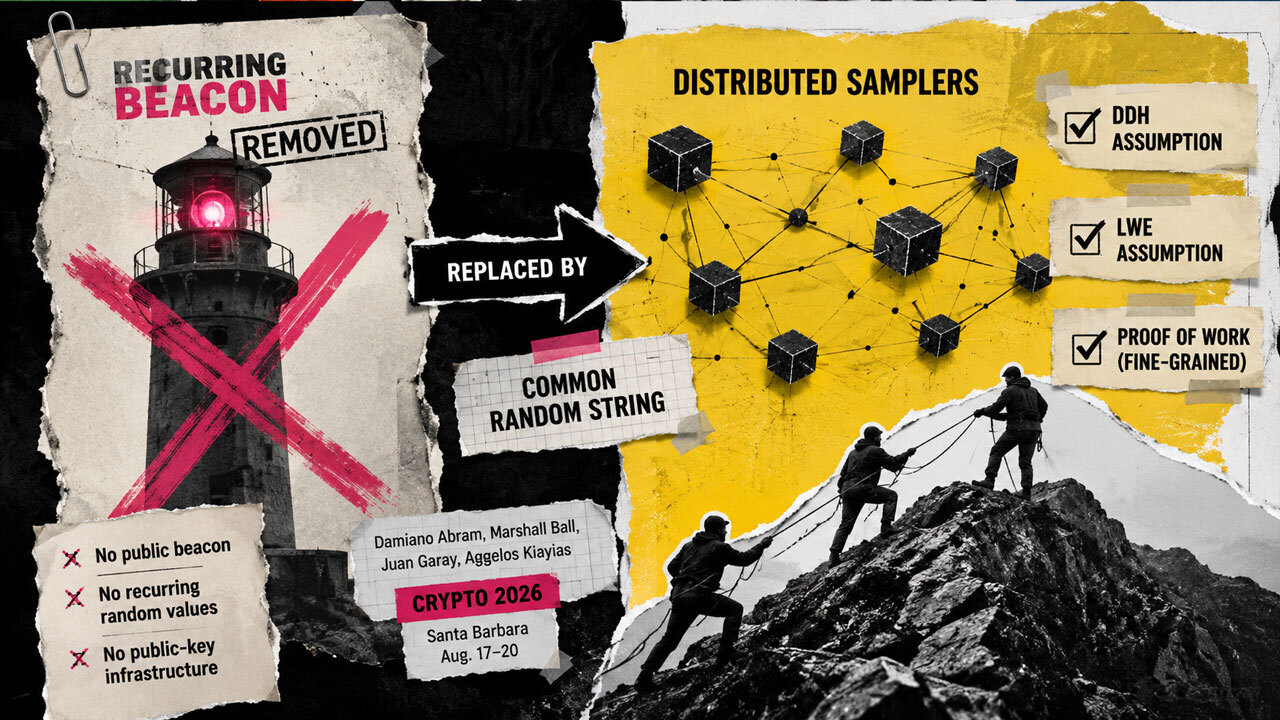
Ball과 공동 연구자들의 2024 construction은 작업 증명(proofs of work)을 미세 조정된 복잡성 가정(fine-grained complexity assumptions)과 결합했습니다. 이 모델은 또한 모든 참가자에게 정기적으로 신선한 공개 무작위 값을 전달하는 비콘에 대한 접근 권한을 부여했습니다.
새 논문은 d-wise 독립 분산 샘플러를 사용하여 해당 반복 서비스를 제거한다고 말합니다. 쉬운 말로 하면, 이 샘플러들은 비콘이 새로운 공개 무작위성을 계속 생성할 필요 없이 동시에 여러 실행을 안전하게 유지하도록 설계되었습니다.
이 비허가형 합의 구조의 경우, 교체 후에도 여전히 공유 설정(shared setup)이 필요합니다. 참가자들은 공통 무작위 문자열(common random string)을 사용하지만, 초록에 따르면 프로토콜이 시작될 때 정확하게 구조화되거나 샘플링될 필요는 없습니다. 샘플러 구조는 또한 결정적 Diffie-Hellman(DDH) 및 오류와 함께 학습하기(LWE) 가정에 의존합니다.
저자들은 이 샘플러들을 미세 조정된 복잡성에 근거한 작업 증명과 결합하여 다중 검증자 작업 서명(multi-verifier signatures of work)을 구축하며, 합의 프로토콜은 이를 모듈식 구성 요소로 사용합니다. 따라서 비콘을 제거하는 것은 암호학적 가정을 없애는 것이 아니라 이전 설계의 의존성 하나를 변경하는 것입니다.
Market Context
Bitcoin
BTC
$83,406
+0.58% (24H)
Market Cap
$1.68T
Circulating Supply
20.1M BTC
24H Volume
$22.3B
24H High
$84,250
Article Intelligence
Topics
Sponsored
Ad
NewsLayerLearn more
NewsLayer Premium
Unlock deeper intelligence.
Ad-free reading, exclusive research, and real-time onchain insights.
Go Premium