This website uses cookies
We use cookies to personalise content and ads, to provide social media features and to analyse our traffic. We also share information about your use of our site with our social media, advertising and analytics partners who may combine it with other information that you’ve provided to them or that they’ve collected from your use of their services.
Consent Selection
Details
  • Necessary cookies help make a website usable by enabling basic functions like page navigation and access to secure areas of the website. The website cannot function properly without these cookies.
  • Preference cookies enable a website to remember information that changes the way the website behaves or looks, like your preferred language or the region that you are in.
    • We do not use cookies of this type.

  • Statistic cookies help website owners to understand how visitors interact with websites by collecting and reporting information anonymously.
    • We do not use cookies of this type.

  • Marketing cookies are used to track visitors across websites. The intention is to display ads that are relevant and engaging for the individual user and thereby more valuable for publishers and third party advertisers.
    • We do not use cookies of this type.

  • Unclassified cookies are cookies that we are in the process of classifying, together with the providers of individual cookies.
    • __emg_sidPending
      Maximum Storage Duration: 1 dayType: HTTP Cookie
      __emg_vidPending
      Maximum Storage Duration: 1 yearType: HTTP Cookie
      nl-read-countPending
      Maximum Storage Duration: PersistentType: HTML Local Storage
Cookie declaration last updated on 8/12/26 by Cookiebot
[#IABV2_TITLE#]
[#IABV2_BODY_INTRO#]
[#IABV2_BODY_LEGITIMATE_INTEREST_INTRO#]
[#IABV2_BODY_PREFERENCE_INTRO#]
[#IABV2_BODY_PURPOSES_INTRO#]
[#IABV2_BODY_PURPOSES#]
[#IABV2_BODY_FEATURES_INTRO#]
[#IABV2_BODY_FEATURES#]
[#IABV2_BODY_PARTNERS_INTRO#]
[#IABV2_BODY_PARTNERS#]
About
Cookies are small text files that can be used by websites to make a user's experience more efficient.

The law states that we can store cookies on your device if they are strictly necessary for the operation of this site. For all other types of cookies we need your permission.

This site uses different types of cookies. Some cookies are placed by third party services that appear on our pages.

You can at any time change or withdraw your consent from the Cookie Declaration on our website.

Learn more about who we are, how you can contact us and how we process personal data in our Privacy Policy.

Please state your consent ID and date when you contact us regarding your consent.
NewsLayer

Install NewsLayer

Get the app experience — one tap from your home screen, instant loads and breaking-news alerts.

NewsLayer.com

Casa CEO Nick Neuman: 233k BTC Moved To Safety After Coldcard Exploit Proves Self-Custody Resilience

작성자 Juan Galt게시 하루 전 2 분 소요
Casa CEO Nick Neuman: 233k BTC Moved To Safety After Coldcard Exploit Proves Self-Custody Resilience

Bitcoin Magazine Casa CEO Nick Neuman: 233k BTC Moved To Safety After Coldcard Exploit Proves Self-Custody Resilience Casa customer data indicates part of the 233k BTC flow came from single-key Ledger and Trezor users shifting to multisig and from multisig users removing Coldcard devices after the July 30 attack waves. This post Casa CEO Nick Neuman: 233k BTC Moved To Safety After Coldcard Exploit Proves Self-Custody Resilience first appeared on Bitcoin Magazine and is written by Juan Galt .

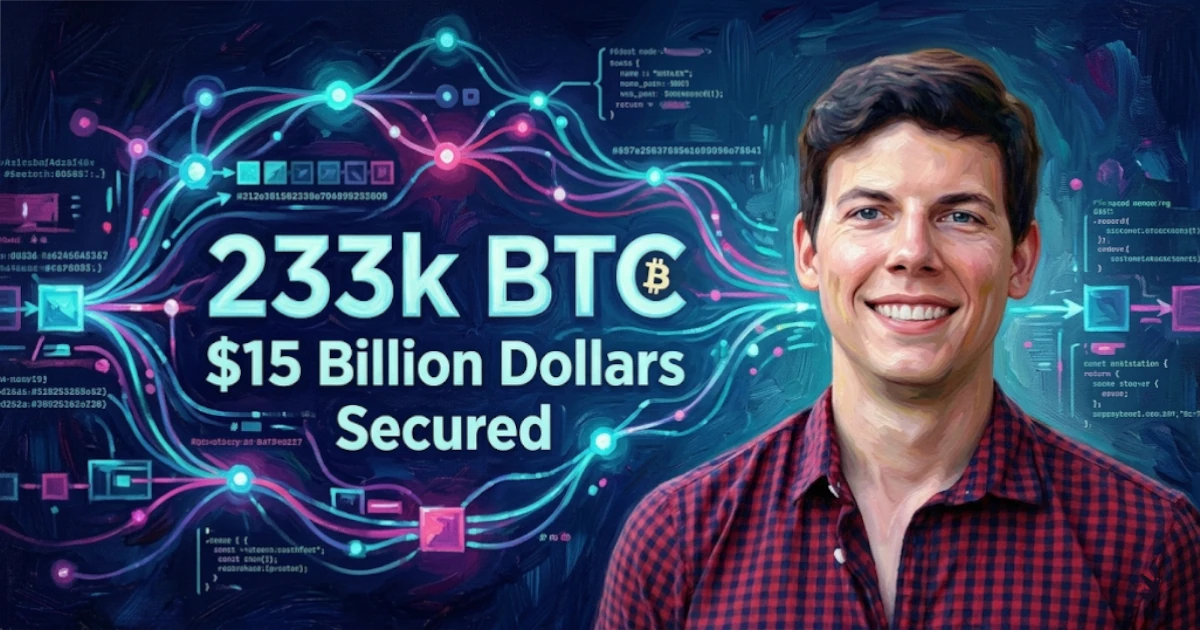
Casa CEO Nick Neuman pointed to onchain data from the recent Coldcard firmware exploit as evidence that self-custody strengthens Bitcoin’s resilience as an asset class.

In an X post on Aug. 9, Neuman cited figures showing that in the days after the Coldcard hack, where approximately 2.1k BTC was stolen, 22k BTC moved to exchanges and 233k BTC left long-term holder wallets in on-chain transactions, according to data by Checkonchain. “The onchain metrics around the Coldcard incident reinforce how important self-custody is to the resilience of Bitcoin as an asset class,” Neuman wrote.

DATA BY CHECKONCHAIN

Galaxy Research has tracked confirmed losses from the Coldcard entropy flaw as low as 1.7k, ranging to more than 2k BTC. The stolen coins are tracked across multiple attack waves beginning July 30, with higher estimates approaching $130 million. The vulnerability stemmed from a March 2021 firmware issue that weakened seed generation on certain Coldcard models.

Neuman said Casa’s own customer conversations indicated that some of the 233k BTC movement reflected holders shifting from non-Coldcard single-key setups (such as Ledger or Trezor) into multisig wallets after reassessing single-key risk. Other flows involved multisig users removing Coldcard devices from their keysets.

“So somewhere between ~10x-100x the amount of bitcoin stolen was moved to safety as people sounded the alarm,” he wrote. “This is a giant flashing neon sign showcasing the resilience that self-custody adds to the network.”

Neuman contrasted the outcome with a hypothetical centralized custodian breach. In that scenario, he argued, the numbers would likely reverse: limited funds might escape while the majority would be lost in a single event. With self-custody, attackers had to target individual wallets, limiting the scale of any single success and giving holders time to react.

“If all that BTC was held at a custodian and the custodian was hacked instead, those numbers would have been flipped,” Neuman stated. “As it was, the thieves had to crack one wallet at a time (and are still going), earning a little BTC each wallet, instead of cracking one wallet and getting a massive payday.”

He concluded that self-custody benefits not only individual holders but the Bitcoin network itself by distributing risk and preserving confidence.

Casa, founded in 2018, provides multi-signature vault solutions aimed at higher-value holders and institutions seeking practical self-custody. Bitcoin Magazine has previously covered the company’s multisig products and Neuman’s views on sovereignty and institutional adoption.

The Coldcard incident has prompted renewed discussion across the industry about single-signature hardware wallets, key generation practices, and the relative merits of multisig and emerging covenant-based vault designs. Onchain data cited by Neuman suggests that, whatever the technical shortcomings of specific devices, the ability of holders to move funds independently limited the systemic impact.

Attribution

Originally reported by Bitcoin Magazine

속보

속보를 놓치지 마세요

빅 뉴스는 빠르게 움직입니다 — X와 텔레그램에서 가장 먼저 받아보세요.

Get stories like this, daily.

Daily crypto + regulation intelligence, straight to your inbox. Free.

관련 기사