
Ethereum Hits 182M Wallets, Tripling Bitcoin Count
Ethereum (ETH) now has 182.74 million non-empty wallets — more than three times the count on the Bitcoin (BTC) network — according to new data from on-chain analytics firm Santiment, underscoring how the smart-contract platform has…
Yellow.com
Publisher
Sep 12, 2026 at 10:34 PM UTC · Updated 4일 전 · 1 분 소요

Key Signal
182.74M Ethereum non-empty wallets
Entities
bitcoin, ethereum
Market Impact
Total MCap+1.66%
Last Updated
4일 전
Ethereum (ETH) now has 182.74 million non-empty wallets — more than three times the count on the Bitcoin (BTC) network — according to new data from on-chain analytics firm Santiment, underscoring how the smart-contract platform has pulled far ahead of every other major blockchain in user adoption.
What Happened: Ethereum Wallet Record
Santiment published a comparison on X showing how the total number of non-empty addresses has changed across eight major cryptocurrencies over the past decade. Every network on the list grew its holder base during that period, but Ethereum's trajectory dwarfed the rest.
ETH surpassed Bitcoin in this metric back in 2019 and then accelerated. The network now sits at an all-time high of 182.74 million holders, while BTC trails at 58.51 million.
The gap widens further down the rankings. Tether (USDT) holds third place with 12.96 million addresses. Dogecoin (DOGE), XRP (XRP), USDC (USDC) and Cardano (ADA) all fall in the 4-to-8 million range.
Why It Matters: DeFi Adoption Edge
Ethereum moved from $2,251.9 to $2,443.02 over the last 30-day period, a gain of 8.5 percent.
Source: Kraken · NewsLayer Markets · Updated 몇 초 후
Ethereum's lead is widely attributed to its smart-contract functionality, which supports a broad ecosystem of decentralized finance applications and tokens — drawing users who interact with multiple protocols rather than simply holding a single asset. That structural advantage has compounded over time, pushing its address count into territory no other chain has reached.
Market Context
Ethereum
ETH
$2,443
+1.62% (24H)
Market Cap
$298.3B
24H Volume
$11.9B
24H High
$2,452
Article Intelligence
Topics
Related Coverage
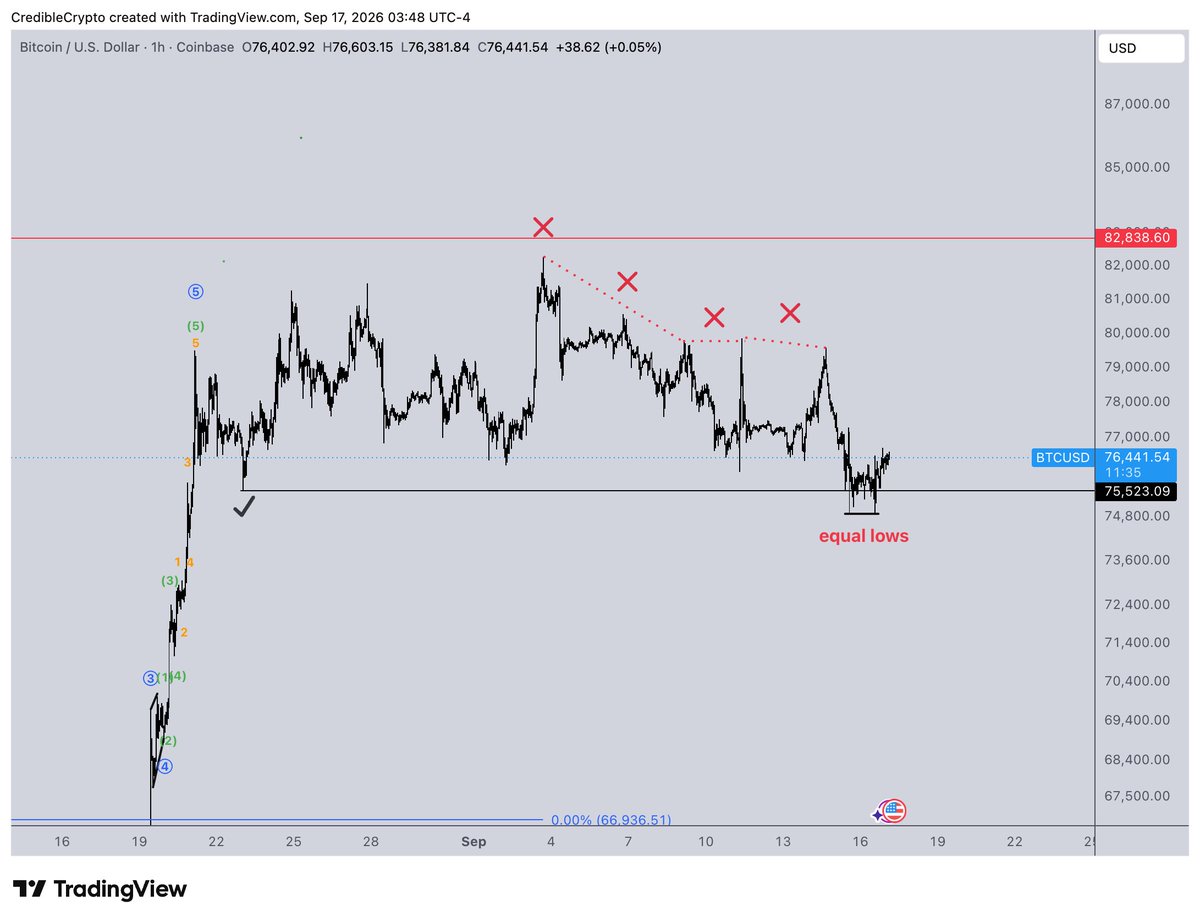 CryptoMeanwhile $Bitcoin (BTC.CC)$ has swept higher TF lows but also left behind equal lows on LTF. Think we may take those if/when we take the triple lows on $Ethereum (ETH.CC)$. Lots of liquidity still remaining on $Bitcoin (BTC.CC)$ to the upside as well and2시간 전 · 1 min read
 CryptoBitcoin (BTC) Reacts to Fed Rate Hike: Analysts Split on What Comes Next한 시간 전 · 2 min read
 MarketsProShares Bitcoin ETF rStock Price Today: Live RBITO to USD Price Chart & Market Data2시간 전 · 1 min read
Sponsored
Ad
NewsLayer Premium
Unlock deeper intelligence.
Ad-free reading, exclusive research, and real-time onchain insights.
Go Premium