
Fidelity Digital Assets says that “markets may appear quiet, but the digital asset landscape isn’t standing still.”
Fidelity Digital Assets Pumps Bitcoin
The article headline states that Fidelity Digital Assets is boosting Bitcoin, according to Crowdfund Insider. The excerpt provides no further details on the nature, scale, timing, or market impact of the reported activity.
Crowdfund Insider
Publisher
Aug 13, 2026 at 4:06 PM UTC · 2 분 소요

Entities
bitcoin
Market Impact
BTC+0.24%$82,711
Last Updated
2달 전
번역 중…
In a post on X, FDA reported that “Spot BTC ETP inflows have reaccelerated” and “30-day realized volatility is hovering near multi-year lows.”
Bitcoin has been stuck in a range of around $60,000 to $65,000, with some observers anticipating a move higher in the coming weeks and months.
“BTC is barely moving, which could be one of the more important signals in the market right now… These periods of compression don’t tend to last forever. The key question for investors isn’t whether volatility returns—but what happens when it does,” stated Fidelity.
Arthur Firstov, Chief Business Officer at Mercuryo, describes the setup as Bitcoin competing with the flow into AI technology, explaining that “AI is increasingly being presented not simply as a technology bet, but as an infrastructure opportunity capable of generating long-term revenues.”
“That creates an interesting challenge for Bitcoin. Some of the companies and investors that helped give crypto institutional credibility are now finding opportunities in AI more compelling. Bitcoin miners are repurposing power capacity and data-center infrastructure for AI and high-performance computing, while institutional investors can increasingly access AI exposure through conventional infrastructure financing structures,” said Firstov.
Market Context
Bitcoin
BTC
$82,711
+0.24% (24H)
Market Cap
$1.66T
24H Volume
$17.6B
24H High
$83,463
Article Intelligence
Key Entities
Topics
Related Coverage
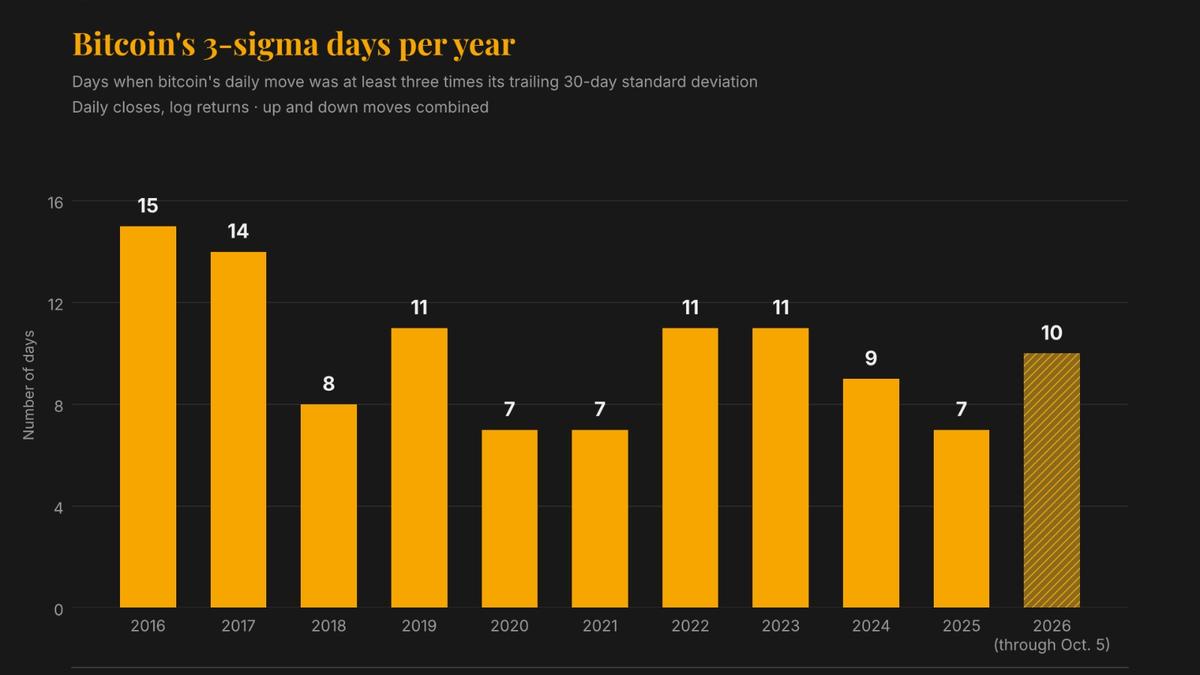 CryptoBitcoin's falling volatility hides a risk that Wall Street models may miss한 시간 전 · 1 min read
 CryptoBitcoin struggles near $86,500 resistance as investors book $1B profits, ETFs see $409M outflows in October.한 시간 전 · 1 min read
 CryptoREGULATION | Thailand Sets Start Date for Bitcoin, Ether ETF Rules with Licensed Custodians한 시간 전 · 1 min read
Sponsored
Ad
NewsLayerLearn more
NewsLayer Premium
Unlock deeper intelligence.
Ad-free reading, exclusive research, and real-time onchain insights.
Go Premium