This website uses cookies
We use cookies to personalise content and ads, to provide social media features and to analyse our traffic. We also share information about your use of our site with our social media, advertising and analytics partners who may combine it with other information that you’ve provided to them or that they’ve collected from your use of their services.
Consent Selection
Details
  • Necessary cookies help make a website usable by enabling basic functions like page navigation and access to secure areas of the website. The website cannot function properly without these cookies.
  • Preference cookies enable a website to remember information that changes the way the website behaves or looks, like your preferred language or the region that you are in.
    • We do not use cookies of this type.

  • Statistic cookies help website owners to understand how visitors interact with websites by collecting and reporting information anonymously.
    • We do not use cookies of this type.

  • Marketing cookies are used to track visitors across websites. The intention is to display ads that are relevant and engaging for the individual user and thereby more valuable for publishers and third party advertisers.
    • We do not use cookies of this type.

  • Unclassified cookies are cookies that we are in the process of classifying, together with the providers of individual cookies.
    • __emg_sidPending
      Maximum Storage Duration: 1 dayType: HTTP Cookie
      __emg_vidPending
      Maximum Storage Duration: 1 yearType: HTTP Cookie
      nl-read-countPending
      Maximum Storage Duration: PersistentType: HTML Local Storage
Cookie declaration last updated on 8/12/26 by Cookiebot
[#IABV2_TITLE#]
[#IABV2_BODY_INTRO#]
[#IABV2_BODY_LEGITIMATE_INTEREST_INTRO#]
[#IABV2_BODY_PREFERENCE_INTRO#]
[#IABV2_BODY_PURPOSES_INTRO#]
[#IABV2_BODY_PURPOSES#]
[#IABV2_BODY_FEATURES_INTRO#]
[#IABV2_BODY_FEATURES#]
[#IABV2_BODY_PARTNERS_INTRO#]
[#IABV2_BODY_PARTNERS#]
About
Cookies are small text files that can be used by websites to make a user's experience more efficient.

The law states that we can store cookies on your device if they are strictly necessary for the operation of this site. For all other types of cookies we need your permission.

This site uses different types of cookies. Some cookies are placed by third party services that appear on our pages.

You can at any time change or withdraw your consent from the Cookie Declaration on our website.

Learn more about who we are, how you can contact us and how we process personal data in our Privacy Policy.

Please state your consent ID and date when you contact us regarding your consent.
NewsLayer.com

Keel Infrastructure Exits Bitcoin Mining for AI: Posts $64 Million Q2 Loss, Sells 1,085 Bitcoin to Overhaul Data Centers

게시 2일 전 5 분 소요
Keel Infrastructure Exits Bitcoin Mining for AI: Posts $64 Million Q2 Loss, Sells 1,085 Bitcoin to Overhaul Data Centers

Keel Infrastructure Exits Bitcoin Mining for AI: Posts $64 Million Q2 Loss, Sells 1,085 Bitcoin to Overhaul Data Centers finance.biggo.com

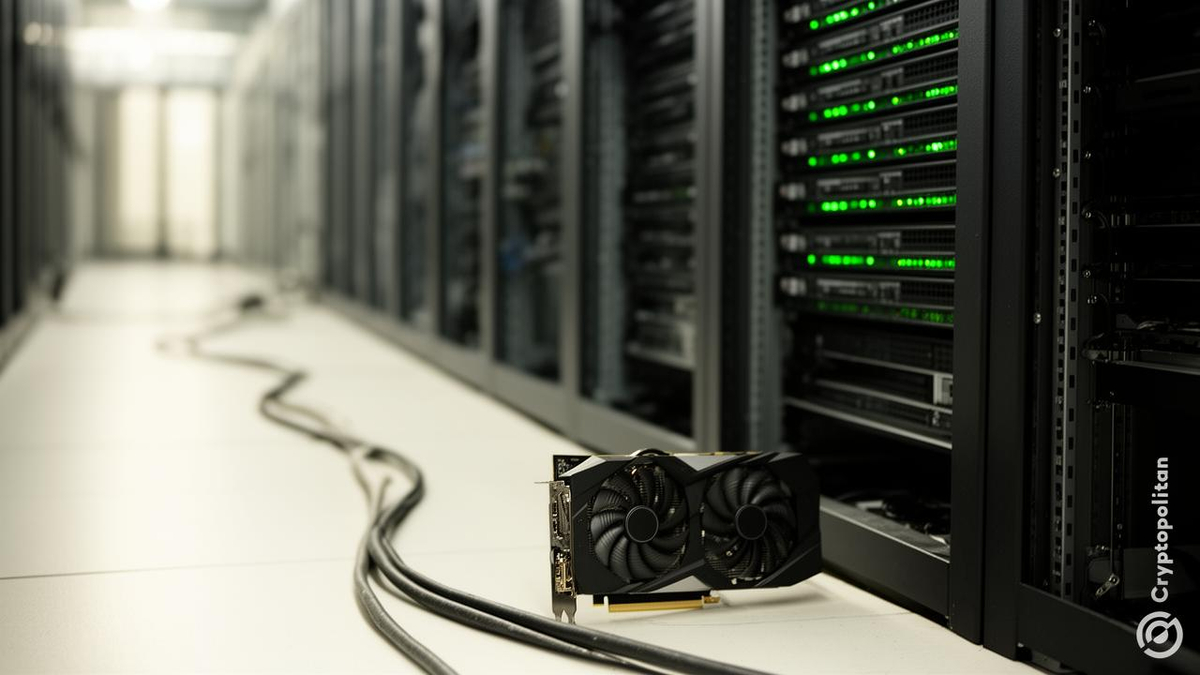
North American digital infrastructure and energy company Keel Infrastructure (KEEL.US) has officially announced a complete exit from its U.S. Bitcoin mining operations, shifting its strategic focus to Artificial Intelligence (AI) and High-Performance Computing (HPC) data centers. The company, formerly known as prominent miner Bitfarms (BITF.US), disclosed alongside its second-quarter earnings the details of its asset disposal, having sold 1,085 Bitcoin for approximately $75 million in cash, and has idled all its U.S. mining sites to pave the way for retrofitting.

This decision marks another major strategic pivot for the crypto mining industry, which is facing the dual pressures of rising costs and shrinking revenues. Keel Infrastructure CEO Ben Gagnon stated bluntly in the earnings release: "Power is the core constraint; everything else derives from that." The company is attempting to leverage its existing power infrastructure and industrial sites to capture the long-term windfall from the explosion in AI computing demand.

Financial Deterioration as the Core Driver of Transformation

According to Keel Infrastructure's second-quarter earnings report released on August 10, the company's financial condition deteriorated sharply over the past year, becoming the key catalyst for this strategic gamble. Data shows that Keel Infrastructure's revenue from continuing operations was just $30 million, a 50% plunge compared to the same period last year. The halving of revenue was primarily attributed to relatively weak Bitcoin prices and the company's closure of its mining facility in Moses Lake, Washington, in April.

The profitability picture was even more dramatically reversed. In the same period last year, Keel Infrastructure posted an operating profit of $11 million from continuing operations, but this quarter swung to an operating loss of $141 million, which included $84 million in non-cash depreciation expenses. Ultimately, the net loss attributable to continuing operations reached $64 million, or a loss of $0.11 per share, compared to a profit of $13 million in the prior-year period. Adjusted EBITDA also turned negative, coming in at a loss of $24 million.

To fund the transformation and alleviate cash flow pressure, Keel Infrastructure sold 1,085 Bitcoin through market operations between April 1 and August 7, generating cumulative cash inflows of approximately $75 million. Following the sale, its balance sheet still holds 1,861 Bitcoin as a reserve, with the unencumbered portion valued at approximately $121 million as of August 7.

The Path and Challenges from Mine to AI Computing Hub

Keel Infrastructure's transformation is not a simple downsizing but a complete portfolio restructuring. The company has decommissioned all its U.S. Bitcoin mining fleets to make room for the construction of HPC centers. CEO Ben Gagnon stated that the company began structuring its operations around the "power is core" philosophy 18 months ago, and its three highest-priority sites are now close to obtaining full permits, with each site in negotiations with potential tenants.

CFO Jonathan Mir emphasized that Keel Infrastructure "is in a better capital position today than at any point in the company's history." The liquidity he referred to includes approximately $698 million in unrestricted cash and the aforementioned Bitcoin position worth about $121 million. This substantial capital is backed by the company's successful completion of a $458 million convertible bond issuance in the second quarter.

However, this transformation path is not without obstacles. Industry analysts point out that retrofitting Bitcoin mines into AI computing centers requires significant capital investment and a high degree of technical expertise, posing a severe test to a company's execution capabilities. While AI hosting services can provide more stable and predictable long-term revenue compared to the highly volatile cryptocurrency market, the risks and costs of technological migration cannot be ignored. Keel Infrastructure's stock price fell over 11% on the day of the earnings release, closing at approximately $3.45, indicating that the market is still digesting the uncertainty brought by this major change.

Industry Trend: Miners Collectively Seek an AI Path Forward

Keel Infrastructure's decision is not an isolated case but reflects an increasingly prominent industry trend. As Bitcoin mining profit margins are squeezed by rising energy costs, increasing network difficulty, and Bitcoin halving events, publicly listed mining companies are collectively turning their attention to the AI and HPC sectors.

According to a report by CoinShares, the weighted average cash cost to mine one Bitcoin for listed miners reached approximately $79,995 in the fourth quarter of 2025, while Bitcoin prices ranged between $68,000 and $70,000 during that period, meaning miners lost nearly $19,000 on average for every coin produced. Against this backdrop, the collective Bitcoin reserves of public miners have decreased by over 15,000 coins from their peak.

Meanwhile, the total value of announced AI and HPC contracts across the listed mining sector exceeds $70 billion. Several players have taken concrete actions:

  • Bitdeer reduced its Bitcoin holdings to zero in February.
  • Empery Digital sold 1,400 Bitcoin in July.
  • MARA Holdings agreed to acquire a 505 MW natural gas power plant in Ohio for $1.5 billion.
  • IREN signed a five-year, $3.4 billion cloud services contract with Nvidia, utilizing its Blackwell GPUs.
  • Core Scientific, TeraWulf, Hut 8, and Cipher Digital have also secured multi-billion dollar AI or HPC agreements.

Keel Infrastructure itself also disclosed initial progress on its transformation, including obtaining zoning approvals at its Panther Creek and Sharon sites, appointing Ganesh Aiyer as President, receiving the first Vertiv modules at Moses Lake, and agreeing to take over 96 MW of capacity at a data center in Sherbrooke, Quebec.

Investor Perspective: Risks and Opportunities Coexist

For investors, Keel Infrastructure's strategic pivot represents a re-evaluation of the company's value. The immediate cash flow generated from Bitcoin sales enhances the company's financial stability, while the shift to AI operations could attract institutional attention from the traditional tech sector. At the same time, the retained holdings of 1,861 Bitcoin allow it to still benefit from potential upside in cryptocurrency prices, forming a unique risk-hedging structure.

However, the business transformation also adds complexity to asset valuation. Market observers are closely watching whether Keel Infrastructure can establish a sustainable revenue model in the highly competitive AI data center market. If the company can successfully pioneer this transition path from mine to computing center, it will provide an important precedent for an entire industry seeking to transcend the crypto cycle; conversely, it could also expose liquidity traps and execution risks inherent in the transformation process. This strategic gamble, involving hundreds of millions of dollars in capital reallocation, will undoubtedly serve as a key case study for observing the reshaping of the digital infrastructure landscape.

Attribution

Originally reported by finance.biggo.com

Get stories like this, daily.

Daily crypto + regulation intelligence, straight to your inbox. Free.

관련 기사