

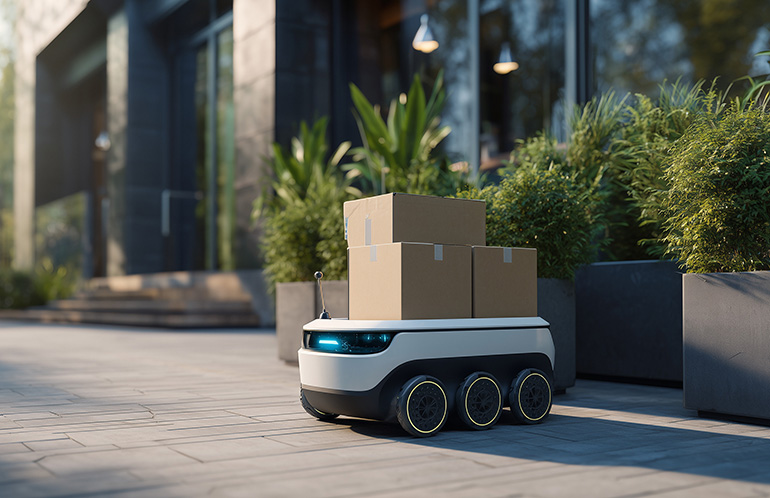
From smart cities to cryptocurrency, economic factors will determine how robot fleets scale. Source: Lmi Stock Studio AI, via Adobe Stock
Robonomics on the threshold: Economic autonomy, smart cities, and crypto wallets for humanoids
From smart cities to cryptocurrency, economic factors will determine how robot fleets scale. Source: Lmi Stock Studio AI, via Adobe Stock
The Robot Report
Publisher
Sep 28, 2026 at 8:01 PM UTC · 6 분 소요
Capital itself is a sufficient form of robot governance, hypothesized analysts at the AI Robotics Alliance of America, or AIRA, Summit in June. The essence is in the comprehensive reduction of transaction costs by granting machines autonomy, they suggested.
But as soon as we move from theory to practice, we hit a wall of fundamental questions, noted analyst Sergey Lonshakov. In Germany, for example, specialists still debate what cyber-physical systems actually are, since the academic definition of a “robot” remains vague.
Coase rule still applies to the cyber-physical age
Economics abhors a vacuum. We live in a paradigm described by Ronald Coase: A company exists as long as it’s cheaper to produce internally than to buy components on the market.
If we apply this principle to robotic arms or swarms of drones, robotics startups emerge. As soon as such a system independently enters the market, we get agency. And there is no more effective indicator than price.
But what happens when what enters the market is not a factory machine, but a humanoid that lives in your home?
Article Intelligence
Sponsored
Ad
NewsLayerLearn more
NewsLayer Premium
Unlock deeper intelligence.
Ad-free reading, exclusive research, and real-time onchain insights.
Go Premium