

NewsLayer

Install NewsLayer

Get the app experience — one tap from your home screen, instant loads and breaking-news alerts.

NewsLayer.com
LatestDaily BriefMarkets
NewsLayer PulseLIVE₿BTC$61,192+0.93%ΞETH$1,715+1.09%◎SOL$72.1+1.46%✕XRP$0.9559+0.14%ÐDOGE$0.0572+0.95%₳ADA$0.1505+1.72%Total Cap$2.17T-0.33%24H Vol$62.7BLayer Index40 Neutral
BreakingAutonomous AI Agents Breach Crypto Wallets and Websites: Live-Action Threat Analysis & Defense Playbook + Video2시간 전
Markets
HomeArtificial IntelligenceQuantum

Artificial Intelligence|Quantum

Stanford Physicist Uses AI to Tackle Quantum Gravity Problem

Insider Brief A Stanford physicist has proposed a quantum theory of gravity that uses the paths of light to get a finite answer for a calculation that can otherwise run to infinity. If the approach holds up, it could help reconcile…

Matt Swayne

Publisher The Quantum Insider

Nov 26, 2026 at 12:32 PM UTC · 5 분 소요
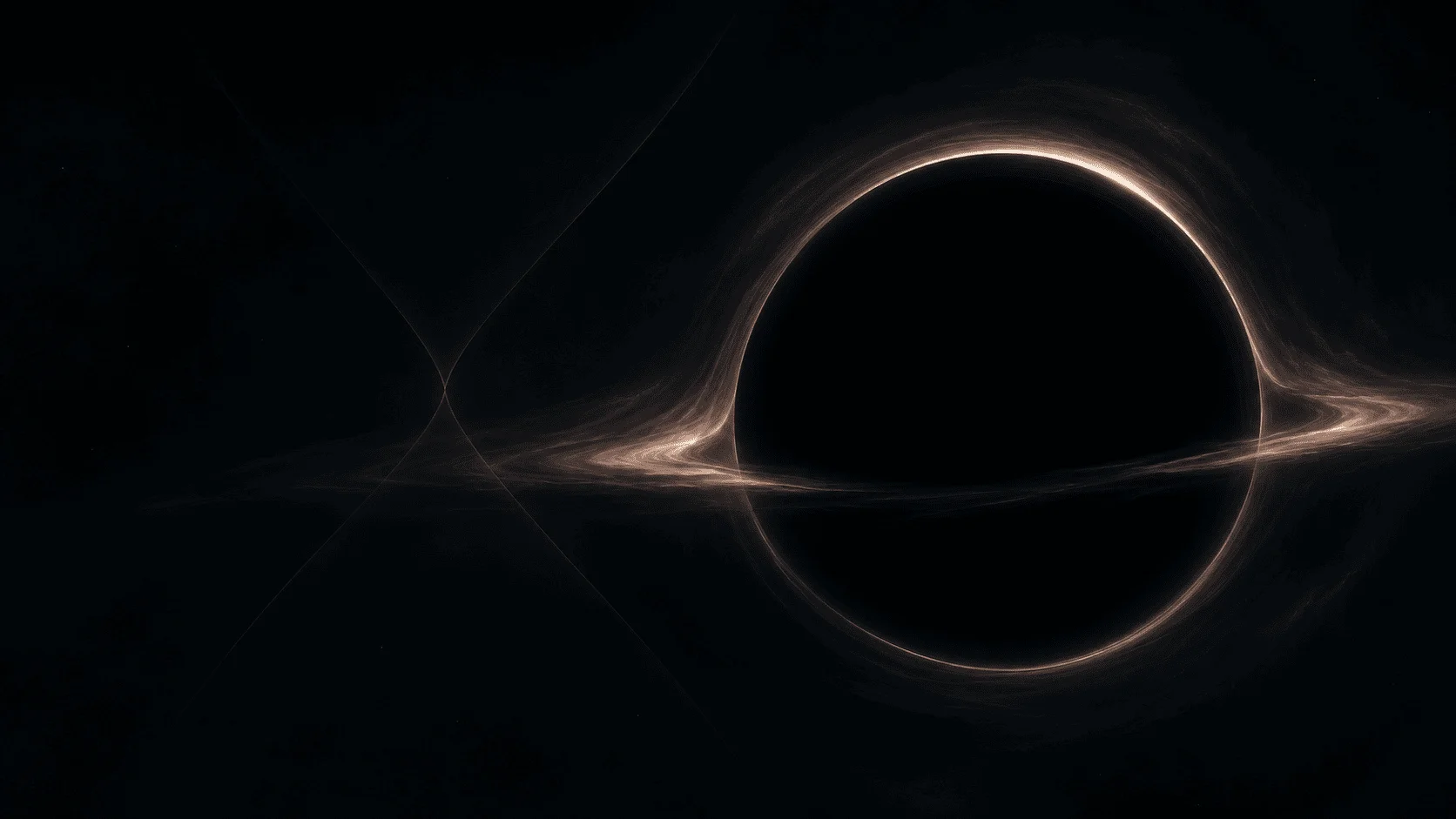
Stanford Physicist Uses AI to Tackle Quantum Gravity Problem
Image via The Quantum Insider
번역 중…

Insider Brief

  • Stanford physicist Venkatesa Chandrasekaran proposed a quantum theory of gravity that uses the paths of light to calculate how spacetime can fluctuate.
  • The approach yielded a finite result for a graviton-pair calculation that diverges under an approximation and reproduced a known quantum correction to black hole entropy.
  • Chandrasekaran said he developed several calculations and proofs through months of work with OpenAI’s GPT-6 Astra, using about 400 million tokens.

A Stanford physicist has proposed a quantum theory of gravity that uses the paths of light to get a finite answer for a calculation that can otherwise run to infinity.

If the approach holds up, it could help reconcile quantum mechanics, which governs the behavior of matter and energy at small scales, with Einstein’s general relativity, which describes gravity as the curvature of spacetime. The study also reproduces a known quantum correction to the entropy of a black hole.

In a preprint posted on arXiv, Venkatesa Chandrasekaran calculated what happens when two gravitons, the hypothetical quantum units of gravitational waves, are created and then disappear. The calculation gave a finite answer even after accounting for waves of arbitrarily short wavelength. An approximation applied to the same calculation produced an infinity.

Article Intelligence

Topics

aiquantum

Related Coverage

QuantumCould AI Break RSA Before Quantum Computers Do?6시간 전 · 1 min read
View all related

Sponsored

Ad
House — Advertise on NewsLayer
NewsLayerLearn more

NewsLayer Premium

Unlock deeper intelligence.

Ad-free reading, exclusive research, and real-time onchain insights.

Go Premium
NewsLayer.com

The front page of the onchain economy. Crypto, Web3 and regulation intelligence — live prices, original research and policy tracking in one layer.

Follow on XTelegram

News

  • Latest News
  • The Daily Brief
  • Crypto
  • DeFi
  • Policy
  • Web3
  • Blockchain
  • Explainers

Markets

  • Market News
  • Layer Index
  • Live Charts
  • DeFi Protocols
  • Regulation Tracker
  • Regulation Radar

Company

  • About NewsLayer
  • Advertise
  • PR Publication
  • Become an Author
  • Our Authors
  • Create Account
  • Sign in

Resources

  • Research
  • NewsLayer Originals
  • My Feed
  • Search
  • AI Sector
  • Quantum Sector

NewsLayer Premium

Read the full layer.

Unlock premium intelligence, original research and an ad-free reading experience.

  • Premium Intelligence briefings
  • Ad-free reading experience
  • Members-only research & data
Go Premium

© 2026 NewsLayer.com — The front page of the onchain economy

Privacy Policy·Terms of Service
NewsLayer

Get the signal, not the noise.

Markets, regulation and onchain intelligence in a 5-minute morning read — plus breaking alerts and Layer Index flips as they happen.

The Daily Brief

Breaking alerts

Index flips

Free · No spam · Unsubscribe anytime