
The Faceless War: How Artificial Intelligence Rewrote the Map of Power
A small number of private technology firms now build the infrastructure on which both military power and the public’s perception of reality depend. Drawing on a 2025 wargaming experiment at the U.S. Army Command and General Staff…
smallwarsjournal.com
Publisher
Sep 1, 2026 at 6:05 AM UTC · Updated 8시간 전 · 8 분 소요
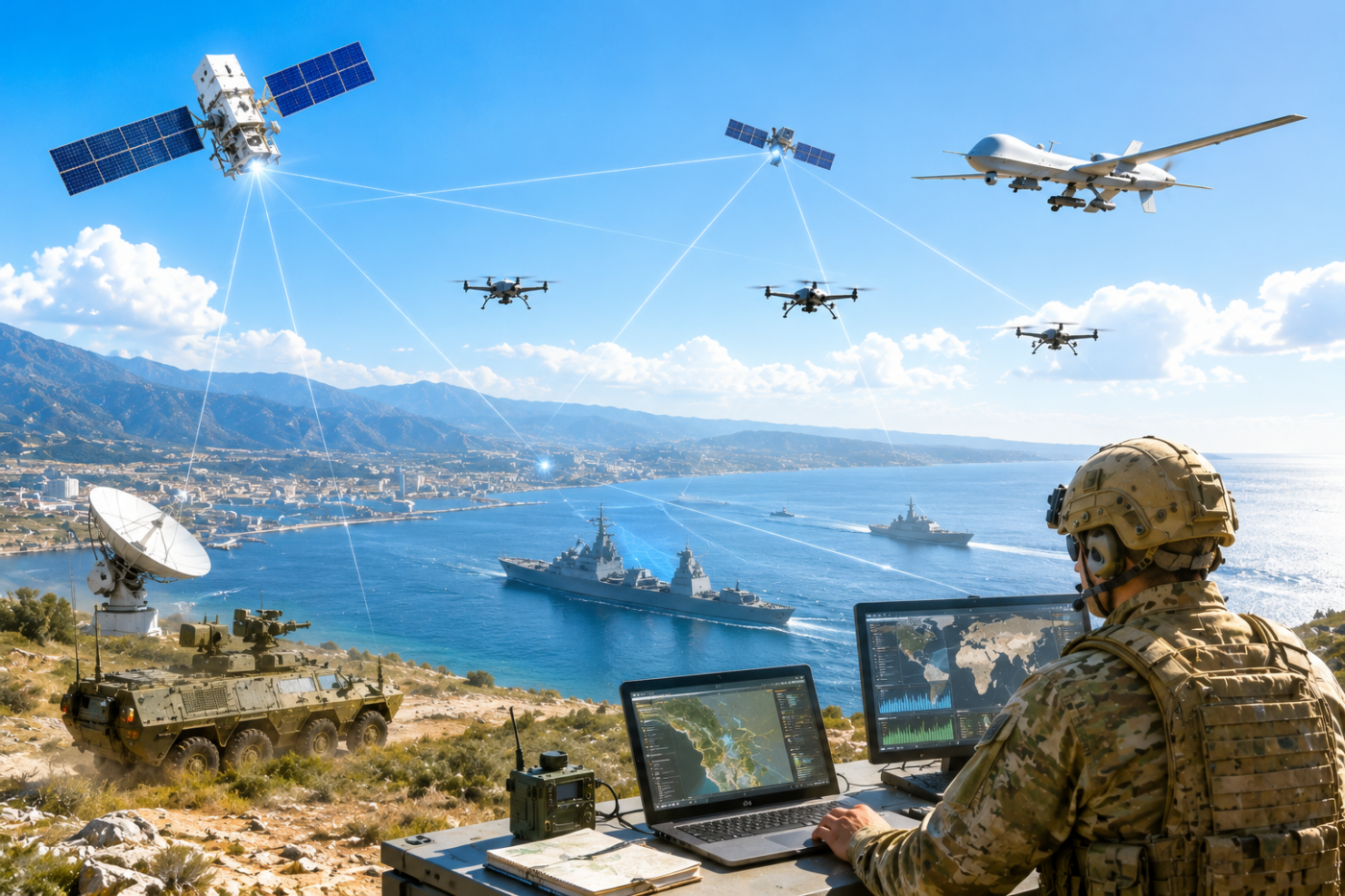
A small number of private technology firms now build the infrastructure on which both military power and the public’s perception of reality depend. Drawing on a 2025 wargaming experiment at the U.S. Army Command and General Staff College and on the documented information war of the June 2025 Israel-Iran conflict, this essay argues that simulated combat and cognitive warfare increasingly depend on the same technological ecosystem — shared firms, infrastructure, and supply chains — with direct implications for doctrine, training, and mid-sized powers such as Brazil.
A Hegemony Written in Code
Power has historically followed infrastructure: control of sea lanes defined the nineteenth century, control of oil and industry defined the twentieth. In this century, the decisive axis has shifted to digital infrastructure and artificial intelligence (AI). This is not a future possibility; it is a present condition. Whoever controls information systems can shape more than data: that control increasingly influences perception, behavior, and how populations interpret events. Every advanced AI model depends on a physical layer of semiconductors, data centers, and satellite links, which makes that physical layer, rather than any single algorithm, the true strategic terrain. Washington has increasingly treated China’s technological rise as a hegemonic challenge rather than mere commercial competition, since military capability, industrial autonomy, and normative leadership now converge on control of computing, data, and networks. Between the United States and China — and between the private companies that supply both — lies the central contest of contemporary geopolitics: a competition over semiconductors, advanced computing, and autonomous systems in which the winner sets the terms for every nation that depends on that infrastructure.
Article Intelligence
Topics
Sponsored
Ad
NewsLayerLearn more
NewsLayer Premium
Unlock deeper intelligence.
Ad-free reading, exclusive research, and real-time onchain insights.
Go Premium