

In the global race to build bigger and better quantum computers, researchers have taken a step forward. A new machine called Helios is a radically different system compared to other quantum computers.
The global race to make a practical quantum computer just took a big leap forward
In the global race to build bigger and better quantum computers, researchers have taken a step forward. A new machine called Helios is a radically different system compared to other quantum computers.
The Conversation
Publisher
Aug 18, 2026 at 12:53 PM UTC · 4 분 소요
Key Signal
98 qubits Helios qubit count
Last Updated
2달 전
번역 중…
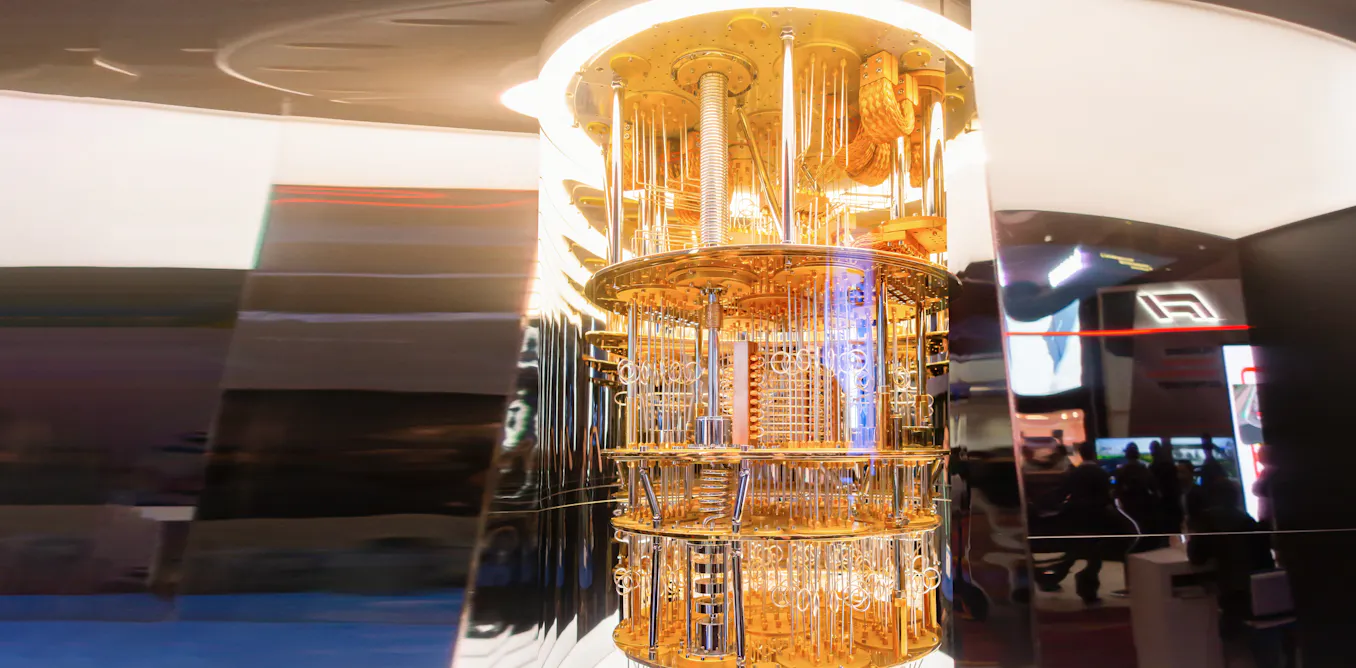
Quantum computers harness the power of quantum mechanics, the laws that govern how physics operates at atomic and sub-atomic scales. Among various designs for such machines, Helios is a trapped-ion quantum computer, which means it uses charged atoms suspended in free space using electromagnetic fields.
It operates using 98 qubits – the units of information that a quantum computer uses to process data. This number of qubits makes it the largest trapped-ion quantum computer built so far. Quantinuum, the company behind the device, which is based in Cambridge, UK and Broomfield, Colorado, demonstrated earlier machines operating on 32 qubits in 2023 and 56 qubits in 2025.
Helios and its predecessors use an architecture (or operational structure) with separate regions for storing and processing quantum information. The architecture is called a QCCD (quantum charge-coupled device) and was invented in 2002. This is akin to the architecture of classical computers that have a memory for storage (hard disk drives, solid state drives) and a separate processor (CPU, GPU).
Article Intelligence
Topics
Related Coverage
View all related
Sponsored
Ad
NewsLayerLearn more
NewsLayer Premium
Unlock deeper intelligence.
Ad-free reading, exclusive research, and real-time onchain insights.
Go Premium