


Resolution No. 05/2025/NQ-CP, issued by the Government on September 9, 2025, marks a historical milestone for establishing Vietnam's crypto asset market and laying a policy foundation to open new capital flows for the economy.
The resolution establishes a strategic rule requiring crypto assets to be backed by real-world assets, excluding securities and fiat currency. Furthermore, these crypto assets can only be offered and issued to foreign investors.
International investors view this as a safe measure that establishes a cross-border capital flow channel, allowing Vietnamese enterprises to tokenize projects and products to distribute to global investors.
Vietnam’s real economy is increasingly defined by its dynamism and scale, with capital-intensive sectors such as real estate, renewable energy, infrastructure, logistics, and agriculture driving demand for investment. These industries, marked by rapid growth and structural transformation, present fertile ground for tokenization testing, offering a potential pathway to unlock liquidity, improve transparency, and broaden access to capital markets.
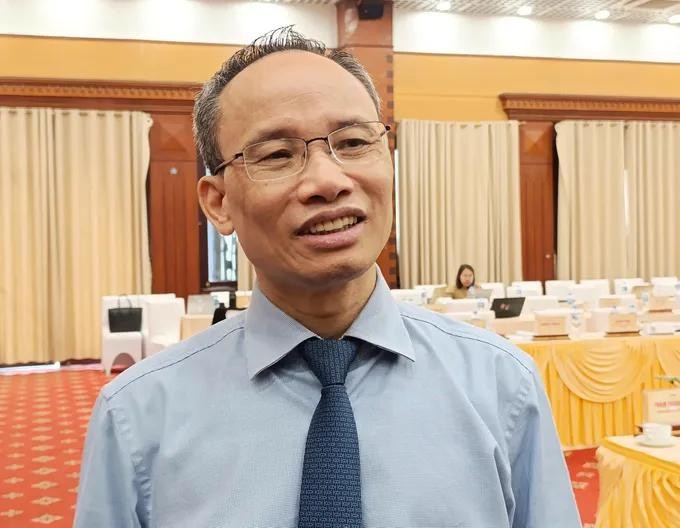
Tran Quy, Director of the Vietnam Institute for Digital Economy Development and Chairman of MetaDAP Digital Asset Platform Company, noted that this approach links technology to the real economy, curtains "empty" tokens, and provides a basis for valuation, information disclosure, and auditing. It opens opportunities to digitize real estate, commodities, and agricultural products. Excluding securities and fiat money minimizes legal overlap with banking and securities laws while protecting monetary sovereignty. Restricting early offerings to foreign investors also mitigates domestic retail speculation risks.
Forecasts from Boston Consulting Group (BCG) indicate that the global tokenized real-world asset market could exceed US$14,000 billion by 2030, presenting a substantial opportunity for Vietnam.
Nguyen Thi Ngoc Quynh, Vietnam Country Director of Republic and member of the Onchain Economic Alliance (GOE Alliance), noted that major markets such as South Korea, Japan, and the United States maintain strict regulations for managing crypto assets.
Through Resolution 05, Vietnam has chosen transparency and investor protection during the market's initial formation. Issuing crypto assets backed by real-world assets provides access to foreign capital markets, addressing capital shortages across various domestic business sectors.
State agencies establish strict safeguards to protect investors

Vietnam currently lacks a licensed crypto asset exchange. Speaking at the Vietnam Real-World Asset Tokenization Conference 2026, To Tran Hoa, Standing Deputy Head of the Crypto Asset Trading Market Management Board under the State Securities Commission, stated that the Ministry of Finance, the Ministry of Public Security, and the State Bank of Vietnam agreed in principle to permit five businesses that passed initial evaluations to deploy exchanges.
In the subsequent phase, these enterprises must obtain Level 4 information system security certificates from the Ministry of Public Security and complete a minimum capital contribution of VND10,000 billion. These stringent requirements act as a shield to protect investors in a high-risk market.
Since September 2025, Vietnam has issued multiple key documents to refine the legal framework for the crypto market. Most recently, on July 16, the Government issued Decree 284/2026/ND-CP detailing administrative penalties in the crypto asset sector.
Investors have expressed interest in Clause 1, Article 9 of this decree, which imposes fines between VND30 million and VND50 million on domestic investors trading crypto assets outside of service providers licensed by the Ministry of Finance under Clause 2, Article 7 of Resolution 05.
Tran Quy emphasized that the provision does not mean individuals trading on unlicensed platforms will be fined immediately on that date. Resolution 05 states that domestic investors are required to trade through licensed providers six months after the first provider is officially licensed by the Ministry of Finance. Only when this obligation arises will Article 9 of Decree 284 take effect.
Regarding investor protection, Nguyen The Minh, Investment Banking Director at An Binh Securities Company, noted that licensed exchanges will enable Vietnamese investors to trade and invest in crypto assets officially, transparently, and safely within the domestic market.