
Best Crypto Tax Software in 2026: 8 Platforms Compared
A centralized-exchange investor, an active DeFi wallet and a trading bot can generate very different reporting problems even when their portfolio values are similar.
Coin Bureau
Publisher
Sep 1, 2026 at 6:44 AM UTC · Updated há 6 horas · 10 min de leitura
Traduzindo…
A centralized-exchange investor, an active DeFi wallet and a trading bot can generate very different reporting problems even when their portfolio values are similar.
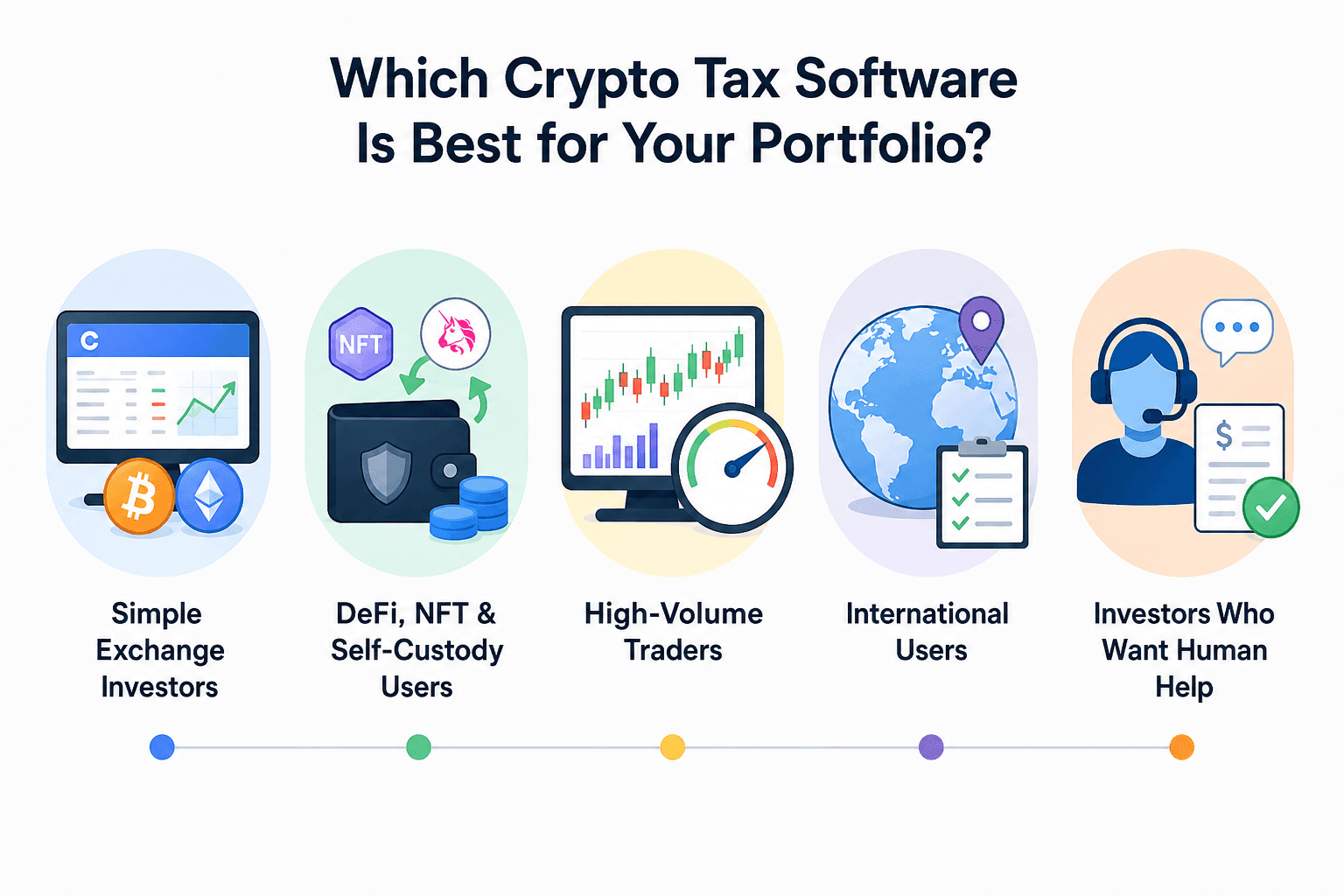
Matching Crypto Tax Software to Different Portfolio Types
Simple Exchange Investors
Users primarily buying and selling through Coinbase, Kraken or another centralized exchange generally need reliable API or CSV imports, correct transfer matching, straightforward capital-gains calculations and Form 8949 output.
CoinTracking, Koinly and CoinTracker all fit this profile. CoinTracking combines the tax workflow with longer-term portfolio reporting, Koinly emphasizes guided reconciliation, and CoinTracker has particularly close connections with the Coinbase and U.S. filing ecosystem.
DeFi, NFT and Self-Custody Users
Onchain portfolios need more than wallet-address importing. The software must recognize transfers, smart-contract interactions and activity involving DEXs, liquidity pools, bridges, staking and NFTs.
Ethereum and Solana wallets can contain hundreds or thousands of transactions that do not resemble conventional buys and sells.
Awaken, Summ and CoinTracking are the main candidates from this comparison. Awaken provides granular controls around bridges, LSTs and perpetual futures, Summ combines automated onchain importing with higher transaction tiers, while CoinTracking brings DeFi activity into a broader portfolio and tax-reporting system.
Market Context
Ethereum
ETH
$2,439
+0.00% (24H)
Market Cap
$295.2B
24H Volume
$9.2B
24H High
$2,489
Article Intelligence
Topics
Related Coverage
 Crypto4 Major Countries Start Their Crypto Regulations This Weekhá uma hora · 2 min read
 CryptoRussia’s Crypto Law Goes LIVE Today, Licensed Trading Beginshá uma hora · 3 min read
 CryptoLazarus Group-linked addresses move $30M through Hyperliquidhá 2 horas · 1 min read
Sponsored
Ad
NewsLayerLearn more
NewsLayer Premium
Unlock deeper intelligence.
Ad-free reading, exclusive research, and real-time onchain insights.
Go Premium