logo
  • Consent
  • Details
  • [#IABV2SETTINGS#]
  • About
This website uses cookies
We use cookies to personalise content and ads, to provide social media features and to analyse our traffic. We also share information about your use of our site with our social media, advertising and analytics partners who may combine it with other information that you’ve provided to them or that they’ve collected from your use of their services.
[#GPC_BANNER_ICON#]
[#GPC_TOAST_TEXT#]
Consent Selection
Show details
Details
  • Necessary cookies help make a website usable by enabling basic functions like page navigation and access to secure areas of the website. The website cannot function properly without these cookies.
    • Pexels
      1
      Learn more about this provideropens in a new window
      _cfuvidThis cookie is a part of the services provided by Cloudflare - Including load-balancing, deliverance of website content and serving DNS connection for website operators.
      Maximum Storage Duration: SessionType: HTTP Cookie
    • ambcrypto.com
      benzinga.com
      bitcoinmagazine.com
      coingape.com
      decrypt.co
      image.coinpedia.org
      pexels.com
      7
      __cf_bm [x7]This cookie is used to distinguish between humans and bots. This is beneficial for the website, in order to make valid reports on the use of their website.
      Maximum Storage Duration: 1 dayType: HTTP Cookie
    • newslayer.com
      1
      CookieConsentStores the user's cookie consent state for the current domain
      Maximum Storage Duration: 1 yearType: HTTP Cookie
  • Preference cookies enable a website to remember information that changes the way the website behaves or looks, like your preferred language or the region that you are in.
    • We do not use cookies of this type.

  • Statistic cookies help website owners to understand how visitors interact with websites by collecting and reporting information anonymously.
    • We do not use cookies of this type.

  • Marketing cookies are used to track visitors across websites. The intention is to display ads that are relevant and engaging for the individual user and thereby more valuable for publishers and third party advertisers.
    • We do not use cookies of this type.

  • Unclassified cookies are cookies that we are in the process of classifying, together with the providers of individual cookies.
    • newslayer.com
      3
      __emg_sidPending
      Maximum Storage Duration: 1 dayType: HTTP Cookie
      __emg_vidPending
      Maximum Storage Duration: 1 yearType: HTTP Cookie
      nl-read-countPending
      Maximum Storage Duration: PersistentType: HTML Local Storage
Cross-domain consent[#BULK_CONSENT_DOMAINS_COUNT#]
[#BULK_CONSENT_TITLE#]
List of domains your consent applies to: [#BULK_CONSENT_DOMAINS#]
Cookie declaration last updated on 8/12/26 by Cookiebot
[#IABV2_TITLE#]
[#IABV2_BODY_INTRO#]
[#IABV2_BODY_LEGITIMATE_INTEREST_INTRO#]
[#IABV2_BODY_PREFERENCE_INTRO#]
[#IABV2_BODY_PURPOSES_INTRO#]
[#IABV2_BODY_PURPOSES#]
[#IABV2_BODY_FEATURES_INTRO#]
[#IABV2_BODY_FEATURES#]
[#IABV2_BODY_PARTNERS_INTRO#]
[#IABV2_BODY_PARTNERS#]
About
Cookies are small text files that can be used by websites to make a user's experience more efficient.

The law states that we can store cookies on your device if they are strictly necessary for the operation of this site. For all other types of cookies we need your permission.

This site uses different types of cookies. Some cookies are placed by third party services that appear on our pages.

You can at any time change or withdraw your consent from the Cookie Declaration on our website.

Learn more about who we are, how you can contact us and how we process personal data in our Privacy Policy.

Please state your consent ID and date when you contact us regarding your consent.
NewsLayer

Install NewsLayer

Get the app experience — one tap from your home screen, instant loads and breaking-news alerts.

NewsLayer.com
LatestDaily BriefMarkets
NewsLayer PulseLIVE₿BTC$64,468+0.29%ΞETH$1,923+1.15%◎SOL$77.46+1.60%✕XRP$1.01+0.81%ÐDOGE$0.0701+0.32%₳ADA$0.1748+0.67%Total Cap$2.30T+0.49%24H Vol$322.6BLayer Index42 Neutral
Crypto·markets
External ReportingPublicado há uma hora

Bitcoin ETF Outflows Hit $390M as Miner Selling Blocks BTC Breakout, Wintermute Warns

US spot Bitcoin ETFs shed $389.7 million for the week ended August 14, 2026 — their steepest seven-day exodus in six weeks, with Fidelity's Wise Origin Bitcoin Fund absorbing the deepest single-fund losses — all while the same miners…

Bitcoin ETF Outflows Hit $390M as Miner Selling Blocks BTC Breakout, Wintermute Warns
Publisher techtimes.com 11 min de leitura
Image via techtimes.com
Traduzindo…

Market Context

₿

Bitcoin

BTC

$64,468

+0.29% 24h

Layer Index

42

Neutral

Layer Index

↓ 3 pts in 24h

US spot Bitcoin ETFs shed $389.7 million for the week ended August 14, 2026 — their steepest seven-day exodus in six weeks, with Fidelity's Wise Origin Bitcoin Fund absorbing the deepest single-fund losses — all while the same miners whose selling is capping Bitcoin's recovery are racing to convert their power plants into AI data centers.

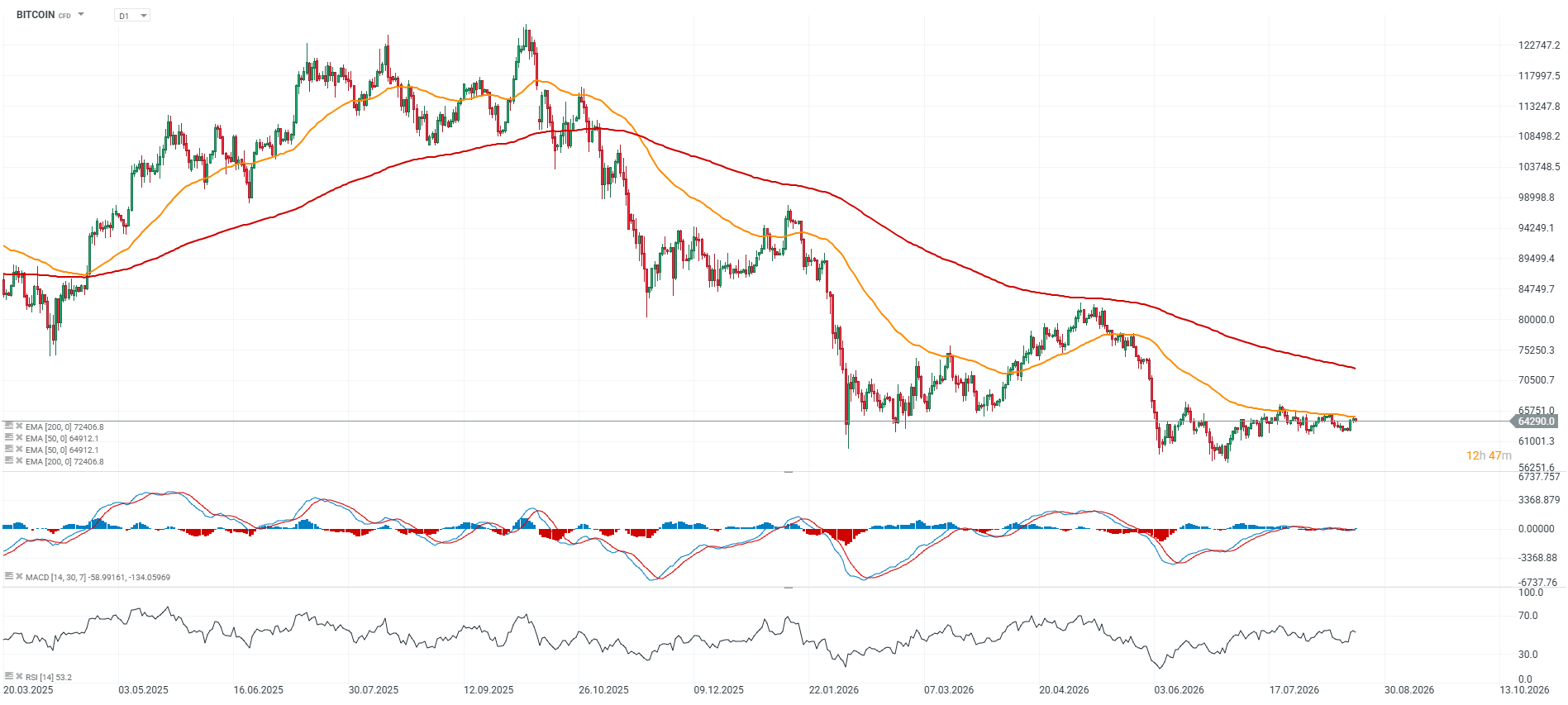
Trading firm Wintermute, in a market update published August 19, identified the dynamic that explains why Bitcoin failed to break above $65,000 even as July's inflation data came in soft and rate-hike odds fell: ETF redemptions and miner selling have formed a simultaneous supply-side pincer that "leaves the market without a strong source of fresh demand," the firm said. "An asset that cannot rally on good news while its dedicated vehicles bleed is telling us the marginal seller is back," Wintermute's August 19 market update stated.

The week's outflows reversed a strong August start that had produced $521.5 million in net inflows over the month's first four sessions.

Which Funds Bled Most

Four of the five sessions ended in negative territory. Monday set the tone, with $144.67 million leaving the complex in a single day — erasing most of the prior Friday's gains in one session.

Fidelity's FBTC led with $153.2 million in outflows — the largest of any individual fund of any individual fund. Grayscale's legacy trust, GBTC, shed $88.3 million; BlackRock's iShares Bitcoin Trust (IBIT) lost $78.9 million; ARK 21Shares' ARKB dropped $70.3 million; and Bitwise's BITB gave up $31.6 million. Franklin Templeton's EZBC posted $23.9 million in withdrawals.

Not every fund participated in the retreat. Grayscale's Bitcoin Mini Trust — which charges a significantly lower fee than its predecessor GBTC — attracted $75.98 million for the week. Morgan Stanley's MSBT, which launched earlier in 2026 with the market's lowest annual fee of 0.14%, pulled in $7.08 million.

The divergence between Grayscale's two products is itself a story: the Mini Trust's lower-fee structure has consistently attracted capital that GBTC continues to lose. Since its January 2024 conversion from a trust to a full ETF, GBTC has shed $27.42 billion, while cheaper competitors consolidated market share.

How Miner Selling Is Now a Structural Headwind

The more consequential story behind last week's numbers is not which fund lost the most — it is why Bitcoin failed to respond to conditions that should have pushed it higher.

On Wednesday, the Bureau of Labor Statistics reported that July's Consumer Price Index rose 3.4% year-over-year and just 0.1% month over month — matching expectations and extending inflation's descent from May's 4.2% peak. Core CPI, which strips out volatile food and energy prices, came in at 2.5% annually and 0.2% for the month. A day later, July's Producer Price Index showed 4.7% annual growth and no monthly change — below the 4.9% expectation. Initial jobless claims for the week ending August 8 came in at 209,000, above the 202,000 consensus estimate.

The in-line inflation print pushed September rate-hike odds fell to 42% on the CME FedWatch tool, from roughly 54% a week earlier. Bitcoin rebounded briefly above $64,000 on the CPI release — and then stalled. By Friday's close the price sat near $63,000, approximately 2.4% below where it opened the week.

Reach crypto's most engaged readers — advertise mid-article on NewsLayer
Sponsored

Reach crypto's most engaged readers — advertise mid-article on NewsLayer

NewsLayer

Ad

Wintermute's explanation for that failure pointed squarely at supply. The trading firm identified Riot Platforms as the paradigmatic example of what it called the miner selling problem: the company sold 4,300 BTC in Q2 of 2026, following sales of 3,778 BTC in the first quarter. Its Bitcoin treasury has declined to 11,380 BTC. The firm reported a $237 million quarterly loss as mining costs approached levels that made operating the Bitcoin business economically painful relative to alternatives.

Those alternatives turned out to be very attractive. Riot simultaneously signed a 20-year contract worth $9.1 billion to supply 191 megawatts of capacity at its Rockdale, Texas campus to a leading AI company, identified by Bloomberg and CNBC as Anthropic. The deal converts Riot from a Bitcoin miner into an AI infrastructure landlord — and its Q2 BTC sales are the transitional selling that accompanies that conversion.

Riot is not alone. Public miners collectively held approximately 127,000 BTC at the start of 2026 and have reduced that position to roughly 99,000 BTC, a 28,000-BTC reduction worth approximately $1.8 billion at current prices. Mining difficulty has fallen approximately 18% from its November 2025 peak, the longest declining hashrate stretch in Bitcoin's recorded history, as large operators redirect power capacity to AI workloads.

The mechanism by which both forces — ETF redemptions and miner selling — produce actual Bitcoin selling pressure is direct. When investors redeem ETF shares, authorized participants (large broker-dealers such as Jane Street, Virtu Americas, and Citadel Securities) return those shares to the fund, and the custodian — typically Coinbase Custody Trust Company for most major US products — sells Bitcoin on the spot market to return cash. Since the SEC approved in-kind redemptions in 2025, this Bitcoin flows directly from custodial wallets to exchanges rather than being converted to cash first. Miner selling adds a second channel of programmatic spot-market selling that operates independently of any individual investor's view on Bitcoin's value.

Research cited in prior market analysis estimates that ETF flows alone explain approximately 45% of Bitcoin's week-to-week price movement. When miner selling is added to sustained ETF redemptions, the combined supply pressure explains why Bitcoin's muted response to a favorable inflation print concerned analysts at Glassnode more than the data itself. "A weak response to good news is itself a warning," Glassnode wrote following the August 12 CPI release.

86 Days of US Demand Absence — and What It Measures

One metric captures the structural dimension of the current stall more precisely than weekly flow figures: the Coinbase Premium Index, which measures the percentage difference between Bitcoin's price on Coinbase Pro and its price on global exchanges (primarily Binance).

A positive reading means US-based buyers are paying a premium — more aggressive than their global counterparts. A negative reading means the opposite: US buyers are either absent or less willing to pay up.

The index turned negative on May 19, 2026. As of August 12, it had remained negative for 86 consecutive days. By August 16, the streak had extended to 90 days — a record that surpasses the prior high of 40 days set between January and February 2026.

Coinbase serves primarily professional and institutional US buyers. When its price sits below Binance's reference price for three consecutive months, the implication is structural rather than transient: US institutional demand has not simply paused — it has been absent through an entire business cycle of data releases and Fed meetings. The July ETF inflow period in which Bitcoin climbed back to $66,500 was an exception, not a reversal; the premium index remained negative throughout that recovery.

Bright Spots: Altcoin ETFs Hold — and Solana Leads

Not all crypto ETF products suffered last week. Solana ETFs attracted $10.26 million for the period — their strongest weekly inflow since May — as the within-crypto rotation that has built throughout the third quarter of 2026 continued to show up in flow data. XRP products attracted $2.25 million and HYPE ETFs added $2.74 million. Ether ETFs ended the week with a small net outflow of approximately $2.26 million, a fraction of Bitcoin's losses.

The selective demand outside Bitcoin reflects a rotation within the crypto ETF complex that has been building throughout the third quarter: allocators reducing Bitcoin exposure while selectively adding to emerging-layer-one ETF products. Solana, in particular, attracted institutional attention during the same period that public miners were filing 13F disclosures showing expanded institutional positions. Morgan Stanley raised its IBIT stake 23% in the second quarter — from roughly 13.4 million shares to 16.5 million — while raising its FBTC position by nearly 38%. Tudor Investment Corp disclosed a 18.9% increase in its IBIT stake to 688,529 shares in a 13F filed August 14.

Jane Street, one of the most active authorized participants in the Bitcoin ETF complex, disclosed $1 billion in ETF holdings in its Q2 13F, including approximately $828 million in IBIT alone. The holding represents a key structural anchor: APs with this size of position have a built-in incentive to maintain the liquidity and efficiency of the ETF mechanism itself.

What's Keeping BTC Range-Bound, and Why That May Change

Several forces converge to explain Bitcoin's current $62,000–$65,000 trading band. On the regulatory front, the Digital Asset Market Clarity Act (CLARITY Act, H.R. 3633) — which would explicitly classify Bitcoin as a CFTC-regulated commodity and provide legal certainty for the spot ETF market — stalled in the Senate before the August recess and is now scheduled for a September 15 vote. Analysts have placed passage odds at approximately 10%. Its absence keeps one class of institutional capital — insurance companies, pension funds, and sovereign wealth funds that need explicit regulatory classification before entering the asset class — on the sidelines indefinitely.

On the supply side, Bitcoin's 30-day implied volatility recently sat near 36%, close to 2026 lows — a reading that frequently precedes a sharp directional move as compressed volatility unwinds into a breakout or breakdown. Technical analysts have identified $66,000 as the level that would confirm a breakout; sustaining above $69,000 would signal that Bitcoin has cleared the short-term holder cost basis — the average acquisition price for buyers in the past 155 days — and shifted the market into genuine momentum territory.

The wildcard entering the picture from the energy sector is also significant. With the 60-day US-Iran ceasefire having expired and Hormuz ship transits collapsed to near zero, Brent crude jumped 7.91% last week. If oil remains elevated, August's CPI print — due September 11 — faces upside risk that could swing rate-hike odds back toward 50%, removing the macro tailwind that BTC has been unable to act on anyway.

The medium-term picture, however, carries a structural note that the current outflow headline obscures. The AI-compute pivot among major public miners is inherently self-limiting as a Bitcoin supply headwind. Riot, MARA, CleanSpark, and others redirecting capacity to AI infrastructure contracts will, over time, stop being forced sellers of BTC — because their revenue model will no longer depend on the Bitcoin price exceeding their production cost. The same transition that is adding selling pressure today is building the conditions that reduce it tomorrow. Whether the September Fed meeting, a CLARITY Act vote, or Hormuz stabilization provides the catalyst first, the supply-side story on miners is not as permanently bearish as the current week's numbers suggest.

This article is for informational purposes only and does not constitute financial or investment advice.


Frequently Asked Questions

Why is Bitcoin failing to rally even when inflation data comes in soft?

The standard logic — lower inflation reduces rate-hike pressure, which should boost risk assets including Bitcoin — is not functioning cleanly in August 2026 because two independent sources of Bitcoin selling have emerged simultaneously. ETF redemptions require custodians to sell actual Bitcoin on the spot market to return cash to investors. Miner selling adds a second stream of programmatic supply from companies like Riot Platforms, which sold more than 8,000 BTC in the first half of 2026 as production costs ate into margins and AI infrastructure contracts offered better returns. When both forces operate together, they collectively suppress price even when the macro direction is favorable.

What does the 90-day negative Coinbase Premium Index streak actually mean for Bitcoin holders?

The Coinbase Premium Index measures the price of Bitcoin on Coinbase (the primary venue for US professional and institutional buyers) versus Binance (a more globally diverse exchange). A negative reading means US buyers are less aggressive than global counterparts — they are either net sellers or simply absent from the bid side. Ninety consecutive days of negative premium, a record that shatters the prior high of 40 days, indicates that the softness in US institutional demand is structural rather than seasonal. For a holder evaluating whether to add, the index suggests the floor in US institutional demand has not been established. For a holder considering whether to sell, it suggests that BTC's recovery runs are likely to be capped by US sellers re-engaging near resistance rather than through genuine demand absorption.

How does miner selling differ from ETF selling — and does the AI pivot change anything?

ETF selling is demand-driven: an investor decides to exit, and the authorized participant mechanism forces a Bitcoin sale on the spot market as a consequence. Miner selling is supply-driven: miners accumulate Bitcoin as a byproduct of validating transactions and sell it to cover operating costs when the price falls below their break-even threshold. When both forces operate at the same time — as Wintermute specifically flagged for the August 10–14 period — Bitcoin faces selling pressure from two structurally independent sources simultaneously. The AI pivot does change the medium-term picture: miners converting power capacity to AI contracts eventually stop being forced Bitcoin sellers because their revenue no longer depends on BTC price. The transition creates short-term selling pressure (miners liquidating treasuries to fund pivot costs) while building conditions for reduced structural supply pressure in subsequent quarters.

Is the CLARITY Act actually likely to pass in September, and what would it mean for ETF flows?

Passage odds for the Digital Asset Market Clarity Act on its tentatively scheduled September 15 Senate floor vote have been cited at approximately 10% by analysts. The bill passed the House 294-134 in July 2025 and cleared the Senate Banking Committee 15-9 in May 2026, but failed to receive a floor vote before the August recess. If it does pass, its primary market impact would be to unlock a class of institutional allocators — insurance companies, pension funds, and sovereign wealth funds — that currently treat Bitcoin ETF exposure as legally ambiguous. That capital has not entered the market yet; the CLARITY Act would not bring them in overnight, but it would remove the single largest regulatory objection that keeps them on the sidelines. A failed vote would extend regulatory uncertainty into 2027, when the next legislative window opens.

Última Hora

Não perca nenhuma notícia de última hora

Seguir no X Entrar no Telegram

Advertisement

House — Advertise on NewsLayer
NewsLayerAd

Related Intelligence

External ReportingCrypto news: Bitcoin price proves "resilient" despite Wall Street losses 🔼 Is the cryptocurrency at a key turning point?External ReportingBitcoin ETF assets rise to $2.38B as Bitwise se...External ReportingInflation Cools, Yet Spot Bitcoin Funds Record Largest Six-Week Outflow, Nearly $400 Million Flows Out in One Week
View More
#bitcoin#crypto#markets

Sourced by

Originally reported by techtimes.com

NewsLayer coverage based on externally reported material.

The Daily Brief

The onchain economy, before your day starts.

Curated markets, onchain insights, and key headlines — delivered every weekday morning.

Weekdays · Free · ~5 minute read

Market Context

₿

Bitcoin

BTC

$64,468

+0.29% 24h

Layer Index

42

Neutral

Layer Index

↓ 3 pts in 24h

Última Hora

Não perca nenhuma notícia de última hora

Seguir no X Entrar no Telegram

Advertisement

House — Advertise on NewsLayer
NewsLayerAd

Related Intelligence

External ReportingCrypto news: Bitcoin price proves "resilient" despite Wall Street losses 🔼 Is the cryptocurrency at a key turning point?External ReportingBitcoin ETF assets rise to $2.38B as Bitwise se...External ReportingInflation Cools, Yet Spot Bitcoin Funds Record Largest Six-Week Outflow, Nearly $400 Million Flows Out in One Week
View More
Institutional0%
₿Bitcoin$64,468+0.29%

Layer Index 42 · Neutral

Notícias Relacionadas

IA está tornando as criptomoedas ‘mais relevantes’, diz Tom Lee da Fundstrat, enquanto BlackRock defende o BitcoinDINHEIRO ALTO

IA está tornando as criptomoedas ‘mais relevantes’, diz Tom Lee da Fundstrat, enquanto BlackRock defende o Bitcoin

IA está tornando as criptomoedas ‘mais relevantes’, diz Tom Lee da Fundstrat, enquanto BlackRock defende o Bitcoin TradingView

há 2 horas

2 min de leitura
Tom Lee, da Fundstrat, diz que cripto é 'mais relevante' na era da IA e apoia previsão otimista da BlackRock para o BitcoinDINHEIRO PESADO

Tom Lee, da Fundstrat, diz que cripto é 'mais relevante' na era da IA e apoia previsão otimista da BlackRock para o Bitcoin

Tom Lee, da Fundstrat, diz que cripto é 'mais relevante' na era da IA e apoia previsão otimista da BlackRock para o Bitcoin Yahoo Finance

há 2 horas

3 min de leitura
O Citigroup (C) está mudando a custódia com Bitcoin em tempo real e ativos tradicionais?RITMO BITCOIN

O Citigroup (C) está mudando a custódia com Bitcoin em tempo real e ativos tradicionais?

O Citigroup (C) está mudando a custódia com Bitcoin em tempo real e ativos tradicionais? Yahoo Finance

há 3 horas

3 min de leitura
NewsLayer.com

The front page of the onchain economy. Crypto, Web3 and regulation intelligence — live prices, original research and policy tracking in one layer.

Follow on XTelegram

News

  • Latest News
  • The Daily Brief
  • Crypto
  • DeFi
  • Web3
  • Blockchain
  • Policy
  • Explainers

Markets & Tools

  • Market News
  • Live Charts
  • Layer Index
  • Regulation Tracker
  • Regulation Radar
  • Research
  • NewsLayer Originals
  • My Feed
  • Search

Company

  • About NewsLayer
  • Go Premium
  • Advertise
  • PR Publication
  • Become an Author
  • Create Account
  • Sign in

© 2026 NewsLayer.com — The front page of the onchain economy·Privacy Policy·Terms of Service

NewsLayer

Get the signal, not the noise.

Markets, regulation and onchain intelligence in a 5-minute morning read — plus breaking alerts and Layer Index flips as they happen.

The Daily Brief

Breaking alerts

Index flips

Free · No spam · Unsubscribe anytime