

This website uses cookies
We use cookies to personalise content and ads, to provide social media features and to analyse our traffic. We also share information about your use of our site with our social media, advertising and analytics partners who may combine it with other information that you’ve provided to them or that they’ve collected from your use of their services.
Consent Selection
Details
  • Necessary cookies help make a website usable by enabling basic functions like page navigation and access to secure areas of the website. The website cannot function properly without these cookies.
  • Preference cookies enable a website to remember information that changes the way the website behaves or looks, like your preferred language or the region that you are in.
    • We do not use cookies of this type.

  • Statistic cookies help website owners to understand how visitors interact with websites by collecting and reporting information anonymously.
    • We do not use cookies of this type.

  • Marketing cookies are used to track visitors across websites. The intention is to display ads that are relevant and engaging for the individual user and thereby more valuable for publishers and third party advertisers.
    • We do not use cookies of this type.

  • Unclassified cookies are cookies that we are in the process of classifying, together with the providers of individual cookies.
    • __emg_sidPending
      Maximum Storage Duration: 1 dayType: HTTP Cookie
      __emg_vidPending
      Maximum Storage Duration: 1 yearType: HTTP Cookie
      nl-read-countPending
      Maximum Storage Duration: PersistentType: HTML Local Storage
Cookie declaration last updated on 8/12/26 by Cookiebot
[#IABV2_TITLE#]
[#IABV2_BODY_INTRO#]
[#IABV2_BODY_LEGITIMATE_INTEREST_INTRO#]
[#IABV2_BODY_PREFERENCE_INTRO#]
[#IABV2_BODY_PURPOSES_INTRO#]
[#IABV2_BODY_PURPOSES#]
[#IABV2_BODY_FEATURES_INTRO#]
[#IABV2_BODY_FEATURES#]
[#IABV2_BODY_PARTNERS_INTRO#]
[#IABV2_BODY_PARTNERS#]
About
Cookies are small text files that can be used by websites to make a user's experience more efficient.

The law states that we can store cookies on your device if they are strictly necessary for the operation of this site. For all other types of cookies we need your permission.

This site uses different types of cookies. Some cookies are placed by third party services that appear on our pages.

You can at any time change or withdraw your consent from the Cookie Declaration on our website.

Learn more about who we are, how you can contact us and how we process personal data in our Privacy Policy.

Please state your consent ID and date when you contact us regarding your consent.
NewsLayer

Install NewsLayer

Get the app experience — one tap from your home screen, instant loads and breaking-news alerts.

NewsLayer.com

Bitcoin Takes 10 Bearish Blows in 2026 Yet Faces Its Mildest Bear Market

Publicado há um dia 4 min de leitura
Bitcoin Takes 10 Bearish Blows in 2026 Yet Faces Its Mildest Bear Market

Bitcoin Takes 10 Bearish Blows in 2026 Yet Faces Its Mildest Bear Market Cryptonews.net

The leading crypto asset by market cap, bitcoin ($BTC), reached climbed over the $126,000 mark in early October before entering a prolonged decline. By August, it was trading mostly between $63,000 and $65,400, leaving buyers near the peak with heavy losses but producing a bear market that remains unusually shallow by bitcoin’s historical standards.

Previous major downturns have routinely erased more than 75% to 80% of bitcoin’s value from the all-time high (ATH). To many veterans, this bear market still feels like a nothingburger.

War and Oil Fail to Crack Bitcoin

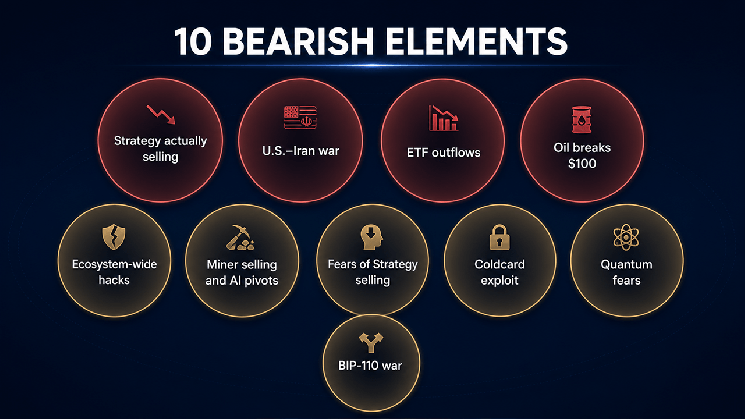
Few assets have had an easy macroeconomic backdrop in 2026. Fighting between the United States and Iran intensified beginning in late February, while attacks involving shipping around the Strait of Hormuz repeatedly rattled energy markets. Oil spikes revived inflation fears and raised the possibility that central banks could keep monetary policy tighter for longer.

Bitcoin reacted, but rarely with the panic that characterized earlier cycles. Geopolitical headlines have triggered bouts of selling, yet declines have generally stabilized instead of turning into uncontrolled liquidation cascades. That matters because it suggests a market increasingly capable of absorbing shocks without every bearish headline becoming a crisis.

Strategy Turns From Buyer to Seller

Another major psychological blow came from Strategy. Michael Saylor’s company spent years building its identity around relentless bitcoin accumulation, making its balance sheet one of the market’s most visible sources of corporate demand.

That changed in 2026. Strategy began selectively selling bitcoin to strengthen cash reserves and support preferred-share obligations and repurchases. The company sold another 1,690 $BTC this past week at an average price of $64,262, reducing its holdings to roughly 840,447 $BTC.

Institutional demand also weakened. U.S. spot bitcoin exchange-traded funds (ETFs) endured an extended stretch of redemptions, including eight consecutive weeks with more than $8 billion in outflows. Yet by the end of last week’s trading session, approximately $853 million flowed back into the products, offering an early sign that institutional selling pressure may be easing.
Bitcoin Gets Hit From Inside, Too

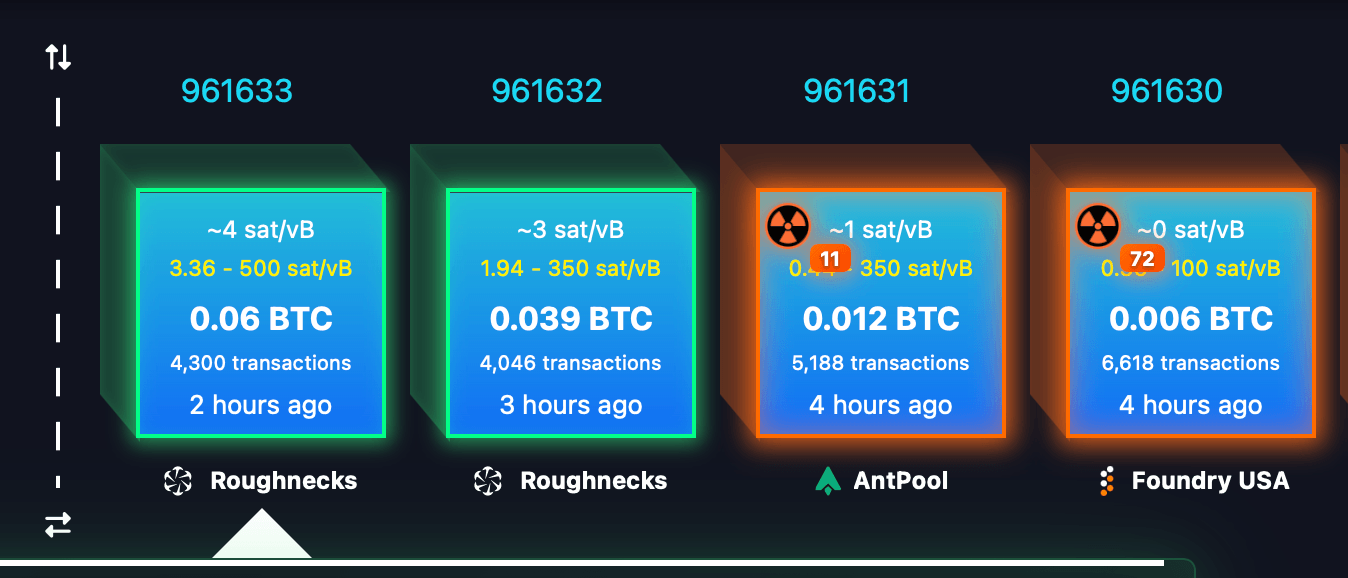
Not all the pressure came from Wall Street or geopolitics. Bitcoin spent weeks wrestling with BIP-110, a controversial proposal targeting non-financial blockchain data. When its signaling period arrived, a minority alternative chain produced only two blocks before falling far behind the dominant Bitcoin network. The minority chain has stalled, and its supporters are now plotting an algorithm change. Meanwhile, bitcoiners are already moving on from the lackluster event.

A small, relatively unknown mining operation called Roughnecks mined the first two BIP-110 chain blocks, but the crushing weight of Bitcoin’s existing difficulty, on top of a new blockchain, quickly brought the alternative network to a complete standstill.

Miners have added another source of selling. Lower bitcoin prices, tighter mining economics and energy pressures pushed publicly traded operators to unload portions of their treasuries while redirecting infrastructure toward artificial intelligence (AI) and high-performance computing (HPC). The shift has weakened a source of traditional bitcoin accumulation while giving miners another way to monetize expensive power and data center infrastructure.

Security problems delivered perhaps the ugliest blow. The Coldcard hardware wallet exploit drained an estimated 2,000+ $BTC from thousands of addresses after attackers exploited a firmware weakness dating to 2021, according to the source report. The episode damaged confidence in self-custody while the broader crypto industry continued battling hundreds of hacks and exploits.

Even longer-term threats have entered the conversation. Advances in quantum computing have renewed questions about whether future machines could eventually threaten the cryptography protecting some bitcoin. Such computers are not currently capable of breaking Bitcoin, but shortening estimates for when that risk could become practical have increased pressure for long-term technical preparation.

The $60,000 Wall Refuses to Fall

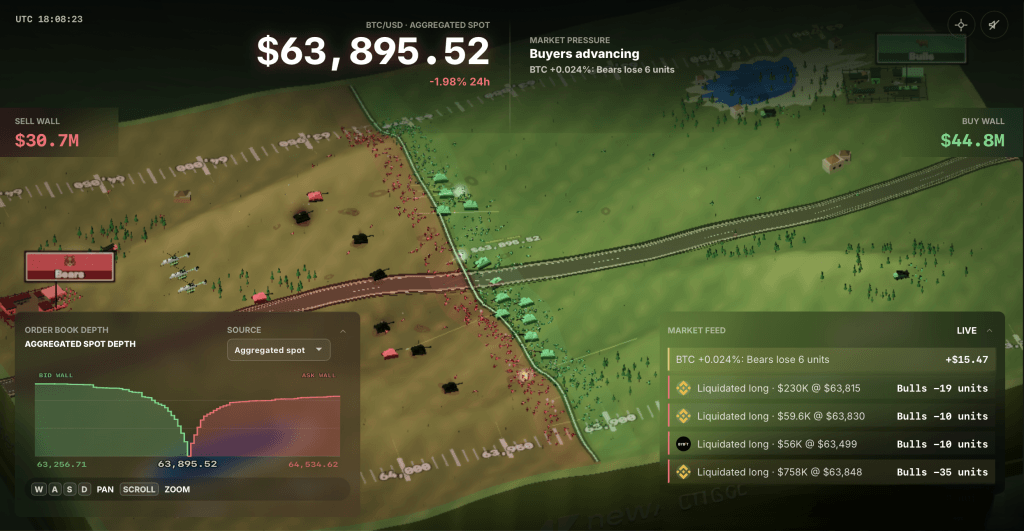
Taken individually, none of these developments necessarily constitutes an existential threat. Taken together, however, they represent a punishing stress test for a market already down nearly 50%. And that may be the bigger story. Bitcoin has continued trading above $60,000 despite corporate selling, ETF withdrawals, miner liquidations, geopolitical turmoil, protocol infighting and security failures.

A live bitcoin buy-and-sell wall, order book, liquidations and price pressure visualized as a 3D market battlefield via Newhedge.io shows how strong that $60K wall is today. Image screenshot taken on Monday, Aug. 10, 2026.

Deeper liquidity, regulated investment products, long-term holders and a more developed market structure appear to be helping absorb supply that might once have triggered a much more violent collapse. That resilience does not mean the bottom is in. Another oil shock, deteriorating economic conditions, renewed institutional withdrawals or additional large sellers could send bitcoin toward the $50,000 range.

For now, though, a 49% decline that would qualify as brutal in most markets looks comparatively restrained against bitcoin’s own market history. The remaining months of 2026 will show whether $60,000 is a durable floor or simply the market’s next major line of defense.

Attribution

Originally reported by Cryptonews.net

Get stories like this, daily.

Daily crypto + regulation intelligence, straight to your inbox. Free.

Notícias Relacionadas