

This website uses cookies
We use cookies to personalise content and ads, to provide social media features and to analyse our traffic. We also share information about your use of our site with our social media, advertising and analytics partners who may combine it with other information that you’ve provided to them or that they’ve collected from your use of their services.
Consent Selection
Details
  • Necessary cookies help make a website usable by enabling basic functions like page navigation and access to secure areas of the website. The website cannot function properly without these cookies.
  • Preference cookies enable a website to remember information that changes the way the website behaves or looks, like your preferred language or the region that you are in.
    • We do not use cookies of this type.

  • Statistic cookies help website owners to understand how visitors interact with websites by collecting and reporting information anonymously.
    • We do not use cookies of this type.

  • Marketing cookies are used to track visitors across websites. The intention is to display ads that are relevant and engaging for the individual user and thereby more valuable for publishers and third party advertisers.
    • We do not use cookies of this type.

  • Unclassified cookies are cookies that we are in the process of classifying, together with the providers of individual cookies.
    • __emg_sidPending
      Maximum Storage Duration: 1 dayType: HTTP Cookie
      __emg_vidPending
      Maximum Storage Duration: 1 yearType: HTTP Cookie
      nl-read-countPending
      Maximum Storage Duration: PersistentType: HTML Local Storage
Cookie declaration last updated on 8/12/26 by Cookiebot
[#IABV2_TITLE#]
[#IABV2_BODY_INTRO#]
[#IABV2_BODY_LEGITIMATE_INTEREST_INTRO#]
[#IABV2_BODY_PREFERENCE_INTRO#]
[#IABV2_BODY_PURPOSES_INTRO#]
[#IABV2_BODY_PURPOSES#]
[#IABV2_BODY_FEATURES_INTRO#]
[#IABV2_BODY_FEATURES#]
[#IABV2_BODY_PARTNERS_INTRO#]
[#IABV2_BODY_PARTNERS#]
About
Cookies are small text files that can be used by websites to make a user's experience more efficient.

The law states that we can store cookies on your device if they are strictly necessary for the operation of this site. For all other types of cookies we need your permission.

This site uses different types of cookies. Some cookies are placed by third party services that appear on our pages.

You can at any time change or withdraw your consent from the Cookie Declaration on our website.

Learn more about who we are, how you can contact us and how we process personal data in our Privacy Policy.

Please state your consent ID and date when you contact us regarding your consent.
NewsLayer.com

"Digital Gold" Debate Reignites as Bitcoin Fails to Track Gold's Rally

Publicado há 2 dias 3 min de leitura
"Digital Gold" Debate Reignites as Bitcoin Fails to Track Gold's Rally

The article says debate over Bitcoin's role as “digital gold” has resurfaced after Bitcoin failed to move in line with gold’s rally. The divergence highlights questions about whether Bitcoin consistently behaves like a safe-haven or gold-correlated asset.

Pontos-Chave

  • 01 Gold has rallied while Bitcoin has not tracked the move.
  • 02 The price divergence has revived scrutiny of Bitcoin’s “digital gold” narrative.
  • 03 The article frames the issue as a debate over Bitcoin’s relationship to gold and safe-haven behavior.

The debate over Bitcoin's "store of value" narrative has reignited amid growing observations that the cryptocurrency is failing to keep pace with gold's rally. Robin Brooks, a macroeconomics expert formerly with the International Monetary Fund, argued that Bitcoin is not fulfilling the role expected of it during a period of currency debasement, asserting that Bitcoin's underperformance confirms a "perception gap."

Brooks wrote on his X (formerly Twitter) account on the 10th (local time), "Bitcoin is not a debasement play." He emphasized that over just the past 10 days, gold prices have surged approximately 10%, while Bitcoin has failed to follow suit. Brooks' argument is straightforward: when central banks signal accommodative monetary policy, currencies become debased, and investors have historically moved into assets that can preserve value outside the traditional financial system. In that process, gold has faithfully performed its role as a store of value, but Bitcoin—promoted for years as "digital gold"—has fallen short of expectations.

Brooks identified last year's Jackson Hole Symposium in the United States as the starting point of this trend. He explained that when Federal Reserve Chair Jerome Powell signaled the beginning of an easing cycle, the "currency debasement" trade began in earnest, subsequently adding further momentum to gold's rally. He also noted that dovish remarks on inflation by Fed Governor Kevin Warsh at the July 29 Federal Open Market Committee meeting provided an additional boost to gold prices.

In response, the digital asset industry has directly challenged Brooks' framing. Jeff Park, Head of Research at Bitwise, argued that Brooks evaluated Bitcoin's performance through a fixed "store of value" lens, contending that Bitcoin has a tendency to rally broadly during periods of yield curve shifts. He explained that Bitcoin has repeatedly demonstrated the ability to rise during both bull steepening and bear steepening episodes.
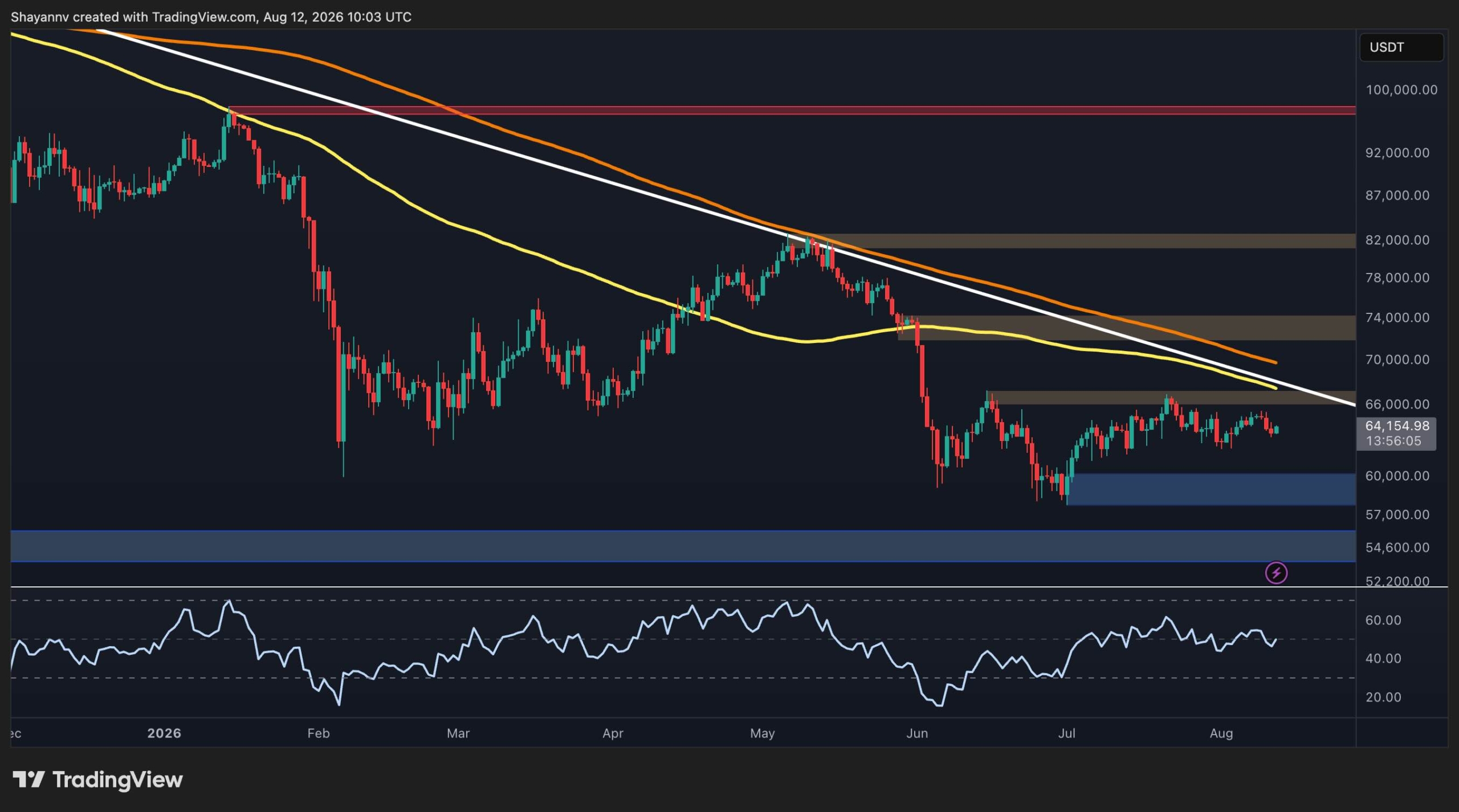
Park cited five specific periods since 2020 as evidence. According to media reports, the periods he identified were March 2020, February 2021, March 2023, September-October 2023, and September 2024. "The key point is that Bitcoin rallies in both bull steepening and bear steepening environments," Park stated, adding that this allows Bitcoin to benefit simultaneously from currency debasement and de-dollarization trends. He also offered the observation that an even larger bear steepening phase could lie ahead.

Brooks' argument does not necessarily have to be interpreted as a complete rejection of Bitcoin's value. When connected to the Raoul Pal framework, there is room to reconcile the points of contention. Pal has previously argued that Bitcoin exhibits an 87% correlation with global liquidity. In other words, Bitcoin's movements should be interpreted in relation to the total amount of liquidity released into markets rather than safe-haven asset perceptions. This perspective overlaps with Brooks' observation about the differing roles of gold and Bitcoin. If gold's path as a traditional store-of-value asset is strong, Bitcoin could be explained as functioning more like an "amplifier" that oscillates more dramatically along the same macro axis of liquidity changes.

Ultimately, the core of this debate is shifting away from the single question of "Is Bitcoin a safe-haven asset?" toward how the market classifies Bitcoin as an asset class, and how stably that classification becomes entrenched. Brooks argued that price action confirms the perception gap, but Park countered that Bitcoin has repeatedly rallied even under different macro regimes. From Pal's perspective, Bitcoin's performance may respond more strongly to liquidity variables than to the store-of-value narrative, leaving room for multiple explanatory frameworks to coexist.

CategoryRecent 10-Day Trend (as reported)Key Interpretation
Gold~10% increaseStore-of-value role highlighted amid currency debasement
BitcoinFailed to track gold"Store of value" narrative vs. "liquidity-linked" perspective clash

Attribution

Originally reported by finance.biggo.com

Respostas Rápidas

Why is the “digital gold” debate resurfacing?

It has resurfaced because Bitcoin failed to track gold’s rally, creating a visible divergence between the two assets.

Did Bitcoin rise alongside gold in this story?

No. The excerpt says Bitcoin failed to track gold’s rally.

What does “digital gold” refer to in this context?

It refers to the idea that Bitcoin could behave similarly to gold, including potentially serving as a comparable store-of-value or safe-haven asset.

Get stories like this, daily.

Daily crypto + regulation intelligence, straight to your inbox. Free.

Notícias Relacionadas