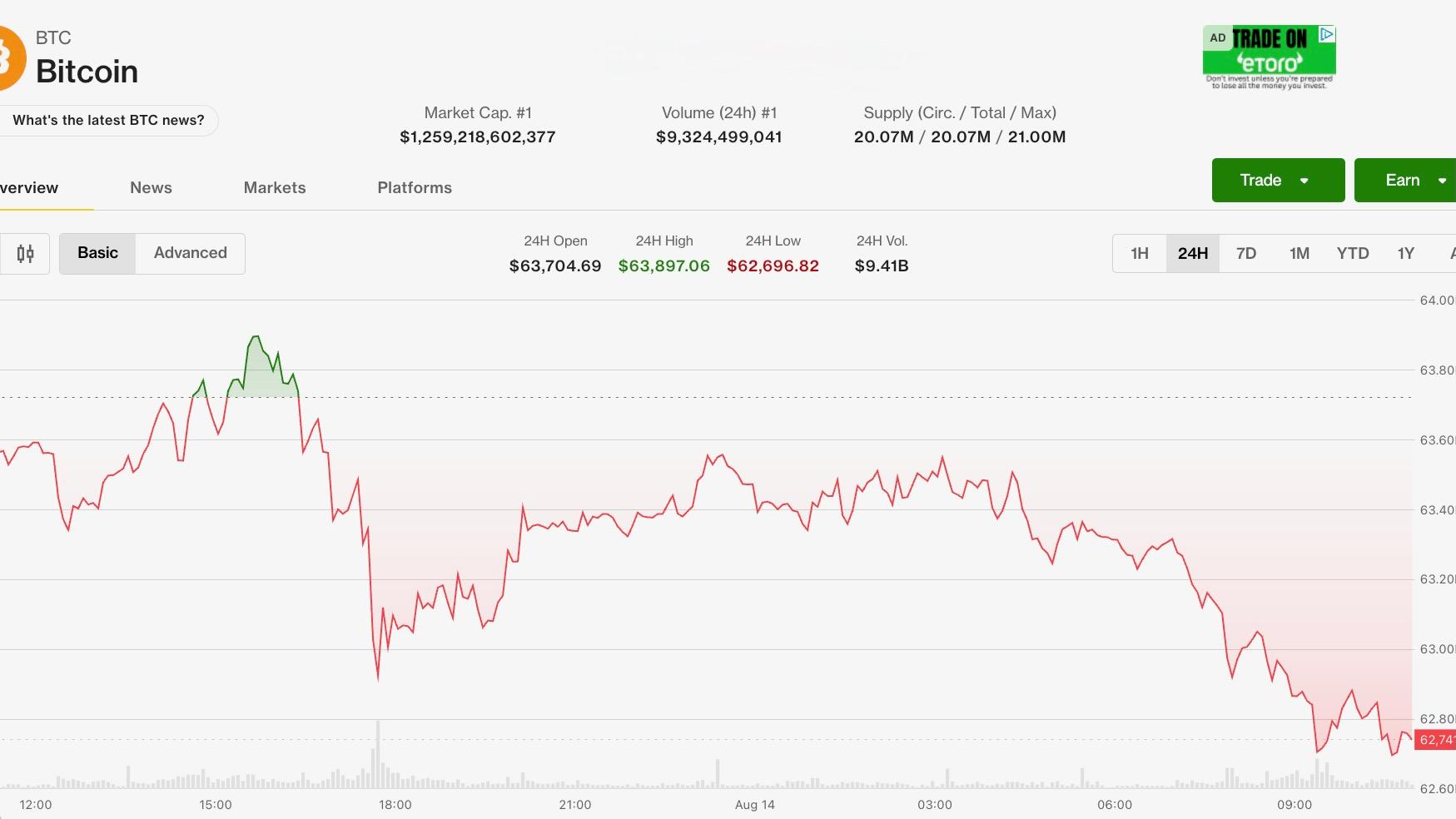
Binance Research notes that the current environment lacks any equivalent fundamental shock: no major exchange collapse, no regulatory crisis, no systemic failure.
The report argues this degree of hedging appears disproportionate, suggesting the market may be closer to a sentiment trough than a precipice. Corroborating this, Bitcoin's Realized Profit/Loss ratio has fallen below 1.0 for the first time since 2023, typically a hallmark of forced capitulation rather than orderly distribution.
The M2 Divergence and Who Owns Bitcoin Now
Since 2015, Bitcoin and global M2 have diverged 23 times - historically resolving within one to two months on average.
The current divergence has extended far beyond that window.
Binance identifies three compounding distortions: dollar weakness mechanically inflating the dollar-denominated M2 aggregate without reflecting real liquidity growth; the post-ETF institutional ownership structure now classifying BTC alongside software equities in risk management systems; and elevated real interest rates keeping large liquidity pools parked in money market funds.
13F Data: Who Sold, Who Bought
Q4 13F filings show a net institutional outflow of roughly 25,000 Bitcoin-equivalent from ETF holdings.
But the breakdown is asymmetric: investment advisors and hedge funds accounted for the majority of sales, while governments, holding companies, and private equity were net buyers.
BTC ETH week-over-week showed Bitcoin down 21.8% and Ethereum (ETH) down 30.4% on the week, against gold's 4.24% gain - a performance gap that tracks closely with the software index (IGV) rather than any monetary metric.

Kostiantyn Tsentsura is a Content Writer at Yellow.com with over 8 years of experience in crypto, dedicating the last 4 years to writing about the industry. Based in Kyiv, he’s passionate about football, fishing, and kayaking. When he’s not tracking market trends or exploring crypto news, you’ll find him on the water—because even in crypto, sometimes it’s best to just go with the flow.