
OpenAI has released GPT-6 Astra, its new flagship model and their most capable LLM yet for end-to-end tasks. Both Harvey and Legora have provided some insights into how it benefits legal AI, (see below).
Harvey + Legora on OpenAI’s GPT-6 Astra
OpenAI has released GPT-6 Astra, its new flagship model and their most capable LLM yet for end-to-end tasks. Both Harvey and Legora have provided some insights into how it benefits legal AI, (see below).
Artificial Lawyer
Publisher
Sep 7, 2026 at 7:24 AM UTC · 5 min de leitura
Traduzindo…
GPT‑6 Astra started its roll out on September 3rd on a limited basis and will eventually be more widely available. But, the question is: with so many models arriving now, is this a big deal?
The short answer is: yes, because the major model makers are showing that they can – albeit incrementally – keep improving AI performance. And that matters especially for lawyers, as there is a hard to define threshold under which legal AI is of limited standalone use, but conversely where once it hits a certain level of dependability it becomes immensely powerful.
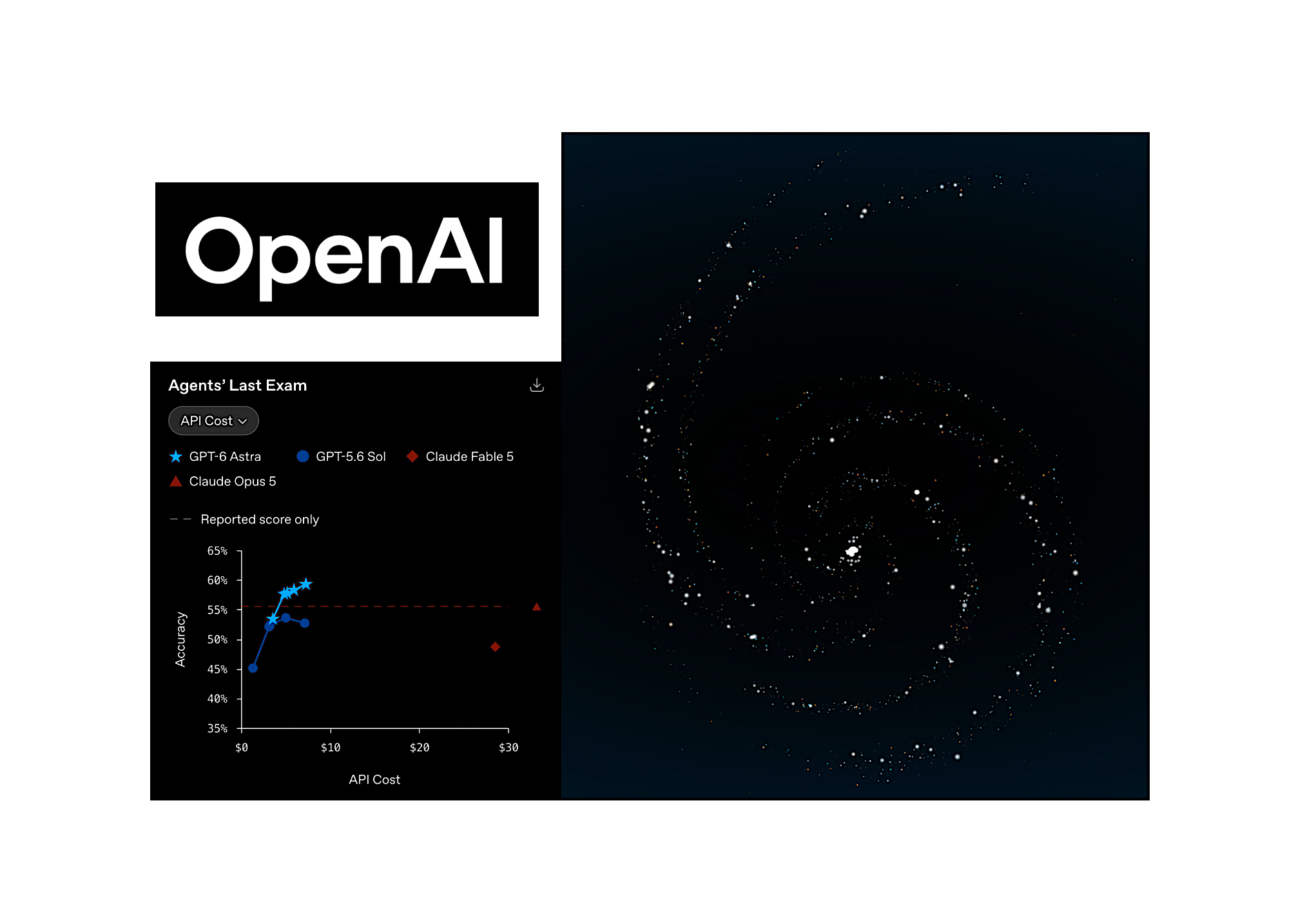
For example, OpenAI provided a range of benchmarks showing many improvements, one of which was ‘Agents’ Last Exam’ – a benchmark created at UC Berkley RDI to answer the question: ‘Can an AI agent perform economically valuable professional work from beginning to end?’
It covers 55 professional ‘subdomains’ and includes some aspects of legal work, among many others. In this case (see graph) it reached 59.3%, while GPT-5.6 Sol reached 53.6%.
Market Context
Solana
SOL
$104.26
-1.38% (24H)
Market Cap
$61.1B
Circulating Supply
586.2M SOL
24H Volume
$3.3B
24H High
$107.03
Article Intelligence
Topics
Related Coverage
 PolicyOpenAI working on 'framework' for sharing rogue-agent incidentshá 12 minutos · 2 min read
 Artificial IntelligenceOpenAI just hit a milestone on the road to self-improving AIhá 6 horas · 4 min read
 Crypto$320M Bitcoin Heist Puts Liquid Network Security Under Scrutinyhá uma hora · 1 min read
Sponsored
Ad
NewsLayerLearn more
NewsLayer Premium
Unlock deeper intelligence.
Ad-free reading, exclusive research, and real-time onchain insights.
Go Premium