
The qubits at the center of quantum computing systems are the equivalent of the binary bits that classical computing processors use – but while classical bits can only be 1 or 0, qubits can be 1, 0, or a blend of both (superposition), a flexibility that promises to transform the power of our computers.
Physicists Propose a 'Supercurrent' To Read Qubits Without Destroying Their Quantum State
The qubits at the center of quantum computing systems are the equivalent of the binary bits that classical computing processors use – but while classical bits can only be 1 or 0, qubits can be 1, 0, or a blend of both (superposition), a…
ScienceAlert
Publisher
Nov 14, 2026 at 12:00 PM UTC · 3 min de leitura

Traduzindo…
There's one nagging problem with superposition, which is that as soon as a qubit is accessed and measured, its value then gets fixed to 1 or 0. The instant it's checked up on, the most useful characteristic of the qubit disappears.
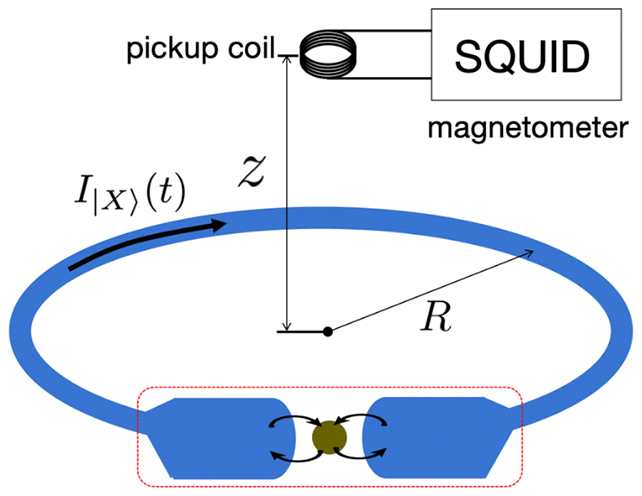
Now researchers from China and Brazil, publishing their work in Physical Review B, think they have a solution to the problem. Essentially, it involves reading the electrical current produced by a qubit, rather than the qubit itself.
In theory – and this is a theoretical study, with no actual experiments involved – that would mean being able to read a qubit without reading it, like glancing at something in your peripheral vision.
Modeling by the researchers suggests the technique might retrieve qubit data with an accuracy of up to 99.85 percent.
"If a qubit has been prepared in a certain superposition of 0 and 1, its direct measurement tends to destroy that superposition and, consequently, the information it contained," says physicist Jose Carlos Egues, from the University of São Paulo in Brazil.
Article Intelligence
Topics
Sponsored
Ad
NewsLayerLearn more
NewsLayer Premium
Unlock deeper intelligence.
Ad-free reading, exclusive research, and real-time onchain insights.
Go Premium