


Insider Brief
Princeton to Lead $27.9M NSF Institute for Quantum Processor Manufacturing
Insider Brief Press release – The U.S. National Science Foundation announced today that Princeton University will lead one of eight major initiatives to accelerate the development of quantum computing. The Princeton-led Quantum Leap…
Mohib Ur Rehman
Publisher The Quantum Insider
Aug 25, 2026 at 5:58 PM UTC · Updated há 2 horas · 5 min de leitura
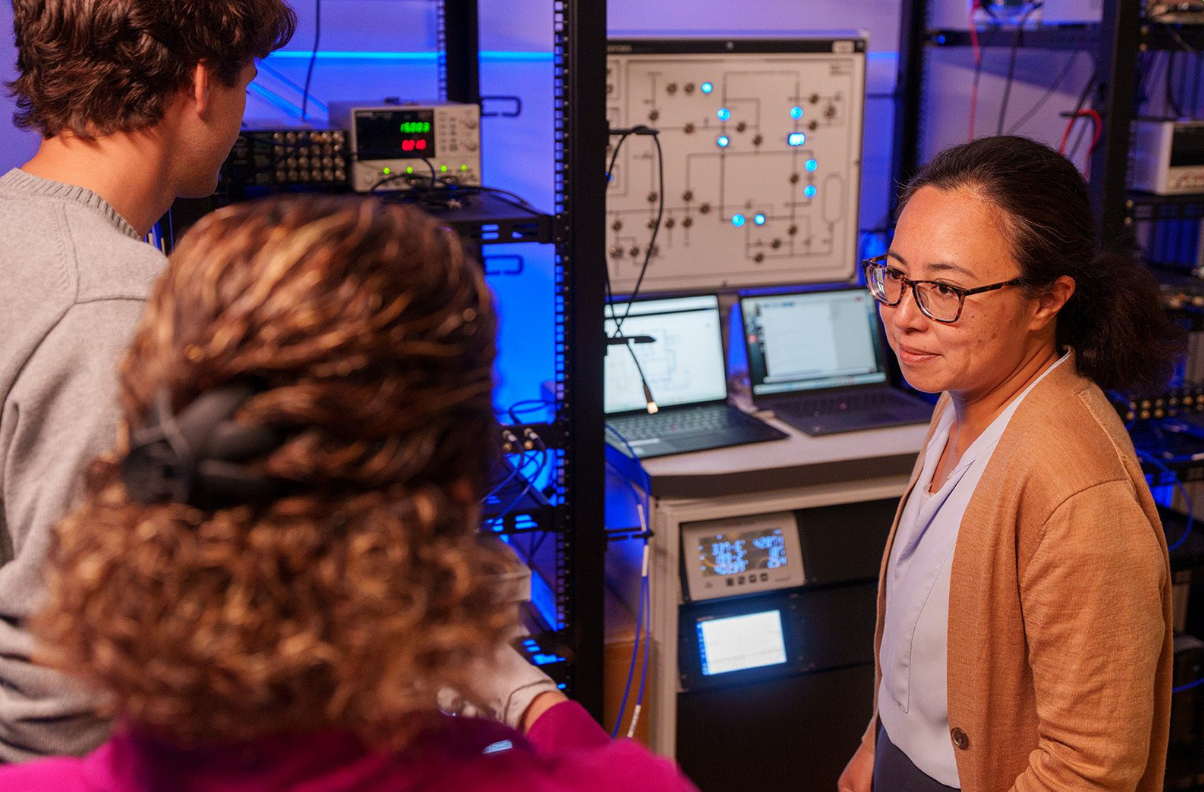
- Princeton University will lead MARQUIS, a new NSF Quantum Leap Challenge Institute receiving $27.9 million over five years to address manufacturing challenges in superconducting quantum processors.
- The institute will bring together researchers in materials science, quantum devices and semiconductor processing from nine institutions to develop new fabrication methods for superconducting qubit components.
- MARQUIS will also develop testing and validation methods for mid-scale quantum processors while building education and workforce programs in quantum science and engineering.
Press release – The U.S. National Science Foundation announced today that Princeton University will lead one of eight major initiatives to accelerate the development of quantum computing.
The Princeton-led Quantum Leap Challenge Institute will devise techniques for fabricating hardware and develop education and workforce training programs that deepen U.S. leadership in quantum science and engineering. The research institute will gather experts from wide-ranging fields to break a single, critical bottleneck — the manufacture of core components for quantum processors.
“The whole community has been using essentially the same materials technology for about a quarter century,” said Nathalie de Leon, a professor of electrical and computer engineering at Princeton and co-director of the Princeton Quantum Initiative, who will direct the new institute. That technology has worked well for experimental prototypes and small-scale systems. But to build quantum computers at a scientifically useful scale, she said, the most basic elements must be reinvented.
Article Intelligence
Related Coverage
 ResearchU.S. SpaceForce’s SpaceWERX Awards Casimir Inc. STTR Phase I Awardhá 8 horas · 1 min read
 QuantumNIST Researchers Supersize Quantum Technology to Help Detect Faint Photonshá 14 horas · 5 min read
 QuantumRGTI vs IONQ: Which Quantum Computing Stock Led the Q2 Earnings Race?há 7 horas · 1 min read
Sponsored
Ad
NewsLayerLearn more
NewsLayer Premium
Unlock deeper intelligence.
Ad-free reading, exclusive research, and real-time onchain insights.
Go Premium