


Insider Brief
Scientists Look to the Brain to Improve Quantum Sensors
Insider Brief A Washington University in St. Louis biologist is applying theories about how the brain balances order and chaos to a Department of Energy project aimed at making quantum sensors more accurate and energy efficient,…
Matt Swayne
Publisher The Quantum Insider
Aug 25, 2026 at 11:56 AM UTC · Updated há uma hora · 6 min de leitura
Traduzindo…
- Washington University in St. Louis biologist Keith Hengen is applying theories of brain criticality to a $750,000 Department of Energy project aimed at improving quantum sensor performance.
- The research will test whether superconducting nanowire single-photon detectors can operate more accurately and efficiently when tuned near the boundary between order and chaos.
- The team will begin with about nine months of theoretical and computational work before potentially helping design and test chips to be built at MIT.
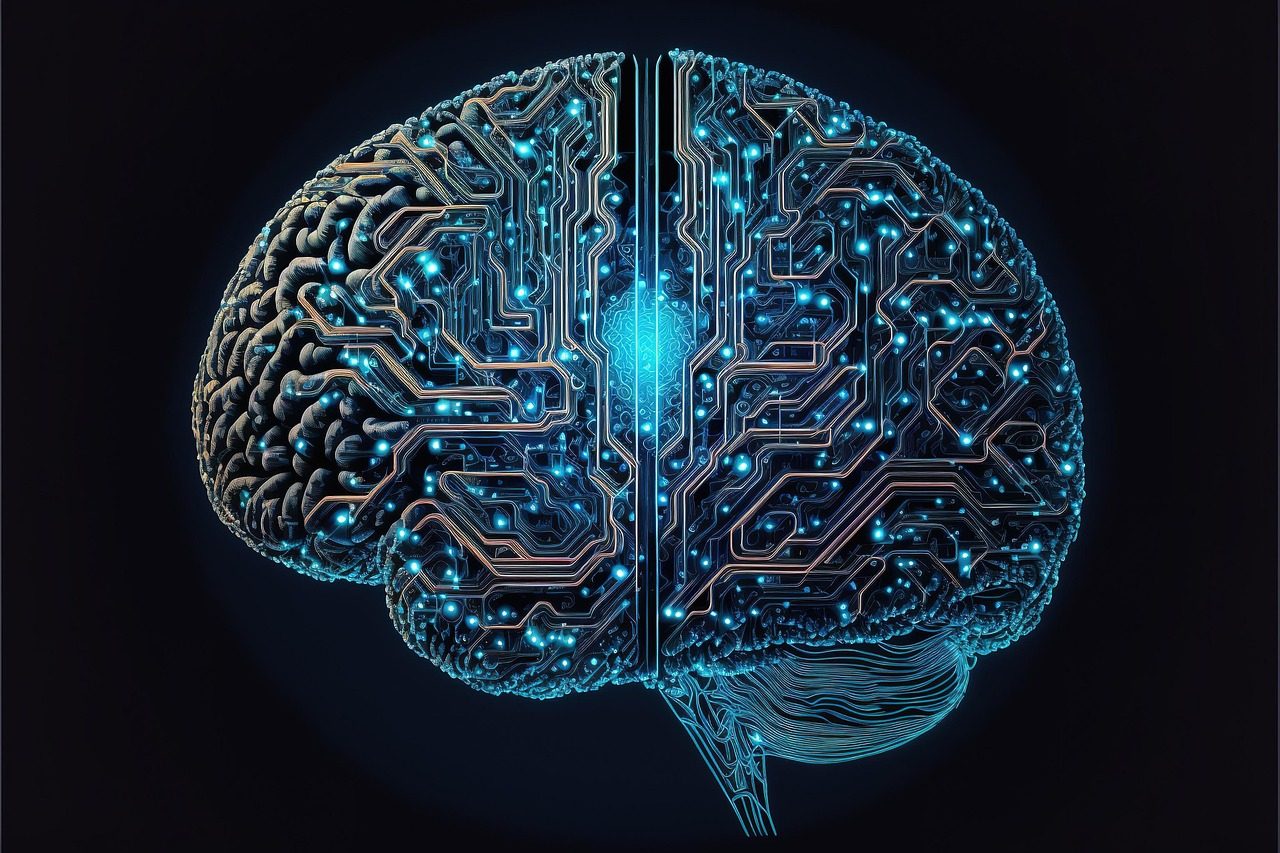
- Photo by DeltaWorks on Pixabay
A Washington University in St. Louis biologist is applying theories about how the brain balances order and chaos to a Department of Energy project aimed at making quantum sensors more accurate and energy efficient, according to an article on the university’s website.
Keith Hengen, an associate professor of biology at Washington University, has joined Argonne National Laboratory physicist Whitney Armstrong as co-principal investigator of a $750,000 project that will test whether quantum sensors can improve their performance by operating near a state known as criticality.
The university said that the Department of Energy awarded the funding in late July through its Genesis Mission, a broader federal research effort spanning artificial intelligence, quantum information science, energy and other areas. The project, called “Superconducting Polychronous Computation Near Criticality,” brings together neuroscience, physics, engineering and quantum technology.
Article Intelligence
Sponsored
Ad
NewsLayerLearn more
NewsLayer Premium
Unlock deeper intelligence.
Ad-free reading, exclusive research, and real-time onchain insights.
Go Premium