

In July 2025, House Republicans staged a coordinated three-bill blitz they called ‘Crypto Week;, advancing the GENIUS, CLARITY, and the Anti-CBDC Surveillance State Act in the same five day stretch. The GENIUS Act was signed into law within 24 hours, creating a regulatory framework for dollar-backed stablecoins. However, the other two bills weren’t so lucky. The Anti-CBDC Surveillance State passed the House by an extremely narrow margin, and got stuck in Senate purgatory without a floor vote in place for over a year.
What The CLARITY Act Actually Does For Bitcoin
In July 2025, House Republicans staged a coordinated three-bill blitz they called ‘Crypto Week;, advancing the GENIUS, CLARITY, and the Anti-CBDC Surveillance State Act in the same five day stretch. The GENIUS Act was signed into law…
Bitcoin Magazine
Publisher
Aug 14, 2026 at 2:09 PM UTC · 5 min de leitura
Key Signal
256 pages House bill struck through
Entities
bitcoin
Last Updated
há 2 meses
Traduzindo…
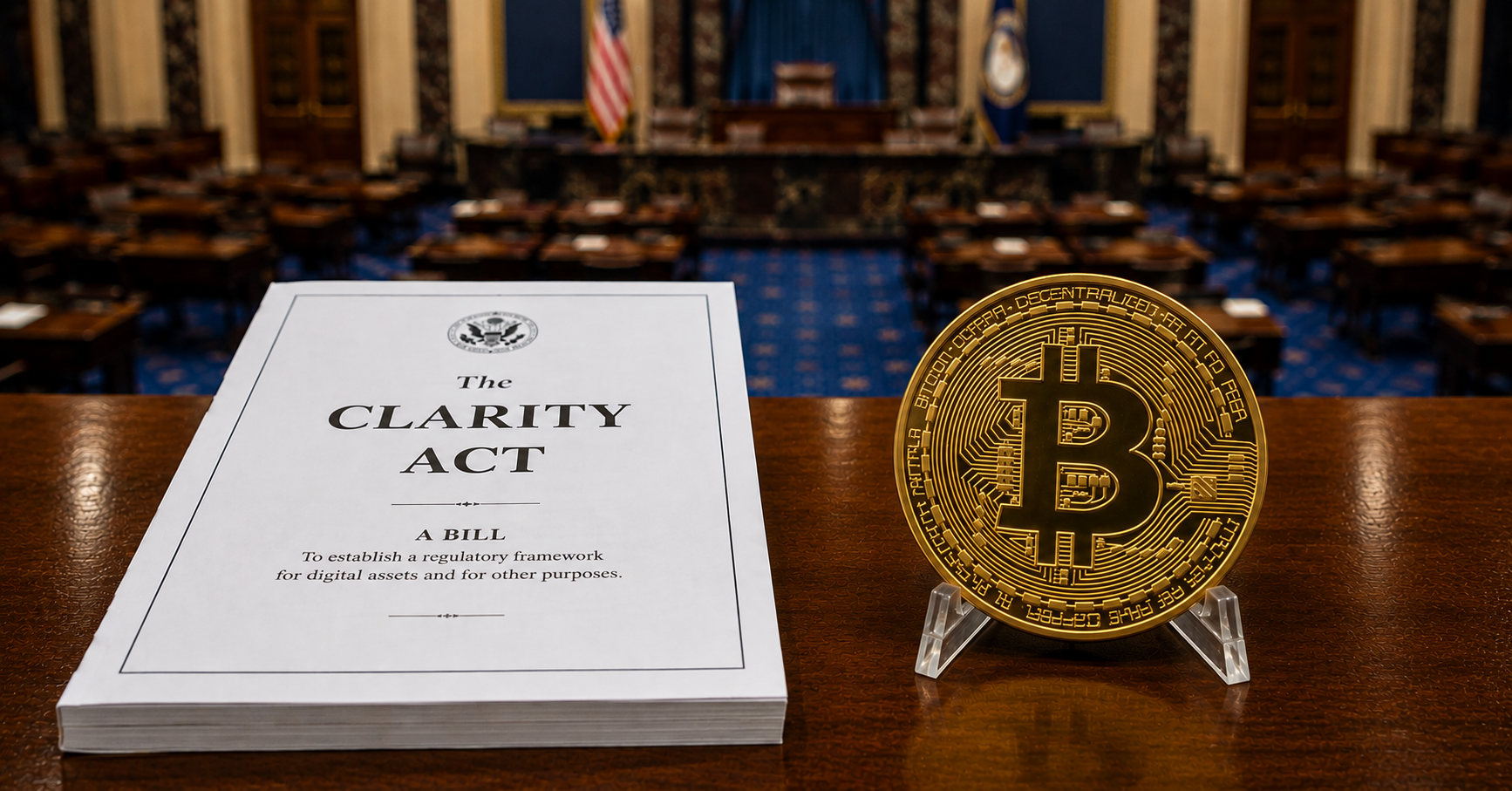
Following the House’s bipartisan passage of the CLARITY Act, the bill landed in the Senate Banking Committee where it sat for nearly a year. When the bill finally emerged out of committee, its cover page included the phrase “Strike out all after the enacting clause and insert the part printed in italic.”
Translation: 100% of the bill had been rewritten.
If you pull up the bill on Congress’ website today, you can see that the first 256 pages (the entire House-passed bill) are struck through, line by line, top to bottom. Then, starting on page 257, the Senate’s new version of the bill begins. (This is still the official text on file; a further-updated draft has circulated since, but hasn’t been formally filed as an amendment.)
Market Context
Bitcoin
BTC
$80,100
-2.62% (24H)
Market Cap
$1.62T
24H Volume
$29.4B
24H High
$83,020
Article Intelligence
Key Entities
Tornado Cashbitcoin
Topics
Related Coverage
 CryptoAvanza Bank holds $298K in shares of Bitcoin treasury company Strategyhá uma hora · 2 min read
 CryptoBitcoin Stuck Between $80,000 and $88,000: Which Level Breaks First?há 2 horas · 2 min read
 CryptoBitcoin Price Crash Wipes Out $89 Billion as Fed Rate Hike Odds Hit 44%há 2 horas · 2 min read
Sponsored
Ad
NewsLayerLearn more
NewsLayer Premium
Unlock deeper intelligence.
Ad-free reading, exclusive research, and real-time onchain insights.
Go Premium