
Insider Brief
Alice & Bob Demonstrates New Approach to Stabilizing Cat With DC Voltage Bias
Insider Brief PRESS RELEASE — Alice & Bob, a leader in fault-tolerant quantum computing, and the École Normale Supérieure de Lyon today announced a new and faster approach to stabilising cat-qubits in superconducting quantum systems…
Matt Swayne
Publisher The Quantum Insider
Oct 1, 2026 at 7:23 AM UTC · 3 dk okuma
Çevriliyor…
- Alice & Bob and ENS Lyon demonstrated a voltage-driven approach to stabilizing cat qubits that could enable more compact quantum hardware with lower heat generation.
- The device achieved a two-photon exchange rate of 3 MHz without a microwave drive, exceeding previous microwave-driven cat-qubit couplers while suppressing an unwanted frequency effect.
- Adjusting the voltage enabled one-, two- and four-photon exchanges on the same chip, potentially supporting four-component cat qubits.
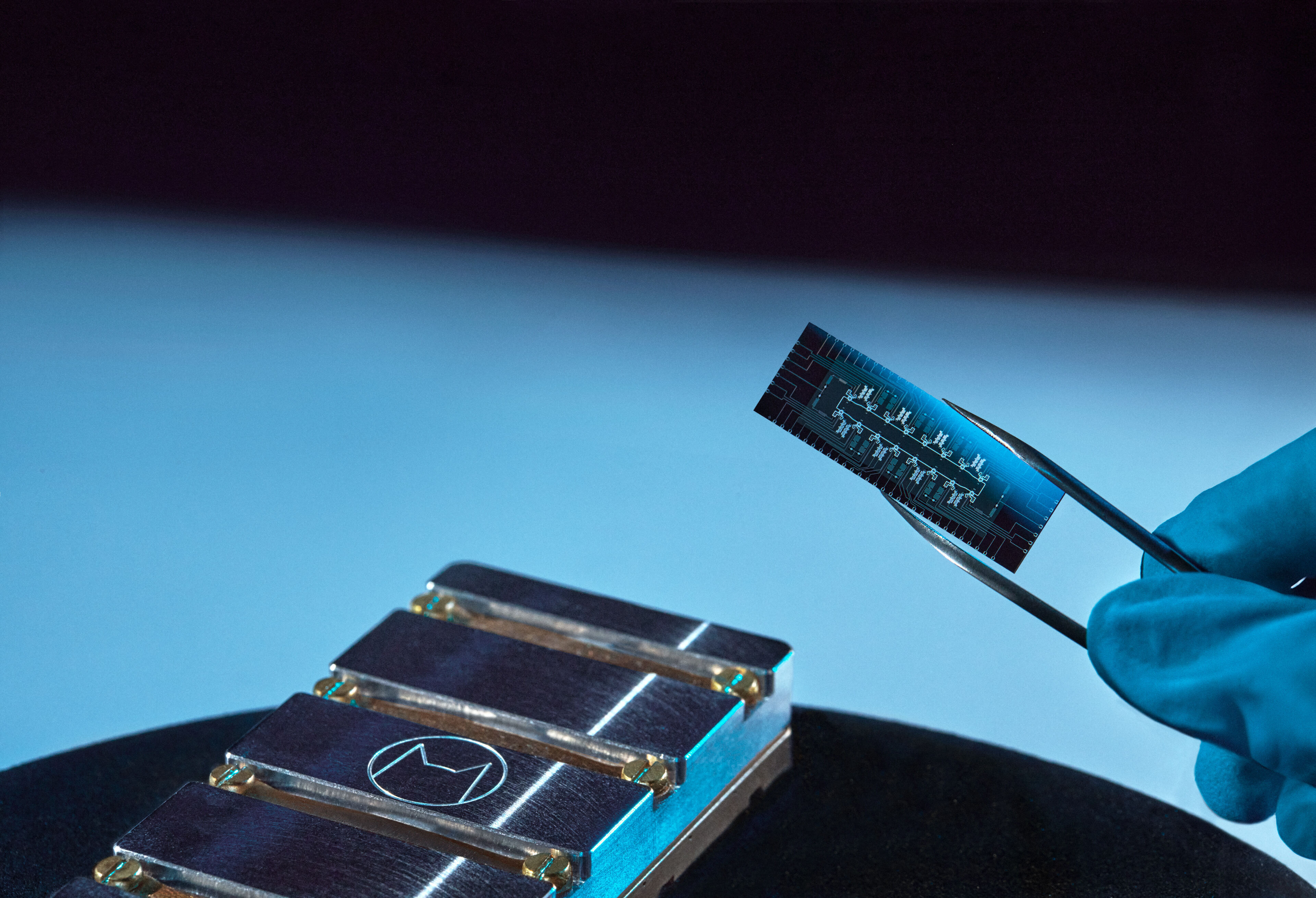
PRESS RELEASE — Alice & Bob, a leader in fault-tolerant quantum computing, and the École Normale Supérieure de Lyon today announced a new and faster approach to stabilising cat-qubits in superconducting quantum systems enabling more compact designs that generate less heat.
Cat qubits, which store information in a microwave resonator, are stabilised by a process that dissipates photons from the resonator into the environment strictly in pairs. This process takes place in a component called a coupler. In Alice & Bob’s current cat qubits, the coupler is driven by a carefully engineered microwave signal, an approach the company has refined over many years.
In this new experiment, the researchers explored an alternative coupler. They drove the same kind of process using a steady voltage of about one millionth of a volt, with no microwave signal required. Key findings include:
Article Intelligence
Topics
Sponsored
Ad
NewsLayerLearn more
NewsLayer Premium
Unlock deeper intelligence.
Ad-free reading, exclusive research, and real-time onchain insights.
Go Premium