

Arthur Hayes Warns Bitcoin May Fall to $50,000 Before $1 Million
Arthur Hayes said Bitcoin could decline to $50,000 before eventually reaching $1 million, highlighting the potential for substantial volatility along the way. The forecast reflects his long-term bullish view while cautioning that major…
Bitcoin News
Publisher
Aug 10, 2026 at 12:34 AM UTC · 4 dk okuma
Key Signal
20 market contacts interviewed
Entities
bitcoin
Market Impact
BTC-0.58%$76,808
Last Updated
bir ay önce
Çevriliyor…
Öne Çıkanlar
- Hayes sees a possible Bitcoin drop to $50,000 before a longer-term move toward $1 million.
- The projection underscores Bitcoin’s history of sharp swings and uncertain timing.
- The comments are a market outlook, not a guarantee of future prices.
- Arthur Hayes frames the AI buildout as a credit bust, not a dot-com repeat.
- Bitcoin may chop between $60,000 and $70,000, with downside to $50,000.
- He expects AI capex growth to decelerate in 2027, with the slowdown becoming apparent by 2028.
What Hayes Thinks the AI Buildout Really Is
Arthur Hayes, co-founder of Bitmex and chief investment officer at Maelstrom, argues that the multitrillion-dollar artificial intelligence infrastructure boom resembles a real estate credit bubble rather than a traditional technology expansion. In an essay titled “Situationship,” published on Aug. 4, Hayes compared data center financing to the 2008 financial crisis rather than the earnings-driven dot-com crash of 2000, arguing an AI credit bust could trigger government intervention and liquidity that propel bitcoin toward $1 million.
Hayes wrote:
“Once the authorities sufficiently panic because their AI-created GDP growth is just another run-of-the-mill property bubble, they will print money in sums greater than the 2008 GFC. This will ultimately drive bitcoin to one million and beyond.”
At the center of Hayes’ thesis are hyperscalers, large cloud companies building data centers used to train and run AI models. Hayes argues that these companies are effectively financing real estate filled with rapidly depreciating hardware. As newer chips produce more computing power with less electricity, lenders could eventually be left financing facilities filled with obsolete equipment.
Market Context
Bitcoin
BTC
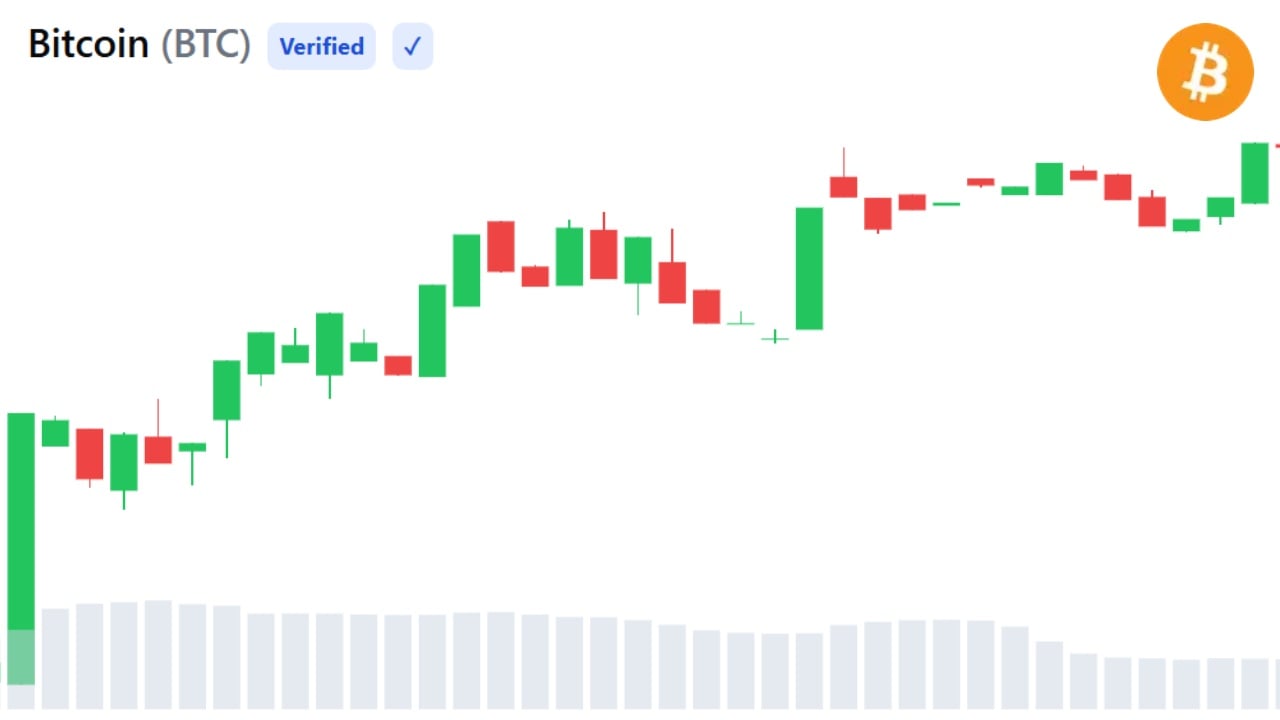
$76,778
-0.62% (24H)
Market Cap
$1.54T
24H Volume
$12.8B
24H High
$77,400
Article Intelligence
Key Entities
Topics
Related Coverage
 CryptoStrategy's $200M Bitcoin sale didn't drop prices, signaling strong market demand.33 dakika önce · 1 min read
 CryptoSatsuma Technology to sell all bitcoin and move toward delistingbir saat önce · 2 min read
 Crypto$BTC is sitting near the bottom of the Bitcoin Rainbow Chart2 saat önce · 1 min read
Sponsored
Ad
NewsLayerLearn more
NewsLayer Premium
Unlock deeper intelligence.
Ad-free reading, exclusive research, and real-time onchain insights.
Go Premium