

Cardano and Solana are testing two competing approaches to on-chain governance, with one exposing the cost of voter absence and the other shifting more power to default representatives who may have their own economic interests.
Cardano and Solana just exposed crypto governance’s biggest weakness
Cardano and Solana are testing two competing approaches to on-chain governance, with one exposing the cost of voter absence and the other shifting more power to default representatives who may have their own economic interests.
CryptoSlate
Publisher
Aug 27, 2026 at 3:30 AM UTC · 5 dk okuma
Key Signal
43% Cardano DRep support
Entities
solana, cardano
Market Impact
Total MCap+0.13%
Last Updated
bir dakika önce
Çevriliyor…
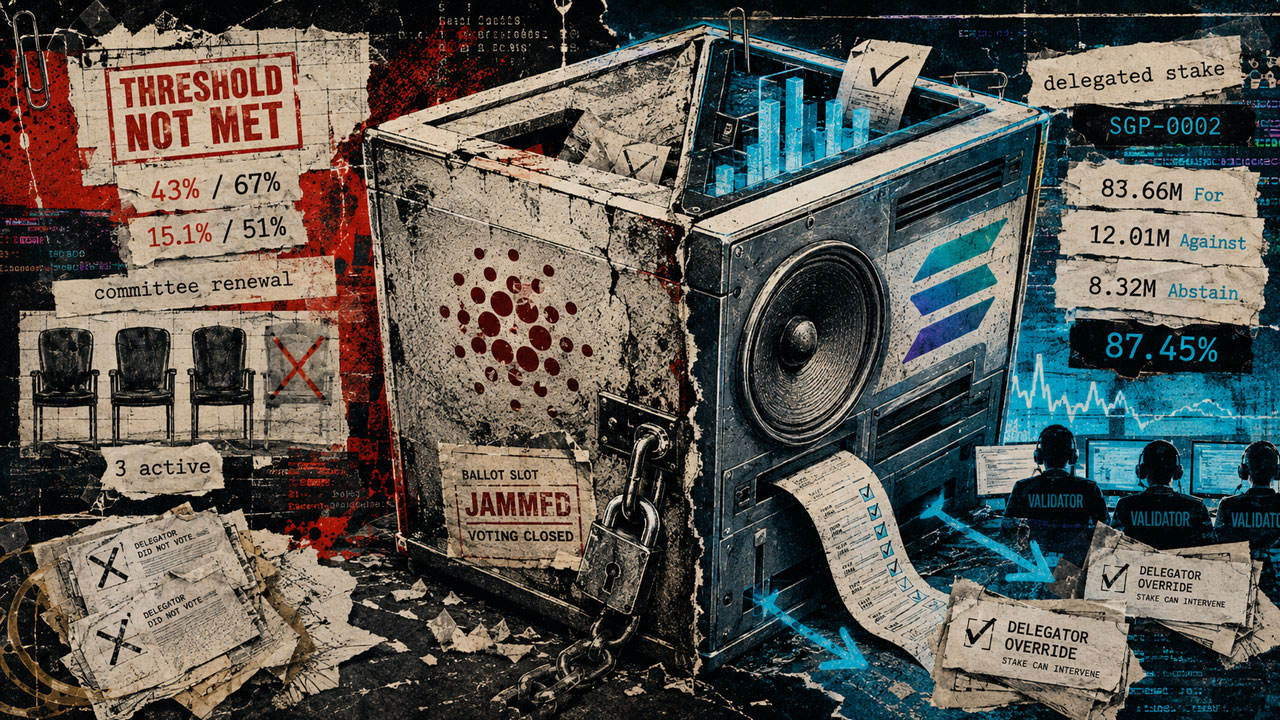
Cardano’s constitutional committee renewal requires separate approval from delegated representatives, or DReps, and stake pool operators. Solana instead allows validators to cast governance votes using the active stake delegated to them unless individual stakers override that choice.
The distinction is becoming visible in simultaneous votes on both networks.
Cardano faces the more immediate risk. An Aug. 26 snapshot showed support for its committee renewal below the required thresholds among both DReps and stake pool operators, creating the possibility that four committee terms expire without replacements.
Solana reduces that kind of participation bottleneck by making validators default voting agents. But its current governance vote shows the tradeoff: stakers who do nothing effectively allow validators to exercise governance weight associated with their delegated stake, even when those validators may have financial interests affected by the proposal.
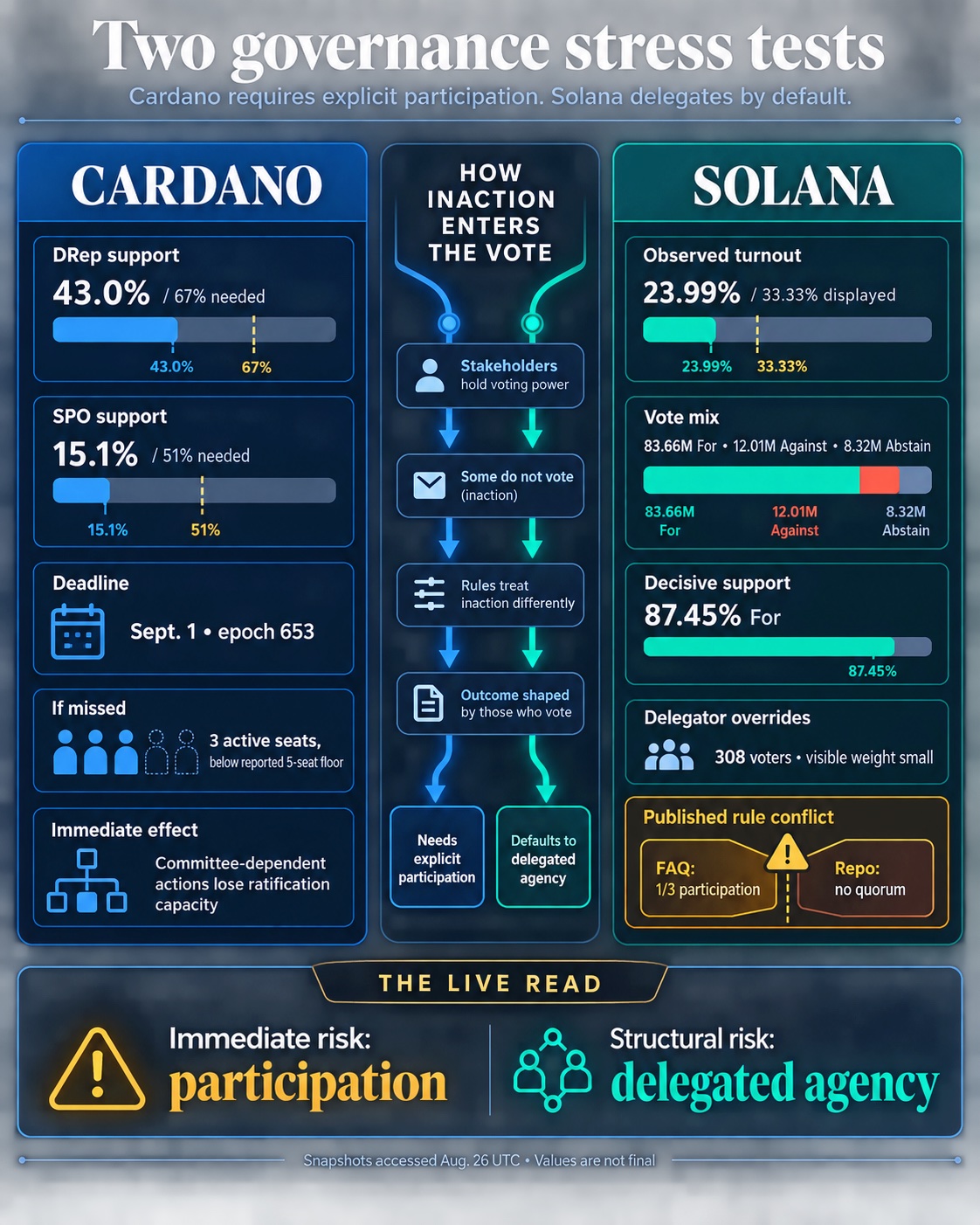
Both systems therefore confront the same underlying problem from different directions. Cardano leaves inactive voters silent. Solana lets an existing delegate speak for them.
Market Context
Article Intelligence
Topics
Sponsored
Ad
NewsLayerLearn more
NewsLayer Premium
Unlock deeper intelligence.
Ad-free reading, exclusive research, and real-time onchain insights.
Go Premium