
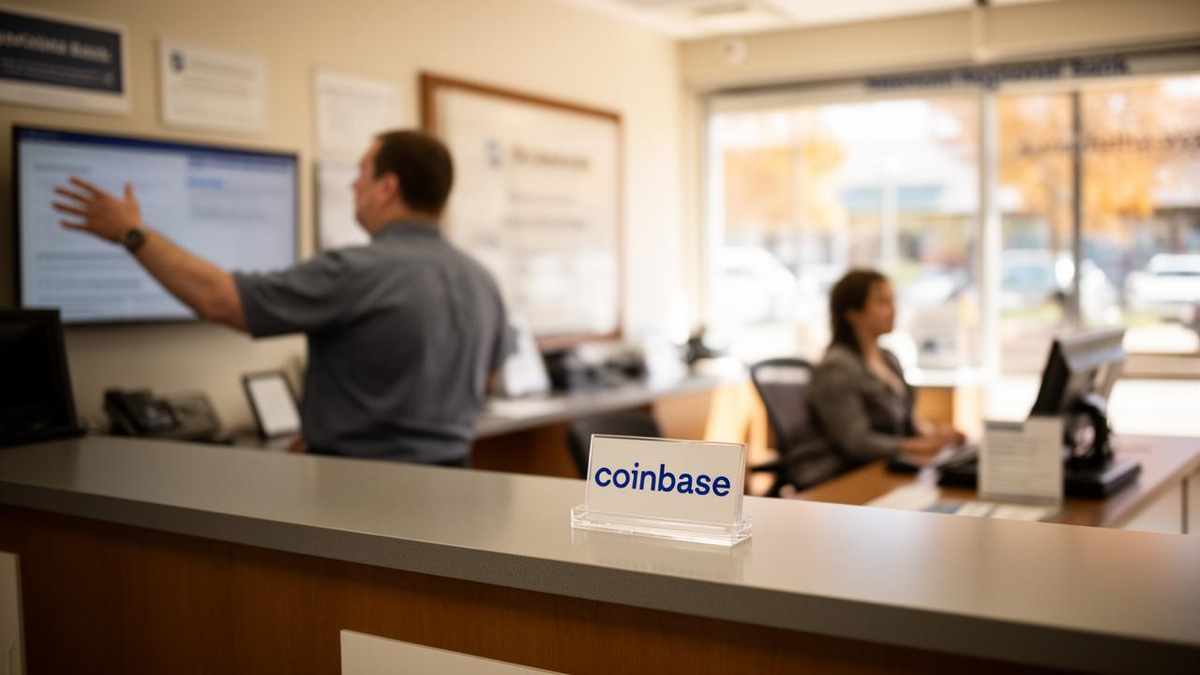
Coinbase, the major U.S. crypto asset exchange, announced on September 16 a new partnership that will enable U.S. regional banks and credit cooperatives to offer crypto asset services to their customers. By teaming up with Stablecore, a digital asset infrastructure provider for banks, the arrangement allows financial institutions to introduce crypto asset trading, custody, and settlement through their existing banking services without building their own systems.
Coinbase to Provide Crypto Asset Infrastructure to Over 3,000 U.S. Regional Banks
Coinbase, the major U.S. crypto asset exchange, announced on September 16 a new partnership that will enable U.S. regional banks and credit cooperatives to offer crypto asset services to their customers. By teaming up with Stablecore, a…
finance.biggo.com
Publisher
Sep 18, 2026 at 7:06 AM UTC · Updated 3 gün önce · 3 dk okuma
Key Signal
3,000+ Potential bank reach
Entities
coinbase
Last Updated
3 gün önce
Çevriliyor…
Under the partnership, customers of eligible financial institutions will be able to access services including crypto asset trading, custody, settlement, and staking through the online services of the banks and credit cooperatives they already use. Coinbase will provide the regulatory-compliant custody and trading infrastructure for crypto assets, while Stablecore will serve as the connector between banks' core systems and Coinbase's services.
Removing Barriers to Entry for Regional Financial Institutions
For U.S. regional banks and credit cooperatives to offer crypto asset services, dedicated systems and management frameworks have historically been essential. Beyond crypto asset custody and trading, the regulatory burden—including know-your-customer (KYC) requirements, anti-money laundering (AML) measures, and segregation of customer assets—was substantial. For regional financial institutions with limited IT investment capacity compared to major financial institutions, the barrier to entry was extremely high.
Article Intelligence
Key Entities
Topics
Related Coverage
 CryptoBitcoin hits $86,000 putting ETF investors back in profit after $86 billion wipeoutbir saat önce · 4 min read
 PolicyFed terminates crypto-linked BSA/AML enforcement action against bank and written agreement with holding companiesbir saat önce · 1 min read
 CryptoNEWS: US sanctions BitBank, Iranian financier’s crypto exchangebir saat önce · 1 min read
Sponsored
Ad
NewsLayerLearn more
NewsLayer Premium
Unlock deeper intelligence.
Ad-free reading, exclusive research, and real-time onchain insights.
Go Premium