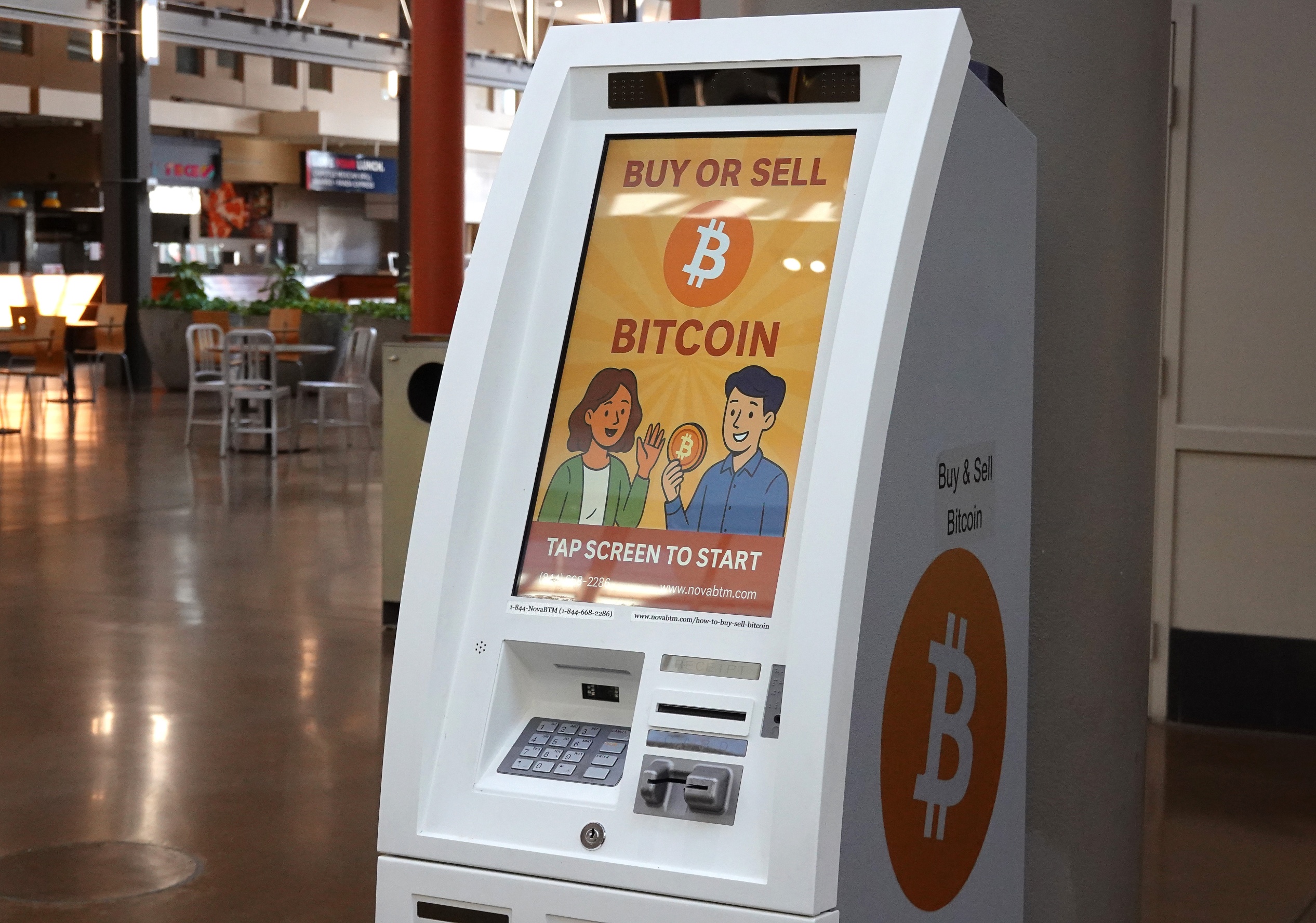
Australia's financial crime regulator pulled the operating license of a major crypto ATM network on Sunday, forcing 96 machines offline — the most forceful enforcement action AUSTRAC has taken against an individual cash-to-crypto operator — and completing a picture that has been coming into focus on three continents for more than a year: the business model that turns cash into Bitcoin at convenience store kiosks cannot survive the compliance costs required to actually stop it from being used to steal from elderly people.
How AUSTRAC's Suspension Mechanism Works — and Why a Fine Wasn't Enough
The Australian Transaction Reports and Analysis Centre suspended the Virtual Asset Service Provider registration of Cryptolink Pty Ltd for three months, effective August 9, 2026. Under Australia's Anti-Money Laundering and Counter-Terrorism Financing Act, that registration is the operating license for every activity Cryptolink does. Without it, the company's 96 cryptocurrency automatic teller machines — scattered across major Australian cities — are not permitted to exchange a single dollar for a single satoshi.
The specific compliance mechanism Cryptolink failed is called a Threshold Transaction Report — a mandatory filing that Australian law requires operators to submit within 10 business days whenever a cash transaction reaches or exceeds A$10,000 (approximately $7,030). These reports feed directly into AUSTRAC's financial intelligence database, which is shared with law enforcement. When an operator goes dark on TTR filing, AUSTRAC loses its visibility into large cash movements through those machines — which is precisely the intelligence loss the agency cited in its announcement.
"While Cryptolink met the conditions stipulated in its enforceable undertaking, it subsequently failed to meet basic reporting obligations, particularly for threshold transaction reports," AUSTRAC CEO Brendan Thomas said Monday. "The company failed to submit these required reports or respond to AUSTRAC's request for information, thus we've deemed it too high risk to continue operating at present."
That language — "too high risk to continue operating" — is significant. AUSTRAC had already tried the lighter option. In October 2025, after its dedicated Cryptocurrency Taskforce identified a series of alleged breaches, the regulator issued Cryptolink an infringement notice of A$56,340 (approximately $39,607) and entered the operator into an enforceable undertaking: a formal commitment to improve transaction monitoring, risk frameworks, and reporting procedures. Cryptolink paid the fine.
It did not improve the reporting. The subsequent failure to file TTRs — while already under formal regulatory scrutiny and bound by a signed undertaking — removed the goodwill that might otherwise have kept the machines running through a second corrective period. AUSTRAC went to the next lever: registration suspension.
A Sector Built on Elderly Victims' Savings
What makes the Cryptolink action the latest chapter in a larger story rather than an isolated Australian enforcement moment is the data AUSTRAC itself has accumulated about who uses these machines — and why.
Of the 90 most active Cryptolink users AUSTRAC examined, the agency found that 85% of transaction value was linked to scam or mule activity. That figure is not describing a machine that has been occasionally misused. It describes a machine whose heaviest users are overwhelmingly either fraud victims depositing cash they've been deceived into moving, or criminals intermediating that cash into crypto.
The demographic breakdown compounds the picture. Data gathered from nine crypto ATM providers across Australia shows that users over 50 account for nearly 72% of total ATM transaction value, with the 60-to-70 age bracket alone representing 29%. AUSTRAC has documented that this over-60 cohort is heavily over-represented among scam victims. The mechanism is consistent: a scammer contacts an elderly person by phone or text, impersonates a bank, a government agency, or a law enforcement officer, and instructs them to go to a nearby crypto ATM, insert cash, and scan a QR code. The money — once sent to a blockchain address controlled by the scammer — cannot be recalled. There is no chargeback mechanism. There is no reversal window. Bitcoin transactions are final.
Australia's crypto ATM market processes close to 150,000 transactions worth approximately A$275 million (approximately $193 million) annually, according to AUSTRAC estimates, with roughly 99% of those transactions being cash deposits used to purchase cryptocurrency. That near-total reliance on cash is the structural fact that makes the machines the preferred payment channel for fraud: cash is anonymous at the point of insertion in a way that bank transfers and credit card payments are not.
AUSTRAC's Escalating Campaign
The Cryptolink suspension did not arrive without context. AUSTRAC established its Cryptocurrency Taskforce in late 2024 and spent the following months engaging operators directly before moving to enforcement in 2025.
In June 2025, the regulator declined to renew the registration of another operator, Harro's Empires, and imposed a sector-wide A$5,000 (approximately $3,515) cap on individual cash deposits and withdrawals at all crypto ATMs across Australia, alongside requirements for enhanced customer due diligence and mandatory scam warnings at machines.
The political backing for further action has strengthened. Home Affairs Minister Tony Burke, addressing the National Press Club in October 2025, announced proposals for new legislative powers that would allow AUSTRAC's CEO to restrict or outright prohibit "high-risk financial products, services, and delivery channels" — with crypto ATMs explicitly named. Burke noted that Australia had grown from just 23 crypto ATMs six years ago to more than 2,000 today.
If Parliament passes that legislation, AUSTRAC would gain the ability to act against the machine category itself rather than operator by operator — a significant expansion of the regulator's authority, and one Thomas has said the agency is ready to use.
Why Compliance Can't Save This Machine
The architectural problem that regulators across multiple jurisdictions have identified is one the crypto ATM industry has never found a workable answer to: the combination of anonymous cash input and irreversible cryptocurrency output creates a payment channel that is structurally better suited to fraud proceeds than to any legitimate financial use case its operators have identified.
The money-laundering framework that shapes how financial crime agencies evaluate risk identifies "placement" — the first stage of converting dirty cash into the financial system — as the moment of highest vulnerability to detection. Cash-to-crypto ATMs sit precisely at the placement stage. The cash a scam victim inserts at a convenience store kiosk is, from the scammer's perspective, fraud proceeds being placed into a system where they can then be moved pseudonymously across blockchain addresses without a bank account, a wire transfer record, or a correspondent institution to flag the movement.
Research from TRM Labs found that illicit transactions made up roughly 1.2% of cash-to-crypto ATM volumes in 2023 — double the 0.63% rate across the broader crypto ecosystem. Compliance sufficient to genuinely address this — real-time identity verification of every user, complete TTR filing for every qualifying transaction, meaningful monitoring of downstream wallet activity — costs more to operate than the fees these machines can charge. Bitcoin Depot's Chapter 11 filing in May 2026 proved that conclusion at scale.
Bitcoin Depot's Collapse: When Compliance Costs Exceeded the Business Model
Bitcoin Depot, the Atlanta-based company that operated the largest network of Bitcoin ATMs in North America, filed for Chapter 11 bankruptcy protection on May 18, 2026, shutting down its entire fleet of approximately 9,700 machines. The company cited "increasingly stringent compliance obligations, including new transaction limits, and in some jurisdictions, outright restrictions or bans" as the reason its business model had become unsustainable.
The financial data tells the compliance-cost story directly. Bitcoin Depot reported an $80.7 million — or 49.2% — year-over-year revenue decline in the first quarter of 2026, driven by "a decrease in transaction volume driven by a combination of regulatory impacts and enhanced compliance controls." The company posted a $9.5 million net loss in the quarter, against $12.2 million in net income the year before. Its stock shed nearly 80% of its value in the months leading to the filing.