
Hidden Text in PDFs Is Hijacking This AI Assistant
A security firm says Atlassian's AI assistant will quietly ship your Jira tickets and Confluence docs to an attacker, using instructions buried in a file you'd swear was empty.
Jose Antonio Lanz
Publisher Decrypt
Aug 10, 2026 at 7:56 PM UTC · 2 dk okuma

Çevriliyor…
- Security company PromptArmor says the Rovo AI assistant can be steered to exfiltrate data with no human approval, via hidden instructions in an uploaded file, like PDFs.
- The trick works even when an org disables Rovo's web search, because the URL-opening tool stays live.
- Atlassian, the maker of Rovo, got the report on May 23 and went quiet; two months on, Rovo "remains vulnerable," the security firm says.
Remember when black-hat SEOs stuffed web pages with white-on-white keywords—invisible to readers, readable to Google—to game the search rankings? Hackers are doing the same thing with AI models now. The attacker hides instructions inside a PDF document, the model can't tell the difference between the user's words and the planted ones, and it obeys.
Per PromptArmor's disclosure, Rovo—Atlassian's agent that reaches across Jira, Confluence, and the rest of your workspace—can be turned into a data pipeline with a single poisoned file. A victim asks Rovo to organize some tickets, uploads a document, and the document is carrying a concealed prompt (for example an instruction written in transparent color and a font at 1pixel in size).
The eye can’t see it, but an Agent recognizes that text as another text in the document. That prompt tells Rovo to gather sensitive data and paste it onto an attacker-controlled URL. The firm calls it a zero-click attack. There’s no approval click, and no warning.
Article Intelligence
Topics
Related Coverage
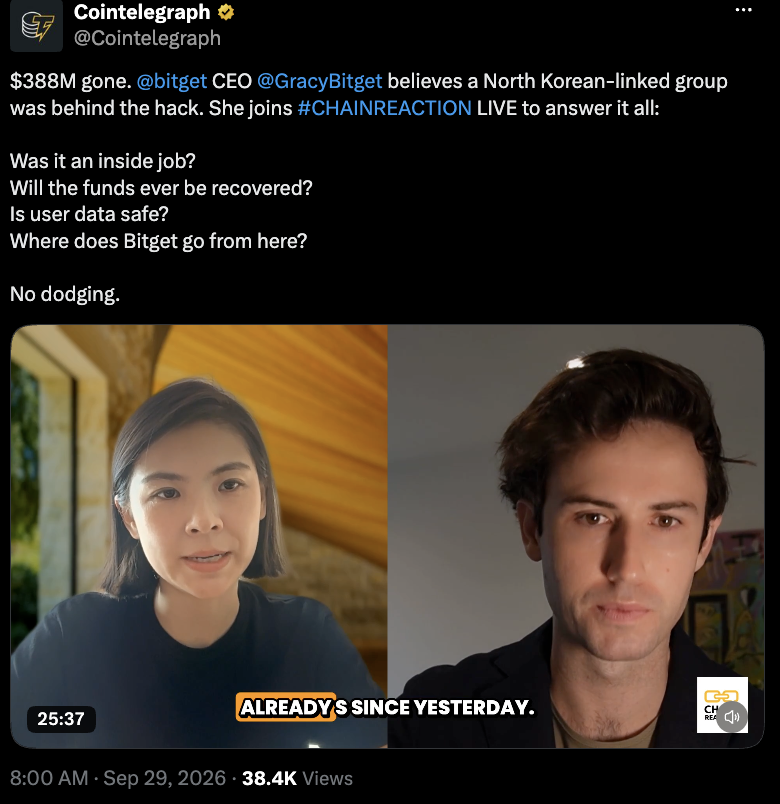 PolicyBitget CEO ‘not very optimistic’ on recovering funds from $388M breach3 saat önce · 2 min read
 Artificial IntelligenceOpenAI apologizes to Australia after its AI agents breached government sites6 saat önce · 2 min read
 CryptoBitcoin Pioneer Adam Back’s Empire Beset by Hack, Lawsuits7 saat önce · 1 min read
Sponsored
Ad
NewsLayerLearn more
NewsLayer Premium
Unlock deeper intelligence.
Ad-free reading, exclusive research, and real-time onchain insights.
Go Premium