
A recent incident where over $10 million was siphoned out of a decentralized perpetual futures exchange shows the shortcomings of focusing security on withdrawal controls
Lighter incident exposes risks beyond withdrawal controls
Crypto platforms need enforceable limits on every route an API key can use to transfer value, including trades, internal transfers and shared pools.
Cointelegraph by Adrian Zmudzinski
Publisher Cointelegraph
Nov 17, 2026 at 5:51 PM UTC · Updated bir gün önce · 2 dk okuma

According to Lighter’s postmortem, an attacker used compromised API keys to move funds into a public pool and redeem shares held through another account. Bitquery traced a withdrawal of 10.39 million USDC. The exchange said its protocol and smart contracts were unaffected.
Lighter now requires wallet signatures for transfers into public pools and has made API-key signatures non-public. It also plans IP allowlists and configurable permissions for individual keys.
Lighter has since restored deposits and withdrawals while also returning about $5 million in USDC (USDC) to the affected trader.
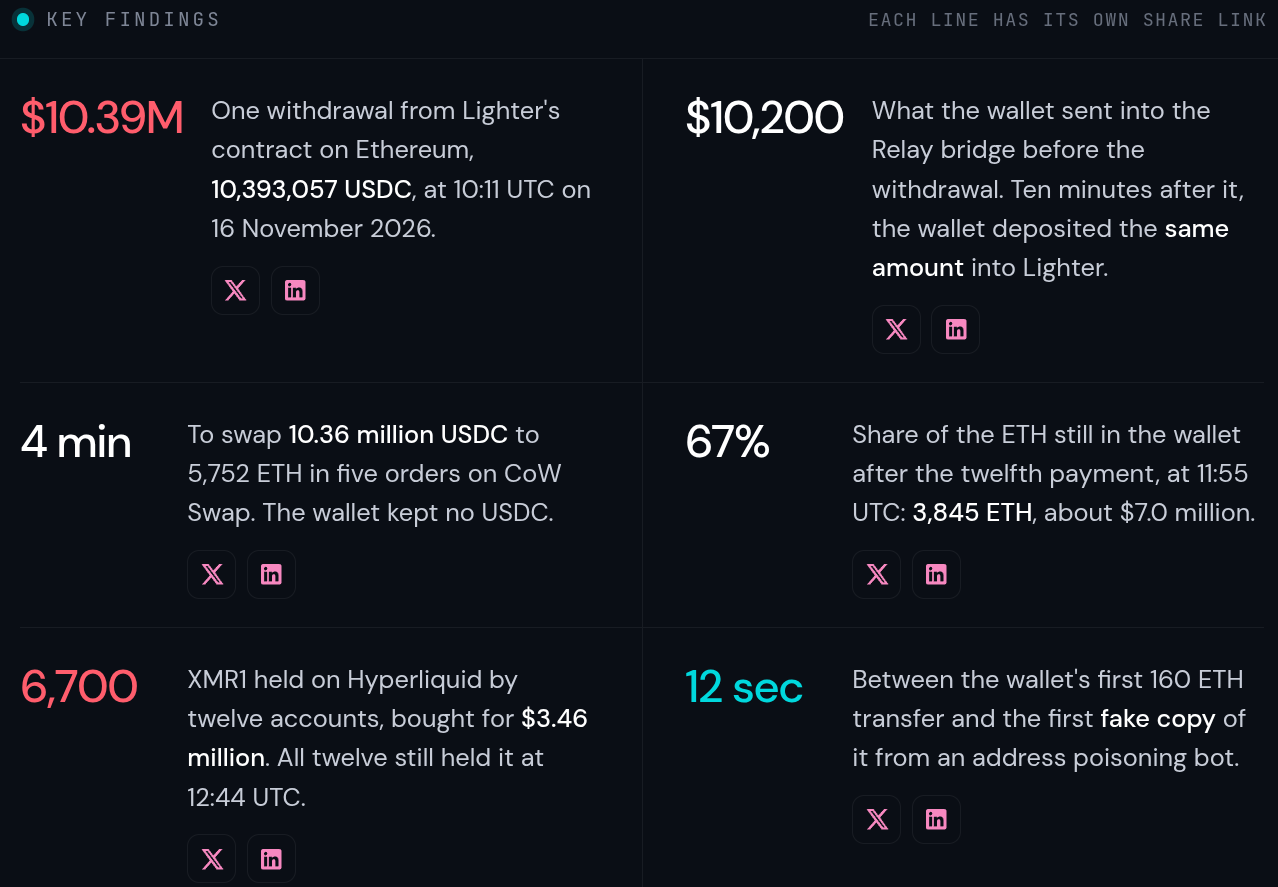
Lighter incident infographic. Source: Bitquery
The incident highlights how cybersecurity reviews need to look past smart contract vulnerabilities. It is important to also consider the gap between the permissions a system grants and the financial consequences those permissions allow.
Related: Google says hackers use AI agents to find and exploit software flaws
The real risk involving a credential depends on the balances it can reach, the transactions it can initiate and the exposures it can create. Whether it is permitted to withdraw assets and to which destinations are just two of many factors. As Lighter put it in its postmortem:
Article Intelligence
Topics
Sponsored
Ad
NewsLayerLearn more
NewsLayer Premium
Unlock deeper intelligence.
Ad-free reading, exclusive research, and real-time onchain insights.
Go Premium