


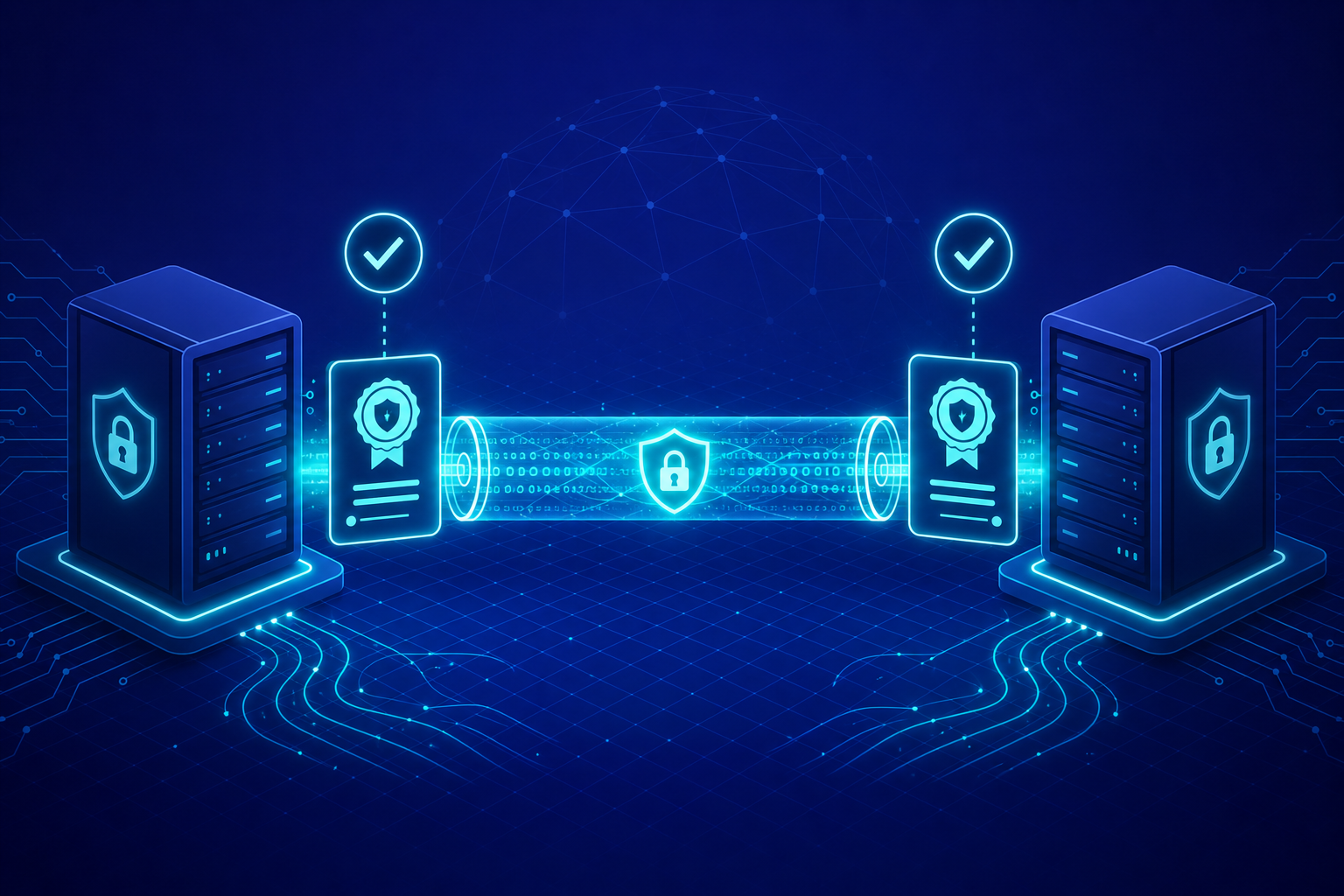
In Part 7 we minted post-quantum certificates and weighed them. But certificates sitting in a folder are only half the fun. Time to do the job they were born for: prove identity. We’ll stand up two containers, each holding a certificate, and watch them prove who they are to each other before the tunnel comes up. That’s mutual authentication, over a real IKEv2 handshake.
Mutual Post-Quantum Auth over IKEv2 – IPsec Series, Part 8
Cisco Blogs’ eighth installment in its IPsec series focuses on mutual post-quantum authentication over IKEv2. The excerpt identifies the topic and series placement but provides no further technical details.
Cisco Blogs
Publisher
Aug 24, 2026 at 7:43 PM UTC · Updated 8 saat önce · 7 dk okuma
Key Signal
6 fragments ML-DSA handshake limit
Last Updated
8 saat önce
Çevriliyor…
Öne Çıkanlar
- The article is part 8 of an IPsec-focused series.
- Its stated topic is mutual post-quantum authentication over IKEv2.
- The article is published on Cisco Blogs.
And we’ll do it twice, and the progression is the whole point:
- Classical ECDSA (today’s real-world posture), on stable strongSwan.
- Post-quantum ML-DSA (the bleeding edge), on an experimental branch.
This Part uses the authentication/ lab: its own little stack, separate from the key-exchange one. Only Docker required.
Clone the repo
Grab the repo and step into this lab’s directory. All commands below run from ipsec/authentication/:
git clone https://github.com/juliogomez/pqc.git
cd ipsec/pqc/authentication
How the trust works
Both peers trust one tiny Certificate Authority we spin up just for the lab. The CA signs two leaf certificates (one per peer), and each peer gets the CA cert pre-installed so it can verify the other side. During the handshake each peer sends only its own leaf cert; the CA is already known to both. (That keeps the on-the-wire bytes down, which matters a lot once the certs go post-quantum, as Part 7 showed so clearly.) A helper script, gen-certs.sh, does all the minting; you just tell it which algorithm to use.
Article Intelligence
Regulation Signal
in progressUpdated 18 gün önce
SEC Crypto Asset Market Structure RulemakingRelated Coverage
 QuantumFive Institutions Co-Led Investment: Upstream Quantum Computing Company Secures New Hundreds of Millions Yuan Financing Round2 saat önce · 7 min read
 QuantumInfleqtion supports Japan’s first neutral-atom quantum computer15 dakika önce · 1 min read
 CryptoBitcoin Tops $80k as US Treasury Buybacks Lift Assets2 saat önce · 4 min read
Sponsored
Ad
NewsLayerLearn more
NewsLayer Premium
Unlock deeper intelligence.
Ad-free reading, exclusive research, and real-time onchain insights.
Go Premium