

Quantum computing has always struggled to achieve the necessary division of labor between processing and memory. While different approaches for separate RAM exist, they typically require bulky electromagnetic resonators. Scientists have now developed a computing architecture that stores memory as vibrations, exponentially shrinking the required hardware.
Quantum computer chip crams more info into less volume – by vibrating
Quantum computing has always struggled to achieve the necessary division of labor between processing and memory. While different approaches for separate RAM exist, they typically require bulky electromagnetic resonators. Scientists have…
New Atlas
Publisher
Sep 24, 2026 at 1:55 AM UTC · Updated 3 gün önce · 4 dk okuma
Market Impact
ETH+0.22%$2,687
Last Updated
3 gün önce
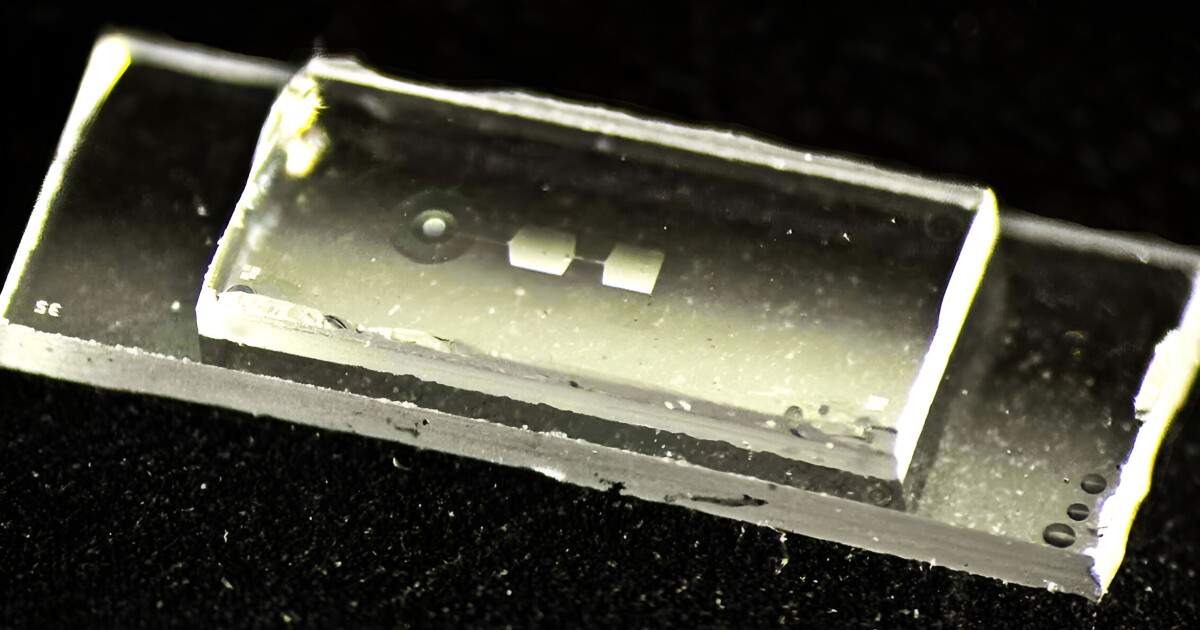
Researchers at ETH Zurich have created a high-overtone bulk acoustic-wave resonator that stores information as phonons, efficiently separating memory from processing. The architecture stores the working information as vibrations inside microscopic resonators while superconducting qubits handle processing as usual. The researchers say this could fit much more quantum information into a smaller space than electromagnetic memory, while keeping the information stable.
Standard computers, including everything from your phone to PCs and gaming consoles, separate memory and processing. The CPUs and GPUs perform calculations, while the RAM temporarily holds the required working data. Superconducting quantum computers typically don't implement this division of labor, with every qubit serving as both a processing element and a storage element. While superconducting qubits are excellent at processing, they have short memories and tend to “forget” the information they hold when the computer runs a long algorithm.
Market Context
Ethereum
ETH
$2,687
+0.21% (24H)
Market Cap
$327.6B
24H Volume
$3.9B
24H High
$2,697
Article Intelligence
Sponsored
Ad
NewsLayerLearn more
NewsLayer Premium
Unlock deeper intelligence.
Ad-free reading, exclusive research, and real-time onchain insights.
Go Premium