

Researchers Observe Optical Magnus Effect to Unlock Precision Quantum Computing
In a significant scientific breakthrough, published in Physical Review Letters, researchers from the Paul Scherrer Institute PSI, ETH Zurich, and the University of Amsterdam have achieved the first direct observation of the optical…
AZoQuantum
Publisher
Aug 31, 2026 at 12:42 PM UTC · 3 dk okuma
Market Impact
ETH-1.04%$2,450
Last Updated
26 dakika önce
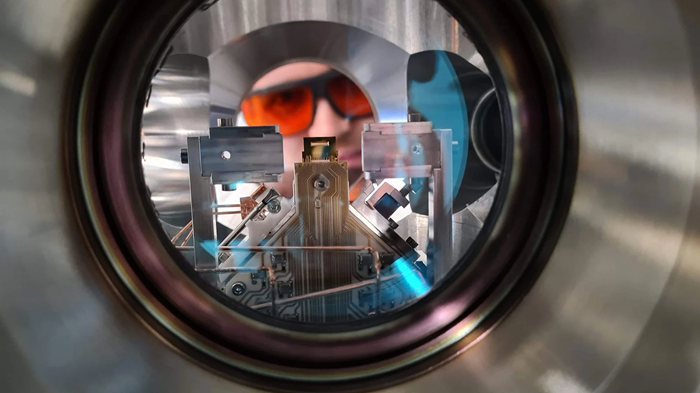
In a significant scientific breakthrough, published in Physical Review Letters, researchers from the Paul Scherrer Institute PSI, ETH Zurich, and the University of Amsterdam have achieved the first direct observation of the optical Magnus effect. This phenomenon, which is the optical equivalent of a classical mechanical effect, holds crucial implications for quantum computing, particularly in the precise control of qubits, the fundamental units of quantum information.
Skilled table tennis players excel at manipulating fast-moving objects. By imparting a specific spin on a serve, they can make the small white ball initially travel straight towards the table's edge before sharply curving into the left corner at the last moment. This athletic maneuver is governed by the Magnus effect, a physical phenomenon that influences balls of all sizes.
An international research collaboration at the Paul Scherrer Institute PSI has now extended this concept from macroscopic balls to the atomic realm, experimentally demonstrating the optical Magnus effect for the first time. In this context, no atom follows a curved path. Instead, the scientists direct a highly focused laser beam at a single ion and meticulously observe the resulting interaction.
Market Context
Ethereum
ETH
$2,450
-1.04% (24H)
Market Cap
$296.0B
Circulating Supply
120.7M ETH
24H Volume
$14.6B
24H High
$2,534
Article Intelligence
Related Coverage
 QuantumIonQ Researchers Run MegaQuOp-Scale Quantum Error Decoder on a MacBook Pro2 saat önce · 7 min read
 QuantumQuantum computing: Where we stand in 2026bir gün önce · 10 min read
 QuantumYaqumo Selected for a NEDO R&D Project; Launches Joint Research with SCREEN Holdings2 saat önce · 5 min read
Sponsored
Ad
NewsLayer Premium
Unlock deeper intelligence.
Ad-free reading, exclusive research, and real-time onchain insights.
Go Premium