

Insider Brief
Researchers Use IBM Quantum Computer to Test Drug-Docking Method
A team of Singapore-based researchers reports that a hybrid quantum-classical method could offer a new route to studying drug candidates using today’s Noisy Intermediate-Stage Quantum (NISQ) devices.
The Quantum Insider
Publisher
Aug 27, 2026 at 11:38 AM UTC · 8 dk okuma
Çevriliyor…
- Researchers demonstrated a resource-efficient hybrid quantum-classical method for molecular docking on an IBM quantum processor.
- The method represented 18- and 14-variable docking problems using six and five qubits, respectively.
- The quantum hardware identified the same molecular contacts as classical calculations, although the small-scale tests didn’t demonstrate quantum advantage.
A team of Singapore-based researchers reports that a hybrid quantum-classical method could offer a new route to studying drug candidates using today’s Noisy Intermediate-Stage Quantum (NISQ) devices.
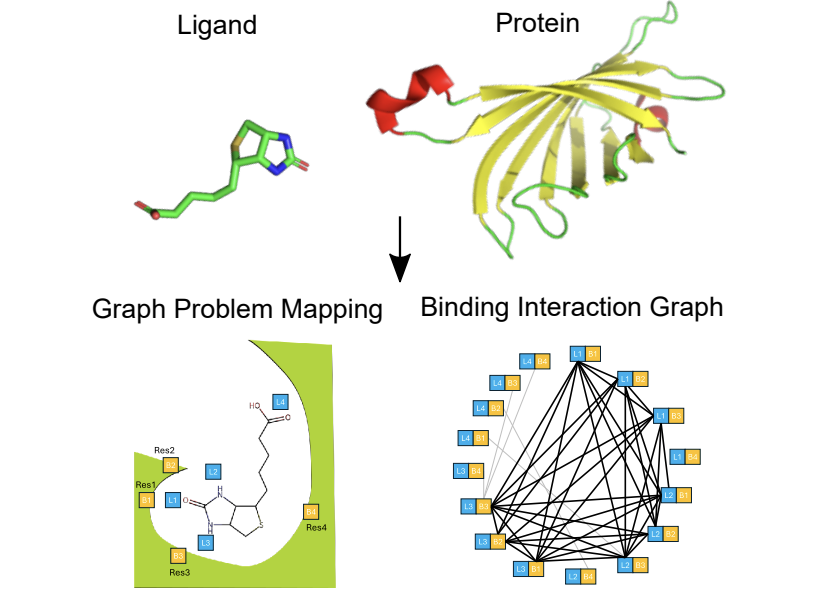
The researchers used the method to examine how two small molecules bind to proteins. In both tests, the quantum computer identified the same molecular contacts as conventional computer calculations.
The approach also reduced the number of qubits needed to handle each problem. One test used six qubits to represent 18 variables, while the other used five qubits to represent 14 variables.
The study, published as a preprint on arXiv, was conducted by researchers at Singapore’s Agency for Science, Technology and Research (A*STAR), the National University of Singapore and Nanyang Technological University.
Article Intelligence
Sponsored
Ad
NewsLayerLearn more
NewsLayer Premium
Unlock deeper intelligence.
Ad-free reading, exclusive research, and real-time onchain insights.
Go Premium