
Understanding why some superconducting qubits outperform others remains one of the most important challenges in quantum computing. As long as the quantum state in a qubit maintains its coherence and does not decay, information can be held and potentially processed in advanced calculations far beyond the capabilities of current computers.
SQMS Center uncovers material origins of variations in qubit performance through landmark study
Understanding why some superconducting qubits outperform others remains one of the most important challenges in quantum computing. As long as the quantum state in a qubit maintains its coherence and does not decay, information can be…
Fermilab (.gov)
Publisher
Oct 1, 2026 at 2:00 PM UTC · Updated 2 gün önce · 14 dk okuma
Çevriliyor…
“Advancing quantum information science is fundamentally tied to our ability to control matter at the atomic level.”
Bindu Nair, U.S. Department of Energy
While over the past decade researchers have identified many possible coherence-limiting defects in the materials used to make the qubits, establishing which microscopic features explain why identically designed qubits may perform differently has remained a challenge. Now, researchers from the Fermi National Accelerator Laboratory-led Superconducting Quantum Materials and Systems Center, or SQMS, have completed one of the most comprehensive studies ever conducted, linking materials and their structures — including surfaces, interfaces and geometries — to variations in quantum device performance. This research provides new insights that directly connect to device fabrication, an important step on the path toward building practical and reliable quantum computers.
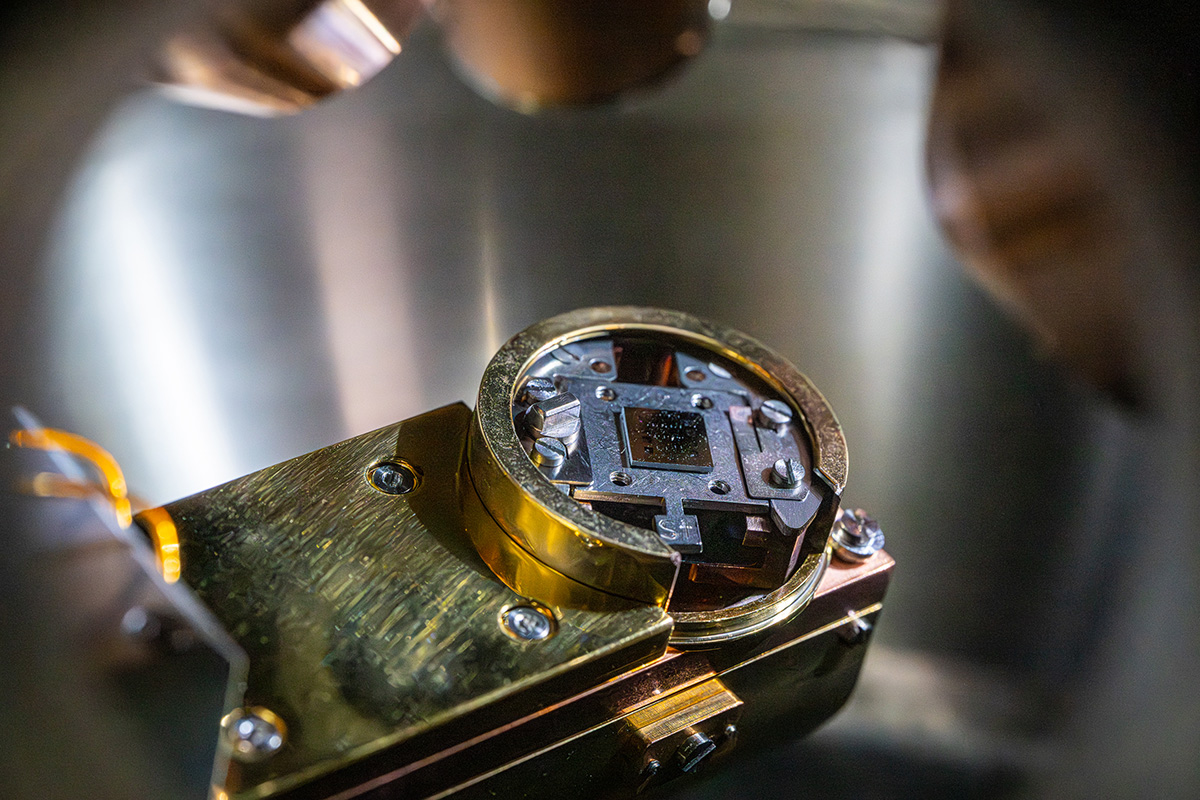
In a large-scale study involving Fermilab, Northwestern University, Rigetti Computing, Ames National Laboratory, National Institute of Standards and Technology, and National Physical Laboratory, SQMS researchers examined 22 superconducting transmon qubits fabricated by Fermilab, Rigetti and NIST. A transmon is a specific type of superconducting qubit, engineered to be far less sensitive to the small fluctuations in electric charge that can flip a qubit’s state, making it one of the most widely used qubit designs in superconducting quantum computing today. Using seven different materials-characterization techniques, the teams documented the material properties of quantum devices exhibiting varying levels of quantum-state coherence and investigated correlations with device-performance data. The study’s findings have been published in Applied Physics Reviews.
Article Intelligence
Related Coverage
 QuantumFermilab SQMS Center Identifies Microscopic Origins of Qubit Performance Variance Across Superconducting Transmonsbir gün önce · 4 min read
 QuantumResearchers Link Defects To Loss Of Qubit Coherencebir gün önce · 4 min read
 QuantumResearchers Learn Quantum System With Single Qubit Readoutbir gün önce · 5 min read
Sponsored
Ad
NewsLayerLearn more
NewsLayer Premium
Unlock deeper intelligence.
Ad-free reading, exclusive research, and real-time onchain insights.
Go Premium