This website uses cookies
We use cookies to personalise content and ads, to provide social media features and to analyse our traffic. We also share information about your use of our site with our social media, advertising and analytics partners who may combine it with other information that you’ve provided to them or that they’ve collected from your use of their services.
Consent Selection
Details
  • Necessary cookies help make a website usable by enabling basic functions like page navigation and access to secure areas of the website. The website cannot function properly without these cookies.
  • Preference cookies enable a website to remember information that changes the way the website behaves or looks, like your preferred language or the region that you are in.
    • We do not use cookies of this type.

  • Statistic cookies help website owners to understand how visitors interact with websites by collecting and reporting information anonymously.
    • We do not use cookies of this type.

  • Marketing cookies are used to track visitors across websites. The intention is to display ads that are relevant and engaging for the individual user and thereby more valuable for publishers and third party advertisers.
    • We do not use cookies of this type.

  • Unclassified cookies are cookies that we are in the process of classifying, together with the providers of individual cookies.
    • __emg_sidPending
      Maximum Storage Duration: 1 dayType: HTTP Cookie
      __emg_vidPending
      Maximum Storage Duration: 1 yearType: HTTP Cookie
      nl-read-countPending
      Maximum Storage Duration: PersistentType: HTML Local Storage
Cookie declaration last updated on 8/12/26 by Cookiebot
[#IABV2_TITLE#]
[#IABV2_BODY_INTRO#]
[#IABV2_BODY_LEGITIMATE_INTEREST_INTRO#]
[#IABV2_BODY_PREFERENCE_INTRO#]
[#IABV2_BODY_PURPOSES_INTRO#]
[#IABV2_BODY_PURPOSES#]
[#IABV2_BODY_FEATURES_INTRO#]
[#IABV2_BODY_FEATURES#]
[#IABV2_BODY_PARTNERS_INTRO#]
[#IABV2_BODY_PARTNERS#]
About
Cookies are small text files that can be used by websites to make a user's experience more efficient.

The law states that we can store cookies on your device if they are strictly necessary for the operation of this site. For all other types of cookies we need your permission.

This site uses different types of cookies. Some cookies are placed by third party services that appear on our pages.

You can at any time change or withdraw your consent from the Cookie Declaration on our website.

Learn more about who we are, how you can contact us and how we process personal data in our Privacy Policy.

Please state your consent ID and date when you contact us regarding your consent.
NewsLayer

Install NewsLayer

Get the app experience — one tap from your home screen, instant loads and breaking-news alerts.

NewsLayer.com
NewsLayer PulseLIVEBTC$64,314+2.09%ETH$1,906+1.38%SOL$75.81+1.13%XRP$1+0.31%DOGE$0.0702+0.63%ADA$0.174-1.65%Total Cap$2.29T+1.14%Layer Index42 Neutral
External ReportingYayınlandı 7 dakika önce

Treasury Proposes Rules Defining Who Can Legally Sell Stablecoins in US

Exchanges and other crypto platforms would face new restrictions on selling stablecoins to US customers beginning in 2027.

Treasury Proposes Rules Defining Who Can Legally Sell Stablecoins in US
Yazan Jason NelsonPublisher Decrypt 2 dk okuma
Image via Decrypt

Regulation Context

MiCA Full Application for Crypto-Asset Service Providers
JurisdictionEuropean Union
RegulatorESMA
Statusenforced
Updated10 gün önce

Layer Index

42

In brief

  • Treasury proposed rules defining when stablecoins are issued, offered, or sold in the US under the GENIUS Act.
  • Beginning January 18, 2027, issuers generally must obtain a federal or state license to issue payment stablecoins in the US.
  • Starting July 18, 2028, crypto platforms generally cannot sell stablecoins to US customers unless they come from an approved issuer.

The U.S. Department of the Treasury proposed rules Monday defining which stablecoins can be issued or sold in the United States under the GENIUS Act.

The proposal implements Section 3 of the GENIUS Act, signed into law last summer. According to the proposal, beginning January 18, 2027, stablecoin issuers generally must obtain a federal or state license. Platforms can also sell foreign-issued stablecoins, but only if the foreign issuer complies with U.S. legal orders and agreements between the U.S. and the country where it is regulated.
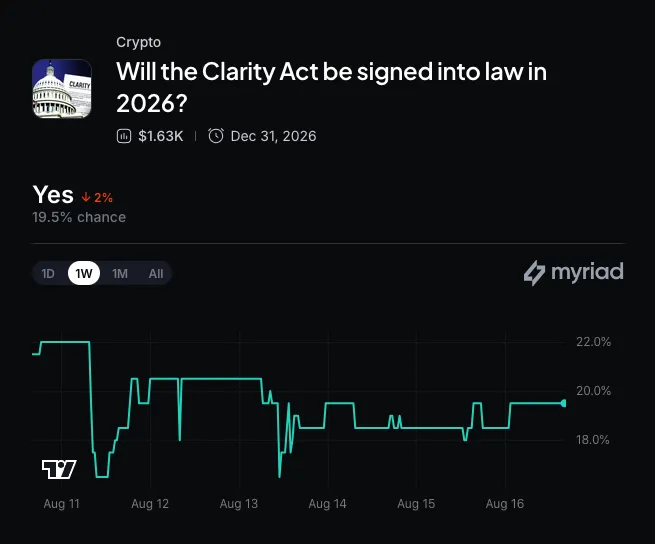
Myriad: Will the Clarity Act be signed into law in 2026? Click to make your prediction.

“President Trump and Congress delivered the GENIUS Act, establishing a landmark framework and clear rules of the road for payment stablecoins, and Treasury is moving quickly to implement that framework,” Treasury Secretary Scott Bessent wrote on X.

Starting July 18, 2028, broader restrictions would generally prevent crypto exchanges and other digital asset platforms from selling stablecoins to U.S. customers, “unless the payment stablecoin is issued by a permitted payment stablecoin issuer.”

Bessent said the regulations would provide businesses with regulatory certainty while helping "cement the role of the U.S. dollar,” and welcomed public input.

“Treasury welcomes input from stakeholders as we work to provide the regulatory certainty businesses need to innovate and grow in America, cement the role of the U.S. dollar as the world’s reserve currency, and keep America the crypto capital of the world,” Bessent wrote.

Violations of these rules could include directly soliciting U.S. buyers, advertising a stablecoin as available to them, agreeing to sell after an unsolicited inquiry, or helping buyers bypass location restrictions such as IP checks.

Public comments on the proposal are due by October 19, 2026, 60 days after its publication in the Federal Register.

The news comes as federal agencies continue to write the rules for implementing the GENIUS Act, which President Donald Trump signed into law in July 2025 to establish a federal framework for stablecoins in the U.S.

In February, the Office of the Comptroller of the Currency proposed rules governing stablecoin issuance and oversight. The FDIC followed in April with proposed requirements for reserves, redemptions, capital, and risk management. That same month, the Treasury proposed anti-money laundering and sanctions rules requiring issuers to report suspicious activity and maintain the ability to block or freeze transactions.

Those proposed compliance rules have faced pushback from the crypto industry. In June, Paradigm and the Hyperliquid Policy Center warned that making issuers responsible for stablecoins after they enter secondary markets could drive them away from decentralized finance.

Son Dakika

Hiçbir son dakika haberini kaçırmayın

Advertisement

House — Advertise on NewsLayer
NewsLayerAd

Sourced by

Originally reported by Decrypt

NewsLayer coverage based on externally reported material.

The Daily Brief

The onchain economy, before your day starts.

Curated markets, onchain insights, and key headlines — delivered every weekday morning.

Weekdays · Free · ~5 minute read

İlgili Haberler