

NewsLayer

Install NewsLayer

Get the app experience — one tap from your home screen, instant loads and breaking-news alerts.

NewsLayer.com
LatestDaily BriefMarkets
NewsLayer PulseLIVE₿BTC$75,755-0.06%ΞETH$2,234-0.35%◎SOL$89.13-0.91%✕XRP$1.16-0.14%ÐDOGE$0.0711-1.12%₳ADA$0.18-2.12%Total Cap$2.66T-0.29%24H Vol$49.9BLayer Index32 Fear
BreakingBinance CFO steps down nine days after record hack; co-CEO says transition was planned six months ago6 saat önce
Markets
HomeQuantumResearch

Quantum|Research

Yale & D-Wave Researchers Study Qubit-cavity Exchange Interaction

Researchers from Yale University and Google, including personnel now at D-Wave Quantum Inc., have introduced a new approach to qubit control by keeping elements decoupled until needed. This work addresses a fundamental limitation in…

Quantum Zeitgeist

Publisher

Nov 7, 2026 at 10:01 AM UTC · Updated 16 saat önce · 8 dk okuma
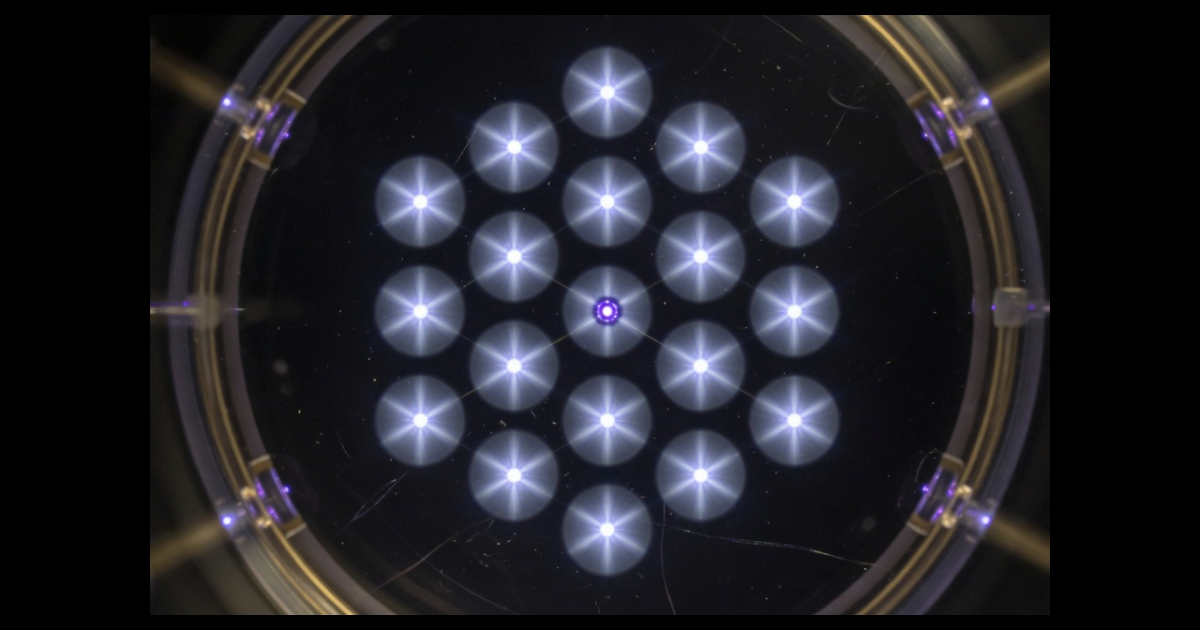
Yale & D-Wave Researchers Study Qubit-cavity Exchange Interaction
Image via Quantum Zeitgeist
Çevriliyor…

Researchers from Yale University and Google, including personnel now at D-Wave Quantum Inc., have introduced a new approach to qubit control by keeping elements decoupled until needed. This work addresses a fundamental limitation in superconducting circuits where persistent interaction between microwave photons and ancillary qubits previously propagated errors, even while those qubits idled. The team broke this trade-off between control strength and fidelity by introducing a parametrically activated hybridization. This dynamic coupling offers a route to bosonic processors whose performance is determined by the oscillator, rather than the ancillary qubits.

Parametric Couplers Enable Decoupled Qubit-Boson Control

A newly demonstrated method of dynamically modulating interactions between oscillators and ancillary qubits allows for decoupled operation when not actively engaged, circumventing a longstanding limitation in superconducting circuit design. This approach addresses the propagation of errors from qubits to bosonic systems, a problem that previously affected performance even when qubits were idle. The research details a parametrically activated hybridization, enabling a substantial “on-off” ratio between the coupled elements.

Article Intelligence

Topics

quantumresearch

Sponsored

Ad
House — Advertise on NewsLayer
NewsLayerLearn more

NewsLayer Premium

Unlock deeper intelligence.

Ad-free reading, exclusive research, and real-time onchain insights.

Go Premium
NewsLayer.com

The front page of the onchain economy. Crypto, Web3 and regulation intelligence — live prices, original research and policy tracking in one layer.

Follow on XTelegram

News

  • Latest News
  • The Daily Brief
  • Crypto
  • DeFi
  • Policy
  • Web3
  • Blockchain
  • Explainers

Markets

  • Market News
  • Layer Index
  • Live Charts
  • DeFi Protocols
  • Regulation Tracker
  • Regulation Radar

Company

  • About NewsLayer
  • Advertise
  • PR Publication
  • Become an Author
  • Our Authors
  • Create Account
  • Sign in

Resources

  • Research
  • NewsLayer Originals
  • My Feed
  • Search
  • AI Sector
  • Quantum Sector

NewsLayer Premium

Read the full layer.

Unlock premium intelligence, original research and an ad-free reading experience.

  • Premium Intelligence briefings
  • Ad-free reading experience
  • Members-only research & data
Go Premium

© 2026 NewsLayer.com — The front page of the onchain economy

Privacy Policy·Terms of Service
NewsLayer

Get the signal, not the noise.

Markets, regulation and onchain intelligence in a 5-minute morning read — plus breaking alerts and Layer Index flips as they happen.

The Daily Brief

Breaking alerts

Index flips

Free · No spam · Unsubscribe anytime
