This website uses cookies
We use cookies to personalise content and ads, to provide social media features and to analyse our traffic. We also share information about your use of our site with our social media, advertising and analytics partners who may combine it with other information that you’ve provided to them or that they’ve collected from your use of their services.
Consent Selection
Details
  • Necessary cookies help make a website usable by enabling basic functions like page navigation and access to secure areas of the website. The website cannot function properly without these cookies.
  • Preference cookies enable a website to remember information that changes the way the website behaves or looks, like your preferred language or the region that you are in.
    • We do not use cookies of this type.

  • Statistic cookies help website owners to understand how visitors interact with websites by collecting and reporting information anonymously.
    • We do not use cookies of this type.

  • Marketing cookies are used to track visitors across websites. The intention is to display ads that are relevant and engaging for the individual user and thereby more valuable for publishers and third party advertisers.
    • We do not use cookies of this type.

  • Unclassified cookies are cookies that we are in the process of classifying, together with the providers of individual cookies.
    • __emg_sidPending
      Maximum Storage Duration: 1 dayType: HTTP Cookie
      __emg_vidPending
      Maximum Storage Duration: 1 yearType: HTTP Cookie
      nl-read-countPending
      Maximum Storage Duration: PersistentType: HTML Local Storage
Cookie declaration last updated on 8/12/26 by Cookiebot
[#IABV2_TITLE#]
[#IABV2_BODY_INTRO#]
[#IABV2_BODY_LEGITIMATE_INTEREST_INTRO#]
[#IABV2_BODY_PREFERENCE_INTRO#]
[#IABV2_BODY_PURPOSES_INTRO#]
[#IABV2_BODY_PURPOSES#]
[#IABV2_BODY_FEATURES_INTRO#]
[#IABV2_BODY_FEATURES#]
[#IABV2_BODY_PARTNERS_INTRO#]
[#IABV2_BODY_PARTNERS#]
About
Cookies are small text files that can be used by websites to make a user's experience more efficient.

The law states that we can store cookies on your device if they are strictly necessary for the operation of this site. For all other types of cookies we need your permission.

This site uses different types of cookies. Some cookies are placed by third party services that appear on our pages.

You can at any time change or withdraw your consent from the Cookie Declaration on our website.

Learn more about who we are, how you can contact us and how we process personal data in our Privacy Policy.

Please state your consent ID and date when you contact us regarding your consent.
NewsLayer

Install NewsLayer

Get the app experience — one tap from your home screen, instant loads and breaking-news alerts.

NewsLayer.com

Bitcoin Losses and Dividends in Austria: How the Tax Offset Works

Đăng 9 giờ trước 4 phút đọc
Bitcoin Losses and Dividends in Austria: How the Tax Offset Works

Bitcoin Losses and Dividends in Austria: How the Tax Offset Works CryptoTicker

Offsetting Bitcoin gains and dividends: what investors in Austria need to know

Bitcoin and shares are treated differently for tax purposes, yet in Austria they can meet when losses are offset. The Ministry of Finance states explicitly that gains and losses from cryptocurrencies can in principle be offset against certain other types of investment income. Dividends and realised gains on shares are among them.

That can be of particular interest to investors who sold Bitcoin at a loss while dividend income came in at the same time.

A Bitcoin loss can offset dividends

An example:

  • Dividend income: 5,000 euros
  • Realised Bitcoin loss: 3,000 euros
  • Remaining positive investment income: 2,000 euros

Where the conditions for offsetting losses are met, the Bitcoin loss reduces the taxable dividends accordingly. Both dividends and taxable crypto income are in principle subject to the special tax rate of 27.5 percent. One point matters, though: a paper loss sitting in a Bitcoin wallet is not enough. The loss has to have been realised for tax purposes, for example through a sale for euros.
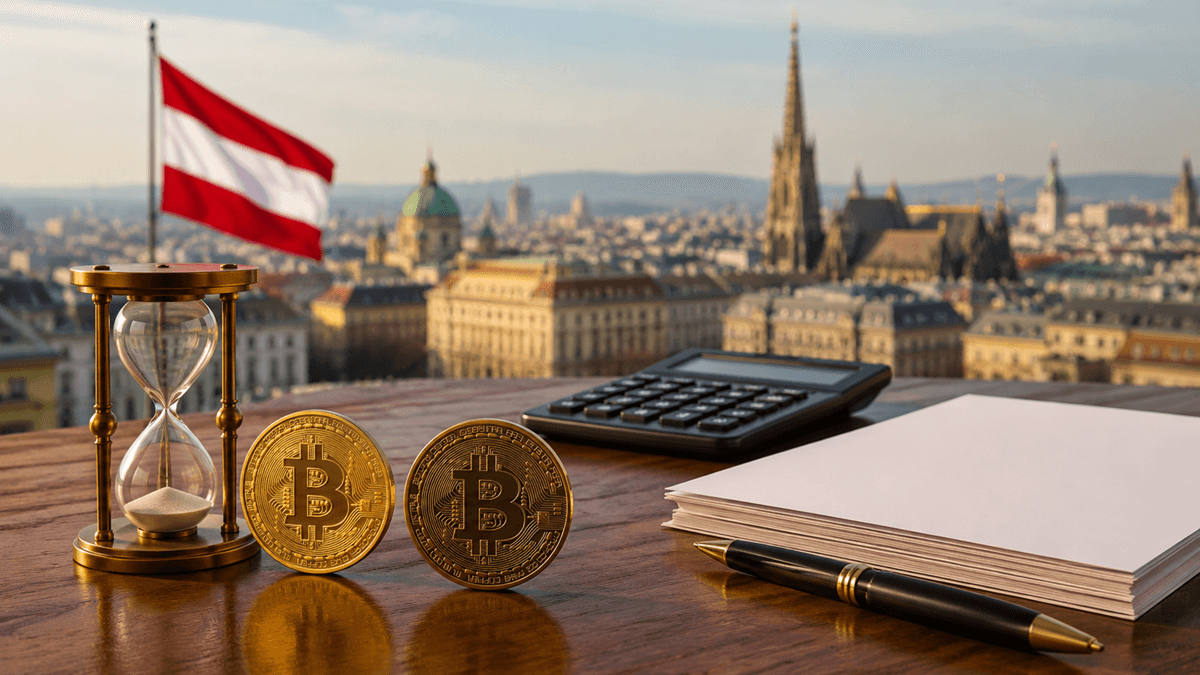
The Bitcoin tax offset does not happen automatically

This is where an important feature of the Austrian system comes in. Within the holdings they administer, banks and Austrian crypto service providers do carry out automatic loss offsetting.

An automatic offset between cryptocurrencies and other investment income such as dividends is explicitly not permitted. That cross-category offset has to be made through the income tax assessment.

Say a bank has already withheld 27.5 percent capital gains tax on dividends while a taxable Bitcoin loss arose on a crypto platform. The investor can then claim the offset through the tax return. Capital gains tax already withheld can be refunded in part as a result.

Sign up with Cointracker now and use the crypto tax tool

Bitcoin losses must arise in the same calendar year

Another point carries weight: offsetting works in principle within one and the same calendar year. A Bitcoin loss from 2026 can therefore be set against dividends from 2026. An unused private capital loss generally cannot simply be carried forward into later years. That is what separates private investment income from certain business losses. Towards the end of the year it can therefore become relevant for investors which gains and losses have actually been realised.

Bitcoin losses cannot be offset against savings account interest

Not every form of investment income may be set against Bitcoin losses.

Offsetting against interest on bank deposits is explicitly ruled out. That covers classic savings account interest and certain account interest. Certain distributions from private foundations are excluded as well.

In simplified terms:
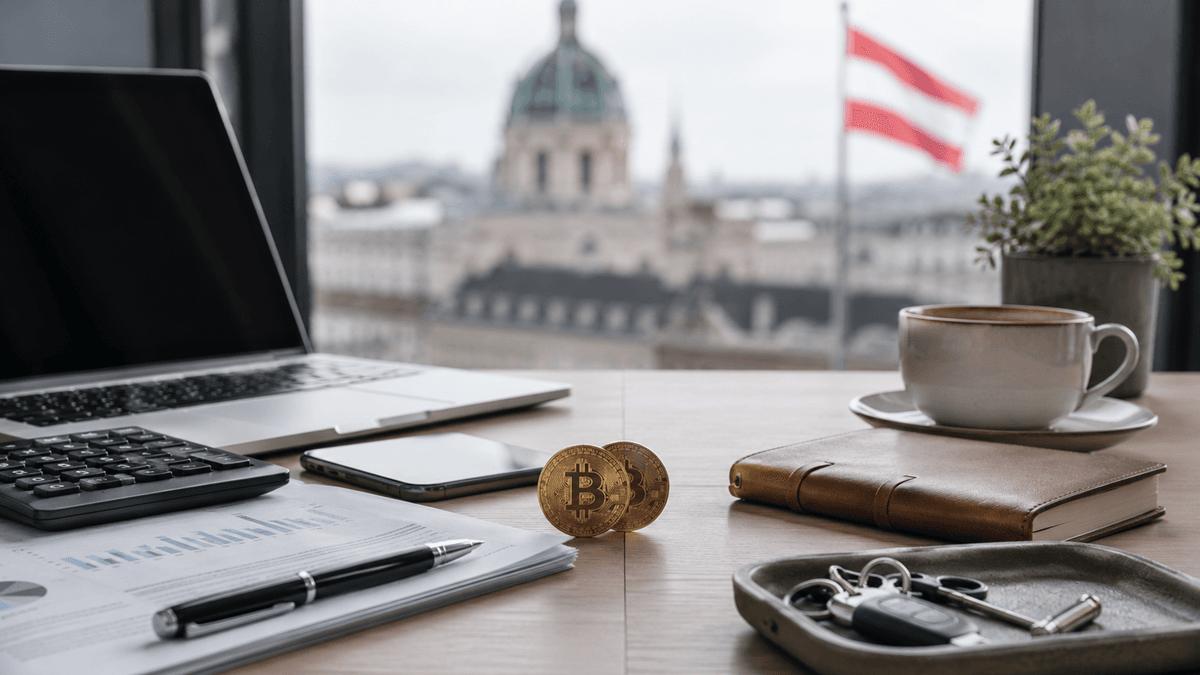
  • Bitcoin loss plus dividends: possible in principle
  • Bitcoin loss plus gain on shares: possible in principle
  • Bitcoin loss plus other eligible crypto gains: possible in principle
  • Bitcoin loss plus savings account interest: not possible
  • Bitcoin loss plus salary: not possible

Tax reporting becomes more important as proof of a Bitcoin loss

For income from the 2025 calendar year onwards, Austrian entities obliged to withhold capital gains tax, such as banks and certain crypto service providers, have to produce standardised tax reporting on request.

It sets out income, losses and capital gains tax already withheld, among other items. The reporting can then serve as proof of an offset that is not applied automatically in the income tax return. Anyone holding dividends at a bank and Bitcoin on a separate crypto platform should therefore keep the tax documents from both providers.

Bitcoin gains can also be offset against losses on shares

Offsetting works in the other direction too.

Take an investor with:

  • 8,000 euros of taxable Bitcoin gains
  • 5,000 euros of realised losses on shares

In principle only the remaining positive amount of 3,000 euros is then subject to the corresponding taxation, provided the losses on shares may be taken into account under the loss offsetting rules. Here too, the offset between crypto income and other investment income is not applied automatically across the various providers and may have to be carried out through the income tax assessment.

See the crypto tax tool comparison

Conclusion on Bitcoin, dividends and tax in Austria

Investors in Austria can in principle offset Bitcoin losses against dividends and certain other investment income. What is decisive is that the losses were actually realised and that they arise in the same calendar year as the positive income.

One thing matters above all: banks and crypto platforms do not offset Bitcoin losses and dividends against each other automatically. Anyone holding assets with different providers generally has to claim the cross-provider offset through the income tax return.

The standardised tax reporting available since 2025 is intended to help document crypto gains, losses and capital gains tax already paid to the tax office in a comprehensible way.

(As of August 12, 2026. This article is not investment advice. Prices and fee structures change; check the terms with the provider before you buy.)

Transparency note: This article was produced with the assistance of artificial intelligence and reviewed by our editorial team before publication. All figures and claims were checked against the primary sources linked in the text. The feature image was generated with AI.

Attribution

Originally reported by CryptoTicker

Get stories like this, daily.

Daily crypto + regulation intelligence, straight to your inbox. Free.

Tin Liên Quan