
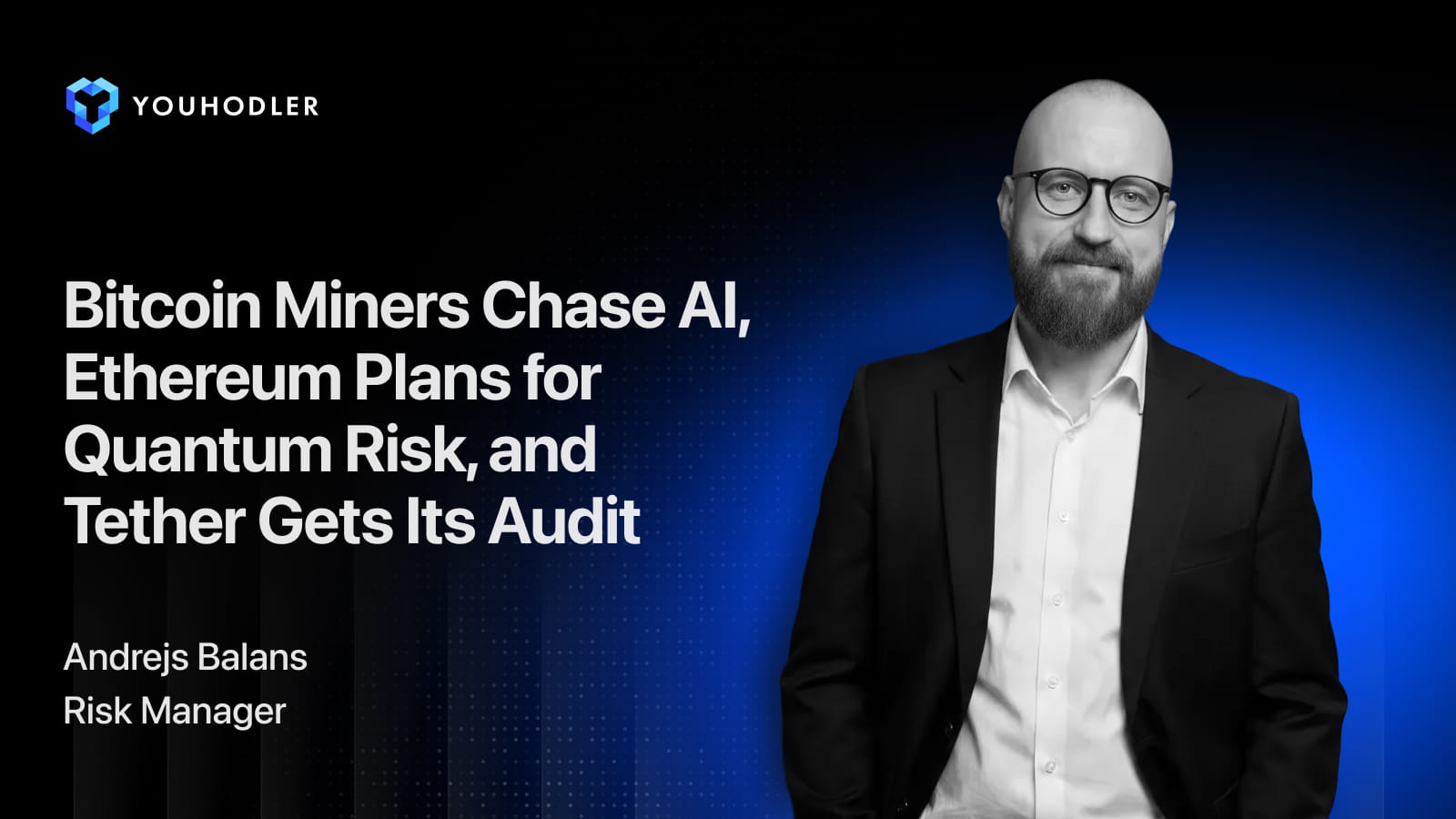
Bitcoin Miners Chase AI, Ethereum Plans for Quantum Risk, and Tether Gets Its Audit
Crypto infrastructure is being pulled in several directions at once. Mining companies are finding new uses for power and data-center assets, financial platforms are testing faster market-data rails, and large holders are trying to make…
YouHodler
Publisher
Aug 17, 2026 at 7:51 AM UTC · 7 phút đọc
Key Signal
$9.1B AI deal value
Entities
bitcoin, ethereum, tether
Market Impact
Total MCap-2.98%
Last Updated
2 tháng trước
Đang dịch…
- Riot Platforms signed a 20-year AI data-center deal worth $9.1 billion
- Ethereum is putting quantum security, privacy and AI deeper into its roadmap
- Kalshi is bringing its market data onto Solana-based DoubleZero infrastructure
- Tether completed its first full independent financial audit with KPMG US
- SharpLink plans to stake about $200 million of ETH through Lido
- Hyperscale Data sold roughly 685 BTC to support its AI data-center plans
- Trezor disclosed a data breach affecting nearly 14,000 hardware-wallet customers
Crypto infrastructure is being pulled in several directions at once. Mining companies are finding new uses for power and data-center assets, financial platforms are testing faster market-data rails, and large holders are trying to make idle assets work harder rather than simply sitting on balance sheets.
At the same time, the industry is confronting familiar control problems. Security failures still expose users outside the blockchain itself, while new infrastructure introduces fresh dependencies around custody, data delivery and operational resilience. The progress is real, but so is the cost of getting these systems wrong.
Riot Makes a $9.1 Billion AI Bet
Riot Platforms signed a 20-year agreement to provide 191 MW of data-center capacity to a major AI company, with Bloomberg identifying the customer as Anthropic. The reported value of the agreement is $9.1 billion, putting it far beyond the scale of a routine hosting contract and giving Riot a new business line built around the same resource that powers its Bitcoin mining operations: electricity.
Market Context
Bitcoin
BTC
$85,524
+0.74% (24H)
Market Cap
$1.72T
24H Volume
$17.5B
24H High
$86,974
Article Intelligence
Topics
Related Coverage
 CryptoEthereum Jumps 70% in Third Quarter Even as Order-Book Liquidity Shrinks to 35%-45% of Bitcoin's25 phút trước · 2 min read
 CryptoTop 3 Price Prediction: Bitcoin, Ethereum, Ripple – BTC, ETH and XRP extend multi‑week rally as bulls target higher levels2 giờ trước · 1 min read
 CryptoBitcoin and USDT Behave Differently During Crypto Payments2 giờ trước · 4 min read
Sponsored
Ad
NewsLayerLearn more
NewsLayer Premium
Unlock deeper intelligence.
Ad-free reading, exclusive research, and real-time onchain insights.
Go Premium