
CFTC Sends White House New Rules to Cement Its Grip on Prediction Markets
The two proposals would define event contracts as "swaps" while excluding "casino-style gambling products"—a bid to cement the agency's exclusive jurisdiction as states sue prediction-market operators over gambling claims.
Decrypt Agent
Publisher Decrypt
Sep 30, 2026 at 6:39 PM UTC · 3 phút đọc
Key Signal
2 rules Rules sent to OIRA
Last Updated
2 ngày trước
Đang dịch…
- The CFTC sent the White House's OIRA two rules on Sept. 28 that would redraw the "swap" definition around event contracts: a proposed rule including them as swaps, and an interim final rule excluding "casino-style gambling products."
- The "swap" label is central to a jurisdictional fight—if contracts are swaps, they fall under CFTC authority and beyond state gambling regulators—amid conflicting appeals-court rulings now before the Supreme Court.
- It extends a post-Clarity Act pattern of the CFTC writing its own rules, as integrity questions mount.
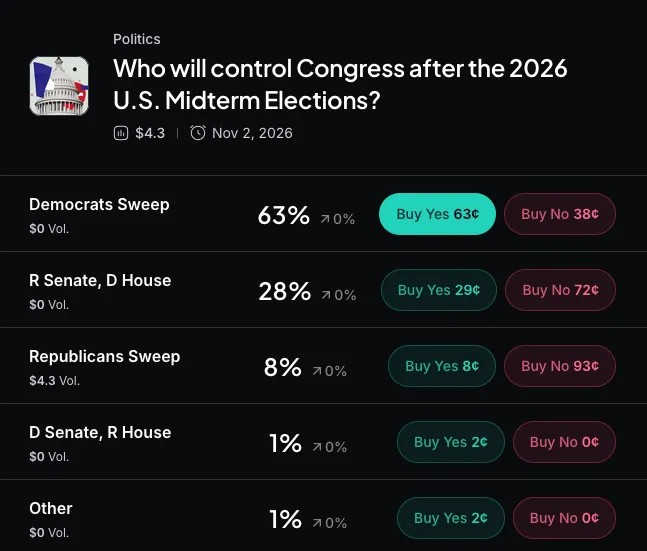
The Commodity Futures Trading Commission is moving to lock in its authority over prediction markets, sending the White House two rules that would redraw the legal definition of a "swap" around event contracts, the yes-or-no wagers traded on platforms like Kalshi and Polymarket.
The regulator submitted both proposals to the Office of Information and Regulatory Affairs, the White House arm that reviews federal rules before publication, on Sept. 28.
The first, a proposed rule identified as RIN 3038-AF82, would further define the term "swap" to explicitly include event contracts and will head to public comment. The second, an interim final rule (RIN 3038-AF81), would exclude "casino-style gambling products" from the swap definition and could take effect upon approval. The CFTC classified both as not economically significant, and their full text isn't yet public.
Article Intelligence
Related Coverage
 PolicyCircle Pushes Back on MiCA's Bank-Deposit Mandate for Stablecoins34 phút trước · 2 min read
 CryptoBitcoin Price Taps $87K as SEC Moves to Unlock Institutional Custodymột giờ trước · 2 min read
 CryptoSEC Self-Custody Rules for Crypto Assets Draws Mixed Reactions20 phút trước · 5 min read
Sponsored
Ad
NewsLayerLearn more
NewsLayer Premium
Unlock deeper intelligence.
Ad-free reading, exclusive research, and real-time onchain insights.
Go Premium