

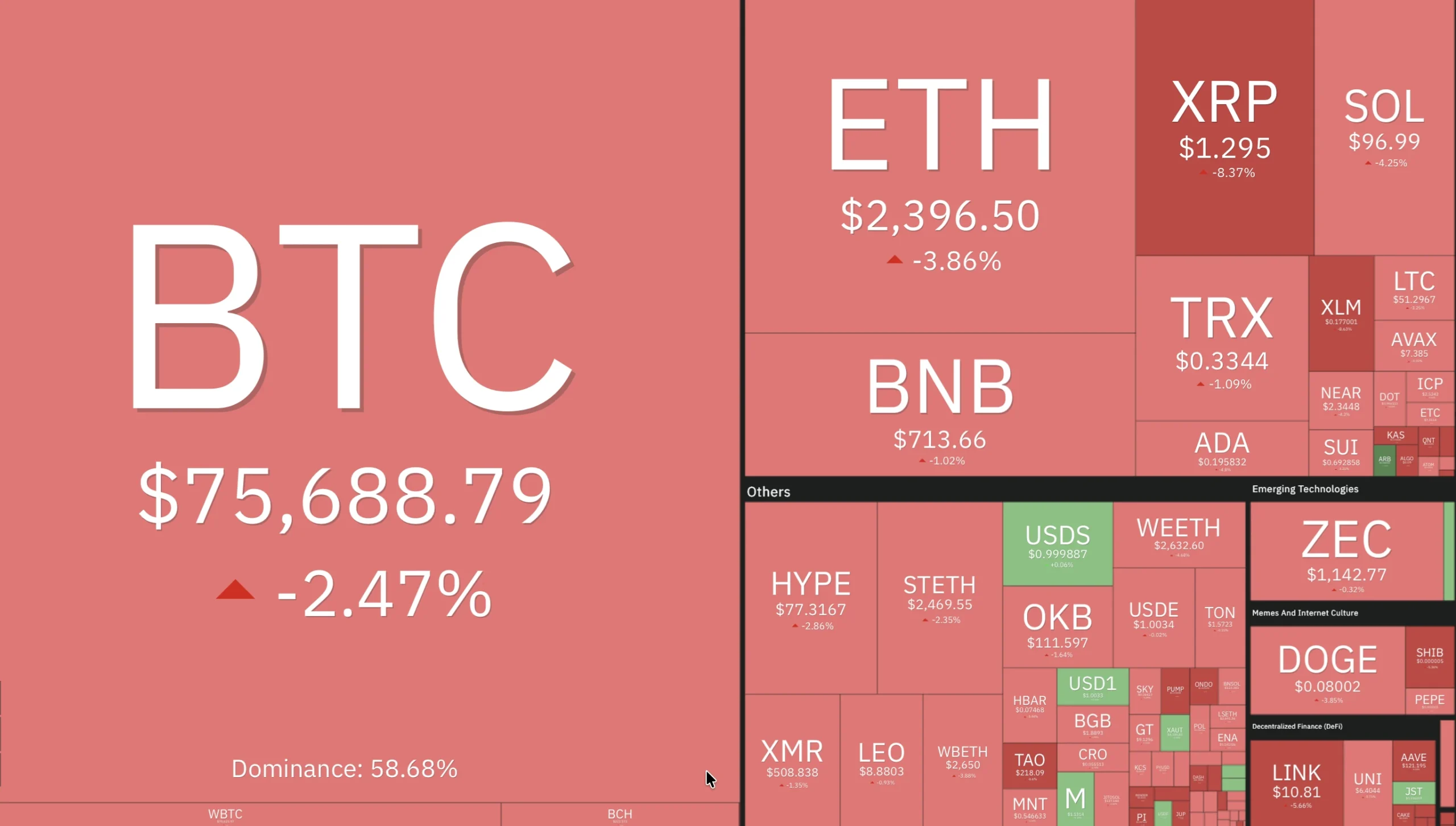
Crypto markets came under heavy selling pressure after the US Senate failed to advance the CLARITY Act. It is significant, as it aimed to establish clearer rules for the digital-asset industry. The legislation fell short of the 60 votes required to move forward, adding a fresh layer of regulatory uncertainty for the crypto market.
Crypto Markets Plummet as CLARITY Act Vote Falls Short—Should You Be Worried?
Crypto markets came under heavy selling pressure after the US Senate failed to advance the CLARITY Act. It is significant, as it aimed to establish clearer rules for the digital-asset industry. The legislation fell short of the 60 votes…
Coinpedia
Publisher
Sep 16, 2026 at 6:15 AM UTC · 3 phút đọc
Key Signal
49-50 Senate CLARITY vote
Last Updated
4 ngày trước
Đang dịch…
Bitcoin, Ethereum and several major altcoins declined following the vote, raising a key question for investors: should you be worried about the crypto sell-off, or is this simply a short-term reaction to a regulatory setback?
CLARITY Act Fails to Attract the Mandatory 60 Votes
The US Senate failed to advance the CLARITY ACT after the bill received 49 votes in favour and 50 against, falling short of the 60 votes. The votes were required to reach the 60-vote threshold to clear the procedural hurdle. Although the vote was not a final rejection of the legislation, it effectively paused its progress at a time when the crypto industry was looking for clearer rules around digital assets.
The CLARITY Act was designed to establish a broader regulatory framework for cryptos and clarify the roles of the SEC and CFTC. Its failure to advance, therefore, matters because regulatory uncertainty remains unresolved.
Market Context
Bitcoin
BTC
$80,510
-1.00% (24H)
Market Cap
$1.61T
24H Volume
$17.5B
24H High
$81,915
Article Intelligence
Related Coverage
 MarketsMichael Saylor Proposed Alternative Path for Crypto Market after Failure of CLARITY Act29 phút trước · 3 min read
 CryptoWeekly: CLARITY Act Failure, Poland Losing $230 Million Due to Cryptocurrencies, and a Zcash Rally2 giờ trước · 11 min read
 CryptoBitcoin ‘Will’ Hit $1 Million Price—Kevin O’Leary Suddenly Ups His Massive $15 Trillion Prediction9 phút trước · 1 min read
Sponsored
Ad
NewsLayerLearn more
NewsLayer Premium
Unlock deeper intelligence.
Ad-free reading, exclusive research, and real-time onchain insights.
Go Premium